
Are we just moist robots?
The mind
★ Kids' lesson▶ Watch the ShortA 10-minute video All the videos on YouTube
The short answer
No. If there were no God, you'd be molecules in motion, and every thought you have would be a chemical push. Then you'd have no reason to trust any of them, including the thought that you're only molecules. You can trust your mind because it was made by a Mind, and the Word who made it became one of us in Jesus.
If there's no God, what are you?
If atheism is true, the answer is pretty stark: you're molecules in motion. A body, a brain, and chemistry doing what chemistry does. Frank Turek calls that picture a moist robot.
So are you one? And if you were, could you even know it? Here's the Christian answer: you're not a robot. Your mind can know what's true because it was made by a Mind.

Sources:Frank Turek, Stealing from God (2014), chapter 2, “Reason”The argument from reason
What you'd be
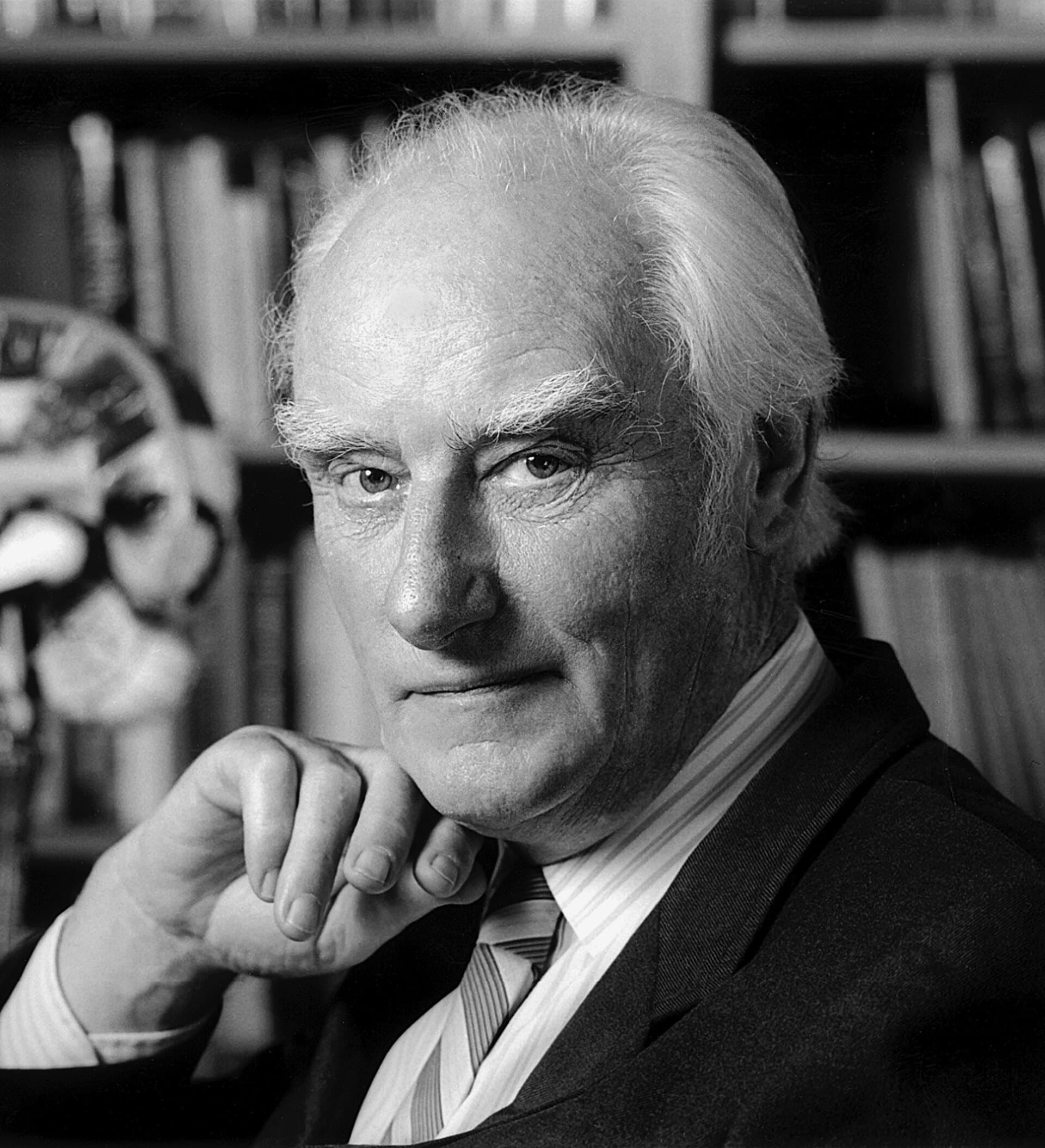
Francis Crick helped discover the shape of DNA. Late in life he wrote a book about the brain, and he opened it with what he called his astonishing hypothesis:
“…“You,” your joys and your sorrows, your memories and your ambitions, your sense of personal identity and free will, are in fact no more than the behavior of a vast assembly of nerve cells and their associated molecules.”
Francis Crick, The Astonishing Hypothesis (1994)
Look at what he says you are: no more than nerve cells and molecules. And if there's no God, Crick's right. There's nothing else for you to be. The Oxford biologist Richard Dawkins put it even more bluntly: “DNA neither knows nor cares. DNA just is. And we dance to its music.” On that picture your thoughts are part of the dance too.
In Stealing from God, Turek describes a person who is “merely a moist robot whose every thought is determined completely by the laws of physics.” Then he names the problem: “then there is no reason to trust that person's experiments or any of his conclusions.”
Sources:Francis Crick, The Astonishing Hypothesis (1994), chapter 1Richard Dawkins, River Out of Eden (1995), pp. 131–132Frank Turek, Stealing from God (2014), chapter 2, “Reason”
Sawing off the branch
A British biologist saw that problem nearly a century ago. In 1927 J. B. S. Haldane wrote this:
“If my mental processes are determined wholly by the motions of atoms in my brain I have no reason to suppose that my beliefs are true. They may be sound chemically, but that does not make them sound logically. And hence I have no reason for supposing my brain to be composed of atoms.”
J. B. S. Haldane, Possible Worlds (1927)
Believing that, he said, would be “sawing away the branch on which I am sitting.”
Sources:J. B. S. Haldane, Possible Worlds and Other Essays (1927), pp. 209–210
A reason, or a push?
Haldane's right, and you can see why. Think about a simple argument:
- All people are mortal.
- Socrates is a person.
- So Socrates is mortal.
You believe that last line because the first two make it true. That's a reason. Now line up some dominoes. Each one falls because the one before it pushed it. True and false never come into it.
If your mind is only molecules, every thought you have is a push like that. Pushes can still land on the truth, but only if something has lined them up with it. So what lined up yours? If nothing did, you'd have no reason to trust any thought you have, including the thought that you're only molecules.

Sources:J. B. S. Haldane, Possible Worlds and Other Essays (1927), pp. 209–210The argument from reason
Darwin's “horrid doubt”
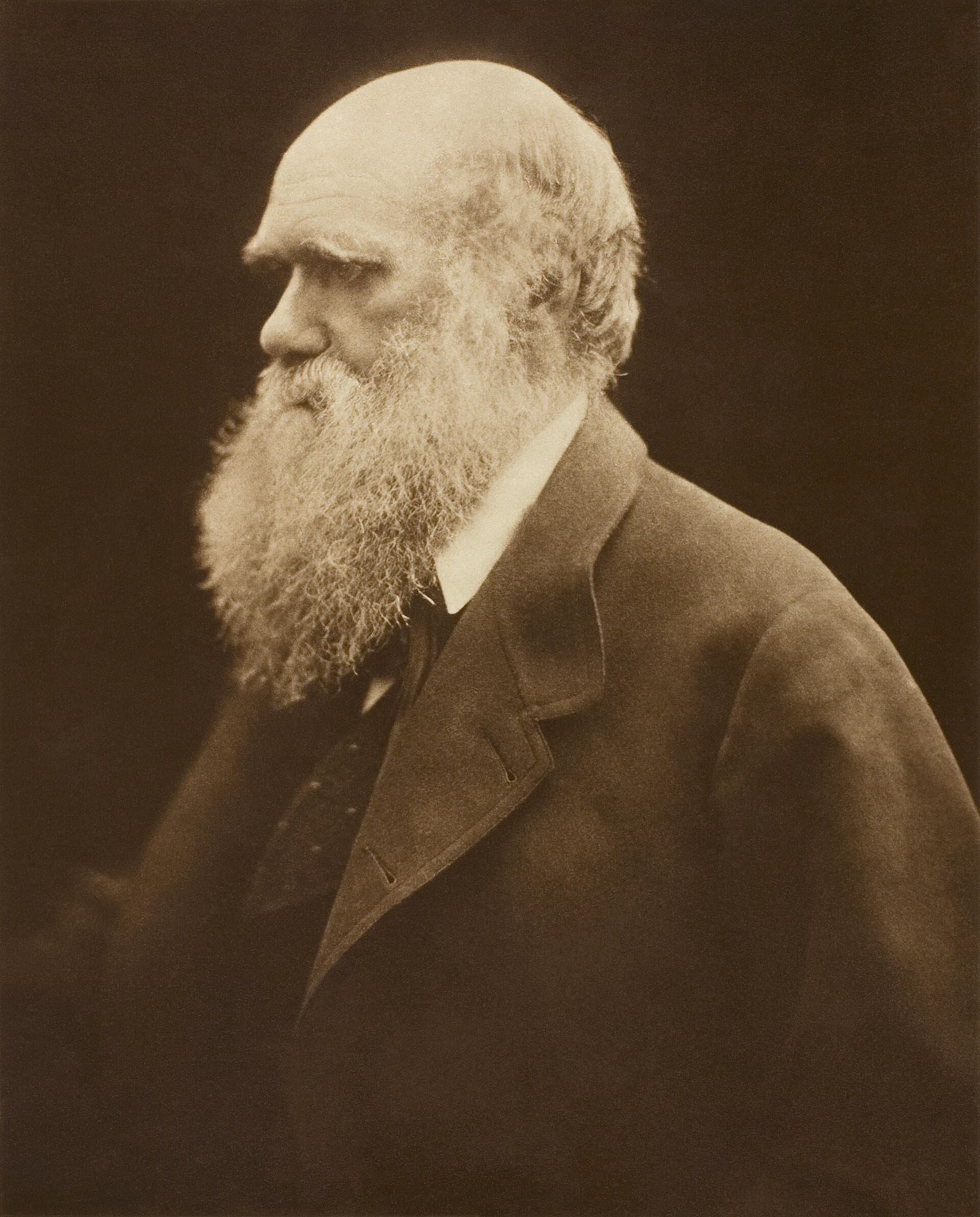
Even Charles Darwin felt this. In 1881 he told the author of a book he'd been reading that he shared his conviction: the universe is not the result of chance. Then he added:
“But then with me the horrid doubt always arises whether the convictions of man's mind, which has been developed from the mind of the lower animals, are of any value or at all trustworthy. Would any one trust in the convictions of a monkey's mind, if there are any convictions in such a mind?”
Charles Darwin, letter to William Graham (1881)
Darwin aimed that doubt at his conviction that the universe is not the result of chance. But a doubt like that can't pick its targets. If a mind can't be trusted, that reaches every belief it holds, including the belief that there's no God.
That's Turek's point. To argue that you're only matter, you need a mind you can trust. As he puts it, “any intellectually reliable effort to conclude materialism is true must assume that materialism is false!”
Sources:Charles Darwin to William Graham, 3 July 1881 (Darwin Correspondence Project)Frank Turek, Stealing from God (2014), chapter 2, “Reason”
More than molecules
And reason isn't the only thing that doesn't fit. Bite into a strawberry. A scientist could map every nerve cell that fires, and still not have told you what it's like to taste it. Philosophers call that the hard problem of consciousness: how chemistry could ever add up to what it's like to be you.
Or look at the people you love. Turek asks:
“Do you really think that they are nothing more than biological sacks of chemicals?”
Frank Turek, Stealing from God (2014)
You don't, do you? Nobody could love them and really believe that.

Sources:The hard problem of consciousnessThomas Nagel, “What Is It Like to Be a Bat?” The Philosophical Review 83 (1974)Frank Turek, Stealing from God (2014), chapter 8
“Computers reason, and they're only matter”
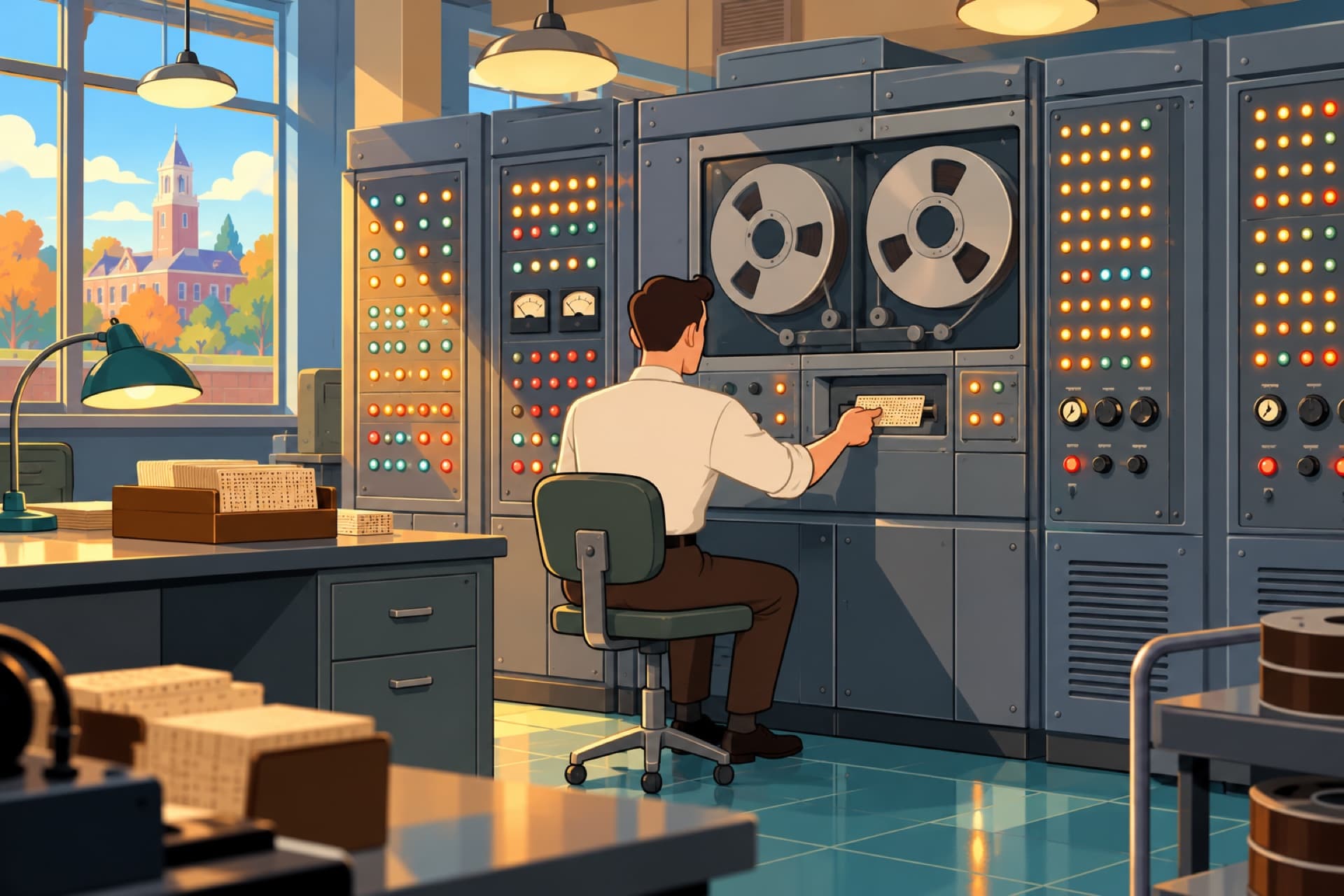
That's a fair question. A calculator says seven times eight is fifty-six, and it's right. Haldane himself came to think that sank his argument. In 1954 he took it back, because a computing machine follows physics and still keeps the rules of logic.
But ask why the calculator's pushes land on the right answer. Its makers took care of that, by designing it to follow the rules of arithmetic. The philosopher Karl Popper, an agnostic, answered Haldane along those lines: a computer works by logic because minds built it to.
So a working calculator points back to a mind that built it. Christians say the same about you.
Sources:Karl Popper and John Eccles, The Self and Its Brain (1977), section 21J. B. S. Haldane, Possible Worlds and Other Essays (1927), pp. 209–210Karl Popper
“Damage the brain and the mind changes”
Doesn't that show the mind is just the brain? Haldane knew that too. Right after his argument, he wrote about his own mind:
“…I can see, by studying the effects on it of drugs, alcohol, disease, and so on, that its limitations are largely at least due to my body.”
J. B. S. Haldane, Possible Worlds (1927)
Christians would say so too. God made us body and soul together, and your brain is how your mind works in this world. Break a piano and the music changes. That doesn't mean there was never a pianist.

Sources:J. B. S. Haldane, Possible Worlds and Other Essays (1927), pp. 209–210
“Survival did the lining up”
Someone might say minds that got things badly wrong wouldn't last, so ours must be reliable. But survival keeps whatever keeps you alive, true or not. A rabbit that bolts at every shadow outlives one that waits to be sure. Caution kept it alive, not being right.
So survival alone gives no reason to expect minds that know the truth. A Mind who made us to know him does.

Sources:The argument from reasonThe evolutionary argument against naturalism (Alvin Plantinga)
Made by a Mind
John's Gospel opens with a Mind before there was a single molecule:
“In the beginning was the Word, and the Word was with God, and the Word was God.”
John 1:1
John's word is logos, Greek for word, and also for reason. And Genesis says God made us “in his own image” (Genesis 1:27). Turek puts it simply: “our minds work because they are made in the image of the Great Mind.”
The Bible doesn't deny the chemistry. It says “the Lord God formed a man from the dust of the ground.” You really are made of the stuff of the earth. But it doesn't stop there. God “breathed into his nostrils the breath of life, and the man became a living being” (Genesis 2:7). So yes, you're dust, but dust that God breathed into.

Sources:John 1:1Logos in John's GospelGenesis 1:27Frank Turek, Stealing from God (2014), chapter 2, “Reason”Genesis 2:7
Putting it together
So follow it through:
- If there's no God, your thoughts are only chemistry, pushed along by physics.
- Then you couldn't trust your reason, not even to argue that there's no God.
- But you can trust it. You're using it right now, to weigh this page.
- So the best answer is that your mind comes from a Mind.
Put that with everything else we've seen: a universe that had a beginning, dials set just right for life, a code written in every cell, and a law written on every heart. And now a mind that can know what's true. Someone is there. He has a mind, and he made yours.

Sources:The argument from reasonJ. B. S. Haldane, Possible Worlds and Other Essays (1927), pp. 209–210Frank Turek, Stealing from God (2014), chapter 2, “Reason”The cosmological argumentFine-tuned universeThe origin of life (abiogenesis)The moral argument
Check yourself
What did Francis Crick say “you” are, in his astonishing hypothesis?Show the answer
“No more than the behavior of a vast assembly of nerve cells and their associated molecules,” your joys, sorrows, memories, sense of who you are and free will included.
Why did Haldane say believing his mind was only atoms would saw off the branch he was sitting on?Show the answer
If his thoughts were set wholly by atoms moving in his brain, he'd have no reason to suppose his beliefs were true. They might be sound chemically, but that doesn't make them sound logically, and that would include his belief that his brain is made of atoms.
How is a reason different from a push, like a domino falling?Show the answer
You believe “So Socrates is mortal” because the first two lines make it true. A domino falls because the one before pushed it; true and false never come into it. Pushes only land on the truth if something has lined them up with it.
Why can't Darwin's “horrid doubt” pick its targets?Show the answer
If a mind can't be trusted, that reaches every belief it holds, the belief that there's no God included, not just the conviction Darwin aimed it at.
A calculator is only matter and still gets 7 × 8 right. Why doesn't that show matter alone can reason?Show the answer
Its pushes land on the right answer because its makers designed it to follow the rules of arithmetic. As Karl Popper answered Haldane, a computer works by logic because minds built it to. A working calculator points back to a mind.
What does Genesis 2:7 say we're made of?Show the answer
“The dust of the ground,” and God “breathed into his nostrils the breath of life.” We're dust, but dust that God breathed into.
Not a robot, a person
Think about choosing. If every thought is set by physics, nobody really chooses anything: not the person who keeps a lost wallet, and not the one who gives it back. But nobody lives that way. We weigh things and decide, and we hold each other responsible. And that's the hard side of being a person. Robots don't do wrong. People do, because people choose. “We all, like sheep, have gone astray, each of us has turned to our own way” (Isaiah 53:6).
But the Word who made your mind became one of us: “The Word became flesh and made his dwelling among us” (John 1:14). Jesus said he came “to give his life as a ransom for many” (Mark 10:45). By his death he broke the devil's power, to “free those who all their lives were held in slavery by their fear of death” (Hebrews 2:14–15). And on the third day he rose. The one who made your mind is alive, and he wants you to know him.
You weren't made to dance to the music of your DNA. You were made to know God, and to “love the Lord your God with all your heart and with all your soul and with all your mind” (Matthew 22:37). And if you come to him, you belong to him.
“You are not your own; you were bought at a price.”
1 Corinthians 6:19–20
You could pray: God, thank you for making me, mind and heart. I've used them to go my own way. Thank you that Jesus gave his life to set me free, and rose again. I want to know you. Make me yours, and I will follow you.

Sources:Isaiah 53:6John 1:14Mark 10:45Hebrews 2:14–151 Corinthians 15:3–4Matthew 22:371 Corinthians 6:19–20