
Is the universe fine-tuned for life?
The dials of the universe
★ Kids' lesson▶ Watch the ShortA 5-minute video All the videos on YouTube
The short answer
Yes. A handful of numbers decide how the universe behaves, and nudging almost any of them a little would leave no stars, no chemistry, and no you. No known law forces those settings, and chance needs countless other universes nobody has found. The settings were chosen, and the Bible names the one who chose them.
A handful of numbers
What if the universe came with dials? In a way, it does. A handful of numbers decide how it behaves: how hard gravity pulls, how tightly the cores of atoms hold together, how strong electric charge is, how much energy a star gets from its fuel, and how hard space itself pushes apart.
No law we know of makes them what they are. Yet nudge almost any of them a little, and there are no stars, no chemistry, and no you. So who set them? Christians answer plainly: God did. Turn a few of the dials and see why that answer holds.
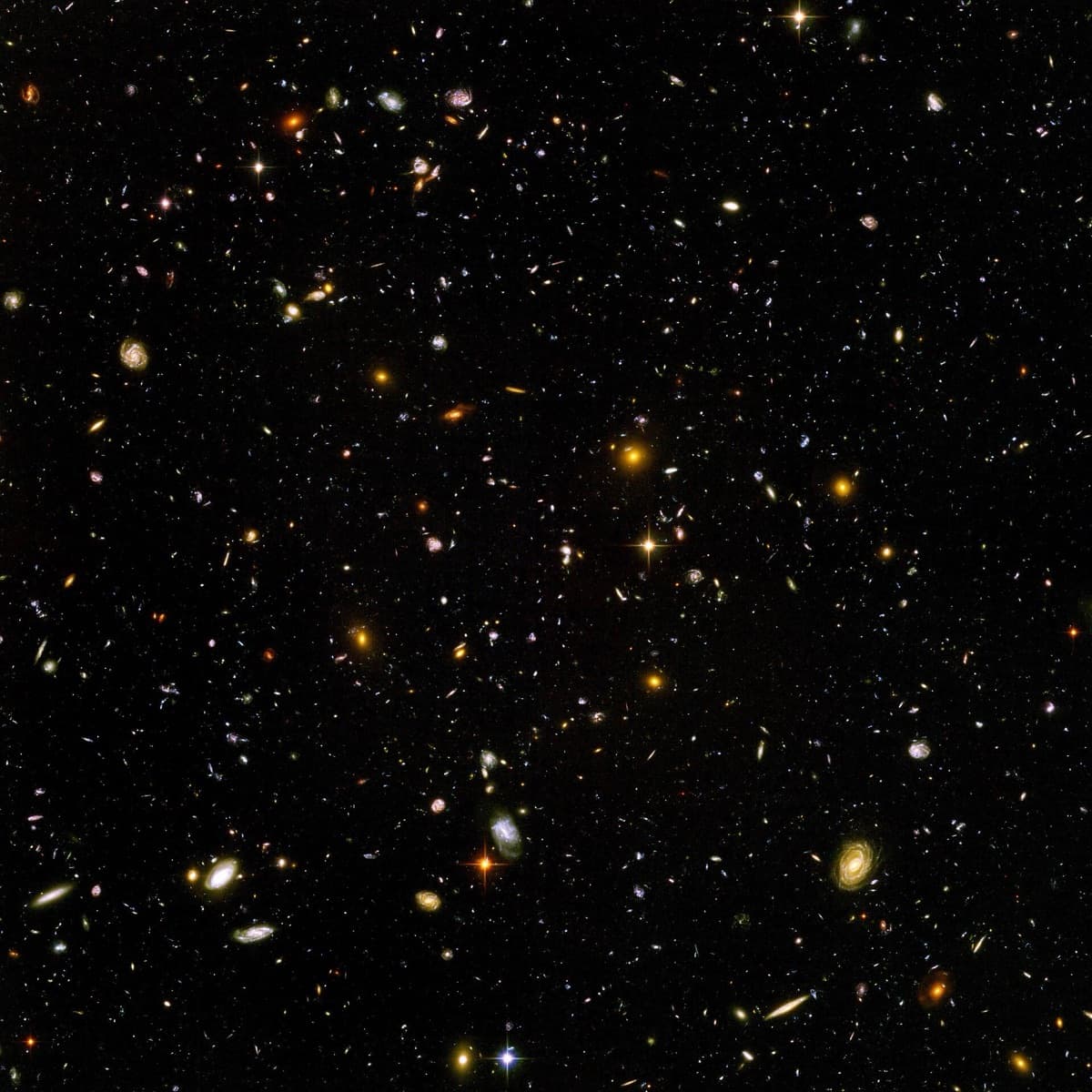
Sources:Fine-tuned universeBarnes, “The Fine-Tuning of the Universe for Intelligent Life” (2012)
Gravity and the glue in atoms
Start with gravity. It's by far the weakest of the forces, and that weakness gives stars and planets room to form, and time. The astronomer Martin Rees, who wrote a book on the six numbers that shape the universe, worked out what a stronger gravity would do. Make it stronger, and only a small, short-lived universe could exist.
Then the strong force. It glues the cores of atoms together, so carbon, oxygen, and iron can exist. Weaken it just a little, and the periodic table would be nothing but hydrogen. A universe with one element has no rock, no water, and nobody to look at it.
Sources:Fine-tuned universeRees, Just Six Numbers (1999)Barnes, “The Fine-Tuning of the Universe for Intelligent Life” (2012)
Carbon, oxygen, and water
Life needs both carbon and oxygen, and stars forge both. That depends on electromagnetism, the force behind electric charge. Change it by one part in 100,000, and stars would make carbon or oxygen, but not both.
A star's fuel is another dial. When hydrogen fuses in a star, a tiny part of its mass becomes energy: 0.007 of it, seven parts in a thousand. That keeps stars like the Sun burning, and it leaves hydrogen for water. If stars turned just a little more of their fuel into energy, eight parts in a thousand instead of seven, the hydrogen would have been used up soon after the Big Bang. No water, and no stars like the Sun.
Sources:Barnes, “The Fine-Tuning of the Universe for Intelligent Life” (2012)Fine-tuned universeRees, Just Six Numbers (1999)
The hardest dial
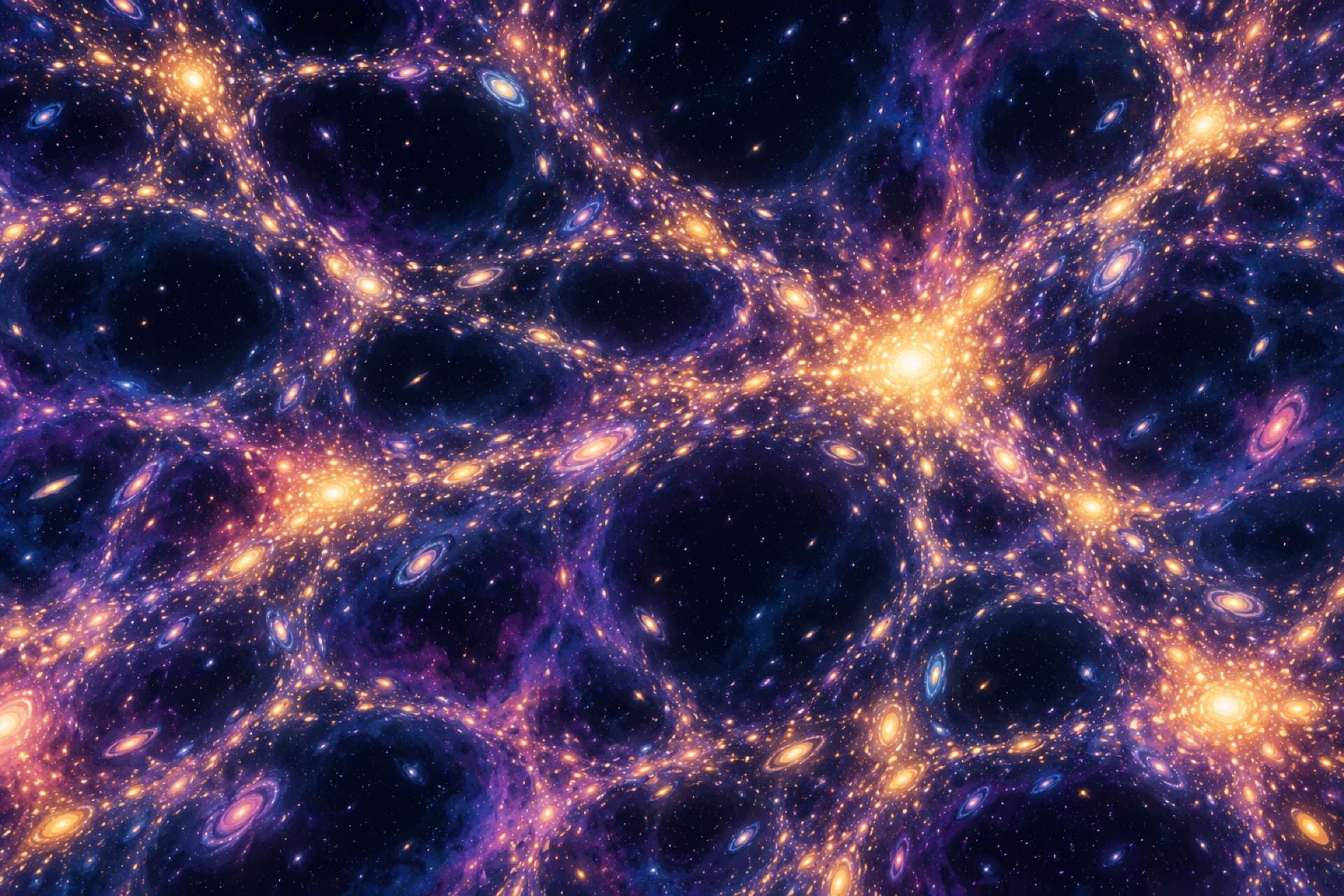
Dark energy is the push that makes space stretch faster and faster. Too strong, and space flies apart before a single star forms. Negative, and everything collapses.
Our best theory expects it to be enormously bigger than it is. So picture the whole range that theory expects, and go looking for the thin window where stars can shine. You'd zoom in more times than there are stars in the observable universe, then more times than there are atoms in it, and keep going, until finally there it is. The physicist Luke Barnes notes that even cautious estimates put that window at 1 in 10⁵⁵.
And that is one dial of many.
Sources:The cosmological constant problemStars and atoms in the observable universeBarnes, “The Fine-Tuning of the Universe for Intelligent Life” (2012)
Necessity, chance, or design?
So why are the dials set this way? There are three explanations. The first is necessity: some law forces these values. But no known law of physics does. As far as anyone knows, they could have been otherwise.
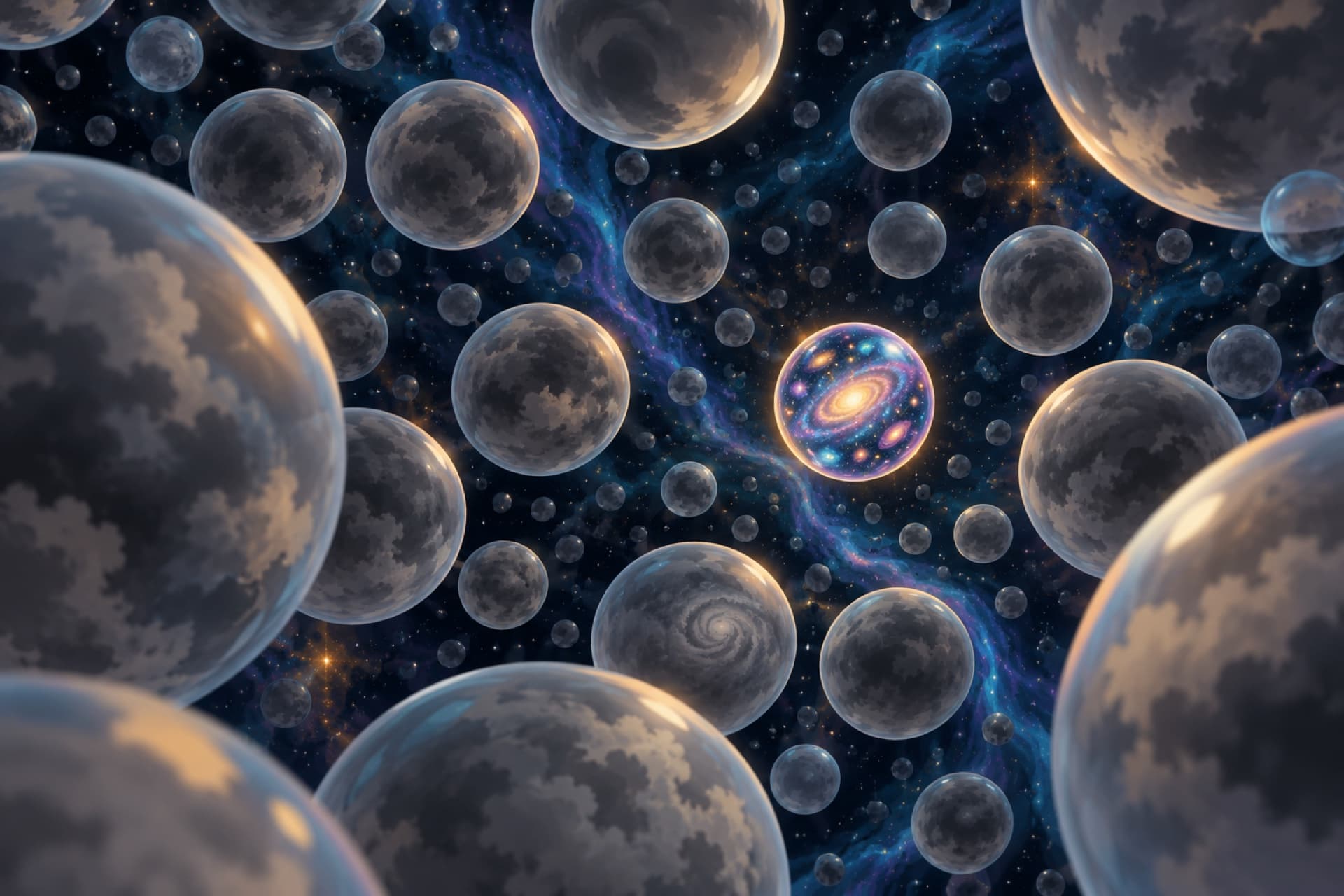
The second is chance. That only works with a multiverse, countless universes with countless settings, so that one of them was bound to land on ours. And there's no evidence that such a multiverse exists. As Barnes puts it:
“‘Multiverse’ is not a magic word that will make all the fine-tuning go away.”
Luke Barnes, “The Fine-Tuning of the Universe for Intelligent Life” (2012)
Someone will say, “Of course the dials suit us. If they didn't, we wouldn't be here to ask.” That's true, but it doesn't explain anything. Picture a man who walks away from a firing squad of fifty trained marksmen, every one of whom missed. He'd be right to say he couldn't have noticed otherwise. He'd be wrong to stop asking why they all missed.
That leaves the third explanation, and the only one that fits: design. Someone chose the settings on purpose.
Sources:Fine-tuned universeBarnes, “The Fine-Tuning of the Universe for Intelligent Life” (2012)The anthropic principle
What the scientists said
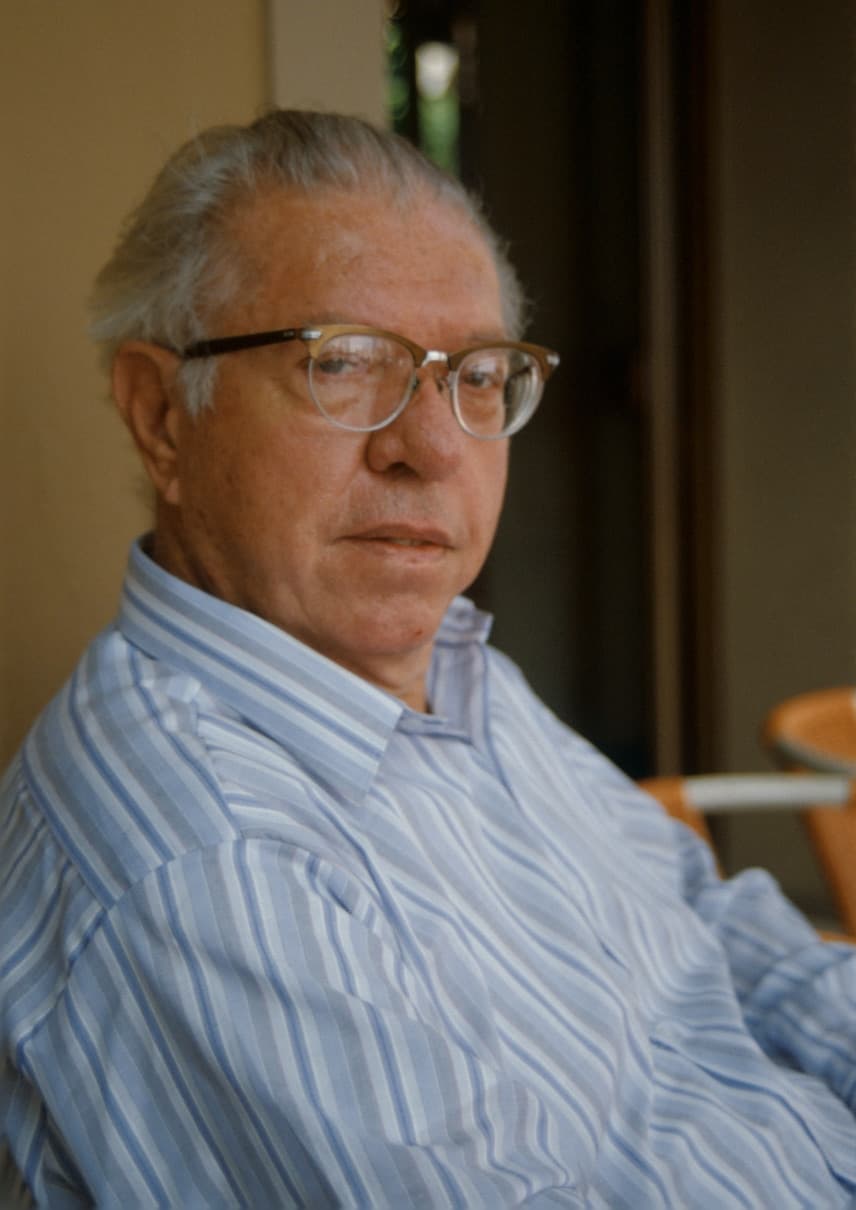
Some of the scientists who studied it closely said so. Fred Hoyle, the Cambridge astronomer who had long been an atheist, wrote:
“A common sense interpretation of the facts suggests that a superintellect has monkeyed with physics, as well as with chemistry and biology.”
Fred Hoyle, Engineering and Science (1981)
Allan Sandage, who worked under Edwin Hubble and measured how fast the universe expands, said: “I find it quite improbable that such order came out of chaos. There has to be some organizing principle.” Charles Townes, who won the Nobel Prize for the work behind the laser, and who was a Christian, said: “Intelligent design, as one sees it from a scientific point of view, seems to be quite real. This is a very special universe: it's remarkable that it came out just this way.”
And the Cambridge physicist John Polkinghorne, who was also an Anglican priest, put it simply: “Anthropic fine tuning is too remarkable to be dismissed as just a happy accident.” Their words don't settle the question for us. The numbers do the arguing. But men who spent their lives studying the universe looked at those numbers and would not call them an accident.
Sources:Hoyle, Engineering and Science (1981)Fred HoyleThe New York Times, 1991 (Sandage)Allan SandageUC Berkeley interview with Charles Townes (2005)Charles H. TownesPolkinghorne, Science and Theology (1998), p. 75John Polkinghorne
Who set the dials?
Fine-tuning points to a universe set up on purpose, by someone with the power to do it. The numbers can tell us the settings were chosen. They can't tell us who chose them. A shepherd boy who became a king named him three thousand years ago:
“The heavens declare the glory of God; the skies proclaim the work of his hands.”
Psalm 19:1
David looked at the night sky over his sheep and saw work, done by someone's hands. The glory goes to the one whose hands they are. The dials we measure today say the same thing in numbers.

Sources:Psalm 19:1Fine-tuned universe
Check yourself
What does it mean to say the universe is fine-tuned?Show the answer
A handful of numbers decide how it behaves, like how hard gravity pulls and how tightly the cores of atoms hold together. No law we know of makes them what they are, and nudging almost any of them a little would leave no stars, no chemistry, and no you.
What would happen if the strong force were a little weaker?Show the answer
The periodic table would be nothing but hydrogen. Carbon, oxygen, and iron need the strong force to hold their atoms together.
How does a star's fuel decide whether there's water?Show the answer
When hydrogen fuses in a star, a tiny part of its mass becomes energy. If a little more did, the hydrogen would have been used up soon after the Big Bang: no water, and no stars like the Sun.
What are the three explanations for the settings, and which one fits?Show the answer
Necessity, chance, or design. No known law forces the values, and chance needs a multiverse with no evidence that one exists. Design fits: someone chose the settings on purpose.
“If the dials didn't suit us, we wouldn't be here to ask.” Why doesn't that settle it?Show the answer
It's true, but it doesn't explain anything. A man who walks away from a firing squad of fifty trained marksmen who all missed couldn't have noticed otherwise, but he'd be wrong to stop asking why they all missed.
What did David say the heavens declare?Show the answer
“The glory of God” (Psalm 19:1). And in Psalm 8 he marvels that the God who set the moon and the stars in place is mindful of iaPeople.
He is mindful of you
Here's what David wondered, looking up at the same sky you can see tonight:
“When I consider your heavens, the work of your fingers, the moon and the stars, which you have set in place, what is mankind that you are mindful of them, human beings that you care for them?”
Psalm 8:3–4
The one who set the dials so you could be here hasn't forgotten you. He's mindful of you. The sky is huge and you are small, and he cares for you anyway. Christians believe that same God came close enough to be seen, in Jesus, and the rest of these lessons show why.
So go outside on a clear night this week and look up. Read Psalm 8 and Psalm 19 while you're out there. Then talk to the one who made what you're looking at. You could pray: God, you made the heavens and set the moon and the stars in place. Thank you for being mindful of me. Show me who you are, and I will follow where you lead.

Sources:Psalm 8:3–4Psalm 19:1