
Did the universe have a beginning?
The Big Bang, and who began it
★ Kids' lesson▶ Watch the ShortA 6-minute video All the videos on YouTube
The short answer
Yes. The Bible's first sentence says the universe began, and it names who began it: “In the beginning God created the heavens and the earth.” For most of history many great thinkers said the world had always been here, but in the last hundred years astronomers found strong evidence that space, time, and matter all had a beginning. Whatever began them has to stand outside them.
An eternal universe?
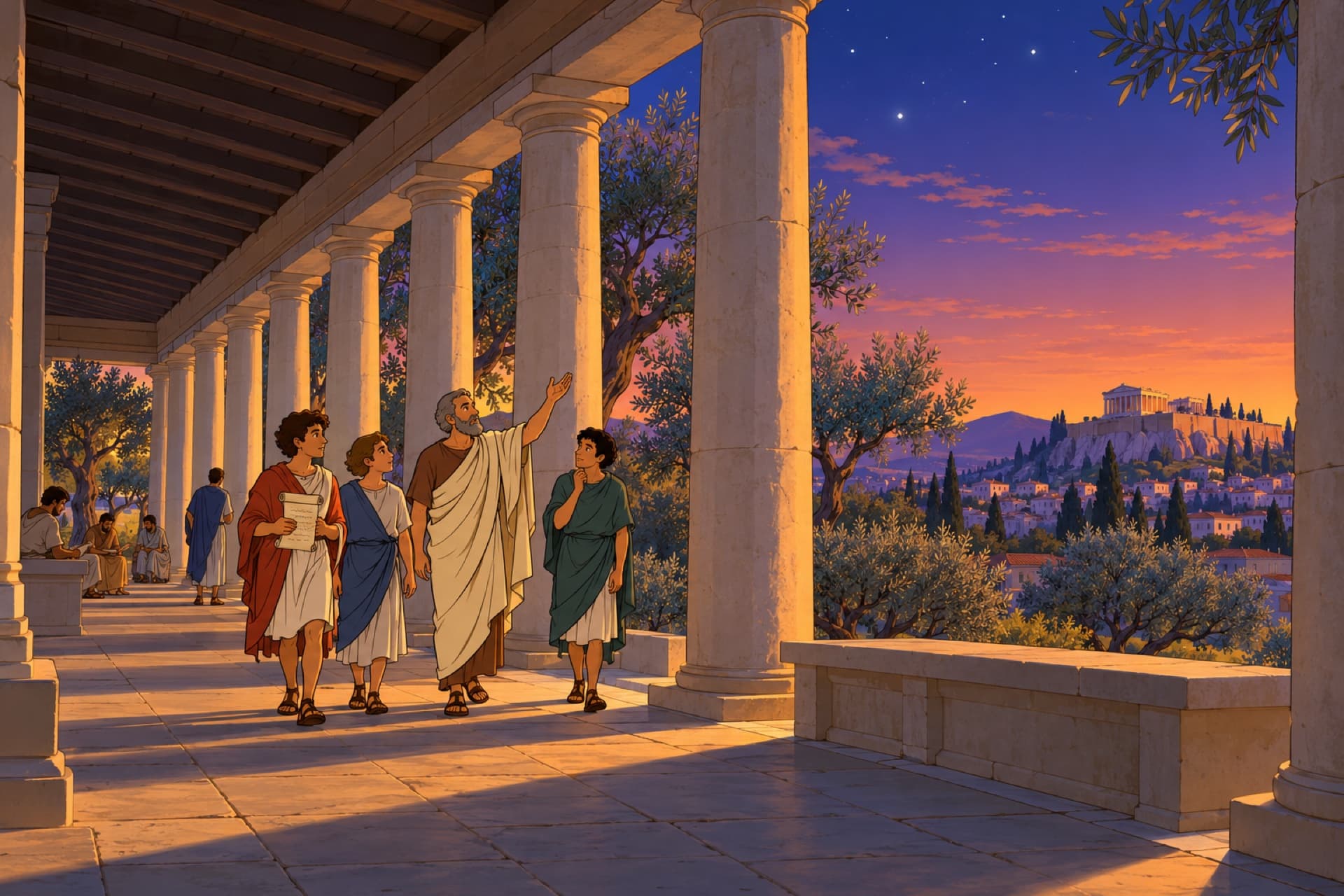
Has the universe always been here? For most of history, many of the smartest people alive said yes. In Athens, about 350 BC, Aristotle, one of the greatest thinkers who ever lived, taught that the world had no beginning. It had simply always been here. But the Bible's very first sentence says something different:
“In the beginning God created the heavens and the earth.”
Genesis 1:1
So either the universe has always been here, or it began. In the last hundred years, astronomers found strong evidence that it began. Some of them hated the idea. And two engineers blamed it on pigeons.
Sources:Aristotle on an eternal worldGenesis 1:1Planck's 2013 resultsThe Big Bang
Galaxies flying apart
Even Albert Einstein assumed the universe stood still. In 1917, when his own equations of gravity wouldn't let it, he added a term to hold it in place.
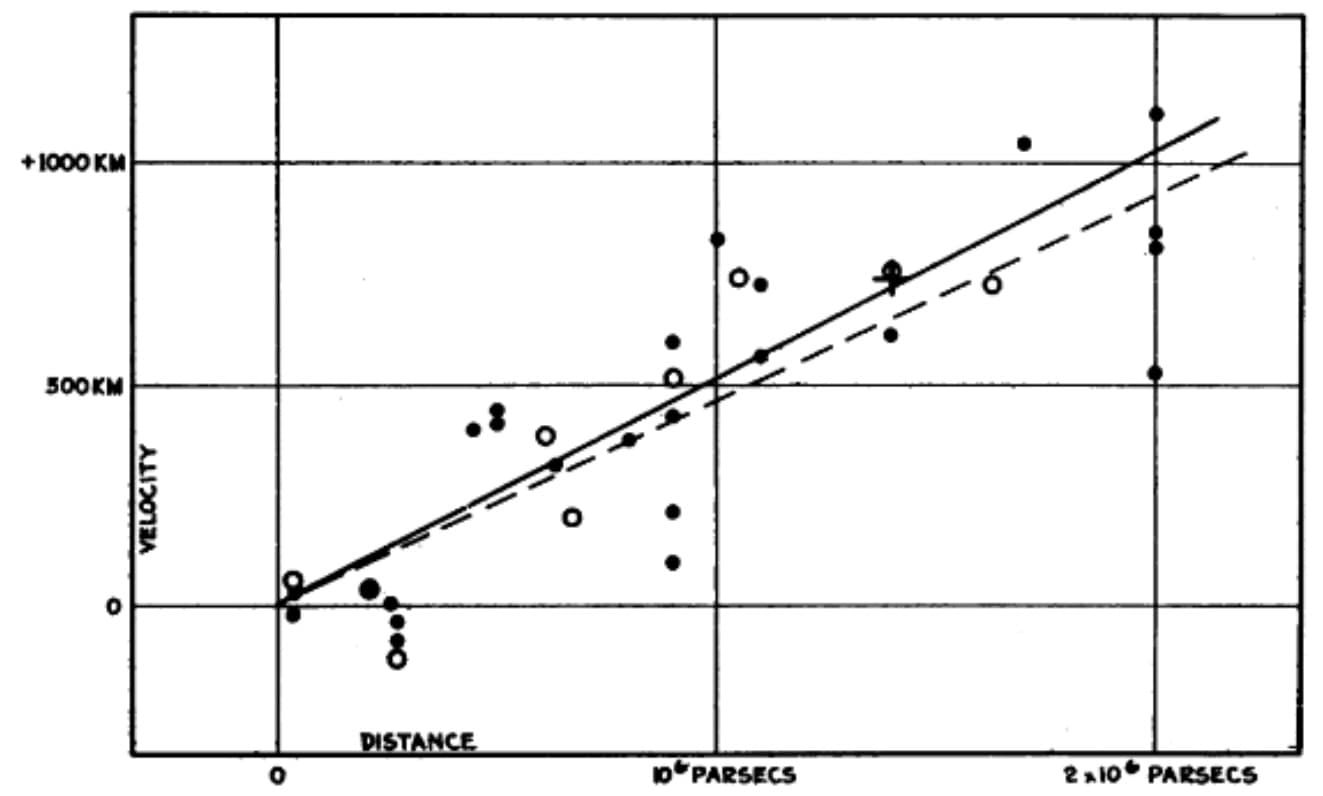
Then, in the 1920s, Edwin Hubble went to work on the biggest telescope in the world, the 100-inch telescope on Mount Wilson in California. He worked out how far away the galaxies are and set that beside how fast they're moving. What he found, in 1929, was that the galaxies are rushing away from us, and the farther away they are, the faster they go. The universe is expanding. By 1931, Einstein had dropped the term he added.
Now run the film backward. The galaxies crowd closer and closer, until everything is so hot and dense it glows. Keep going, as far back as physics can follow, and everything comes to a beginning: space, time, and matter, all starting together.
Sources:Einstein's 1917 static universeThe cosmological constantThe Hooker TelescopeHubble's 1929 paperO'Raifeartaigh and McCann, “Einstein's cosmic model of 1931 revisited” (2014)Planck's 2013 resultsThe Big Bang
A beginning nobody wanted
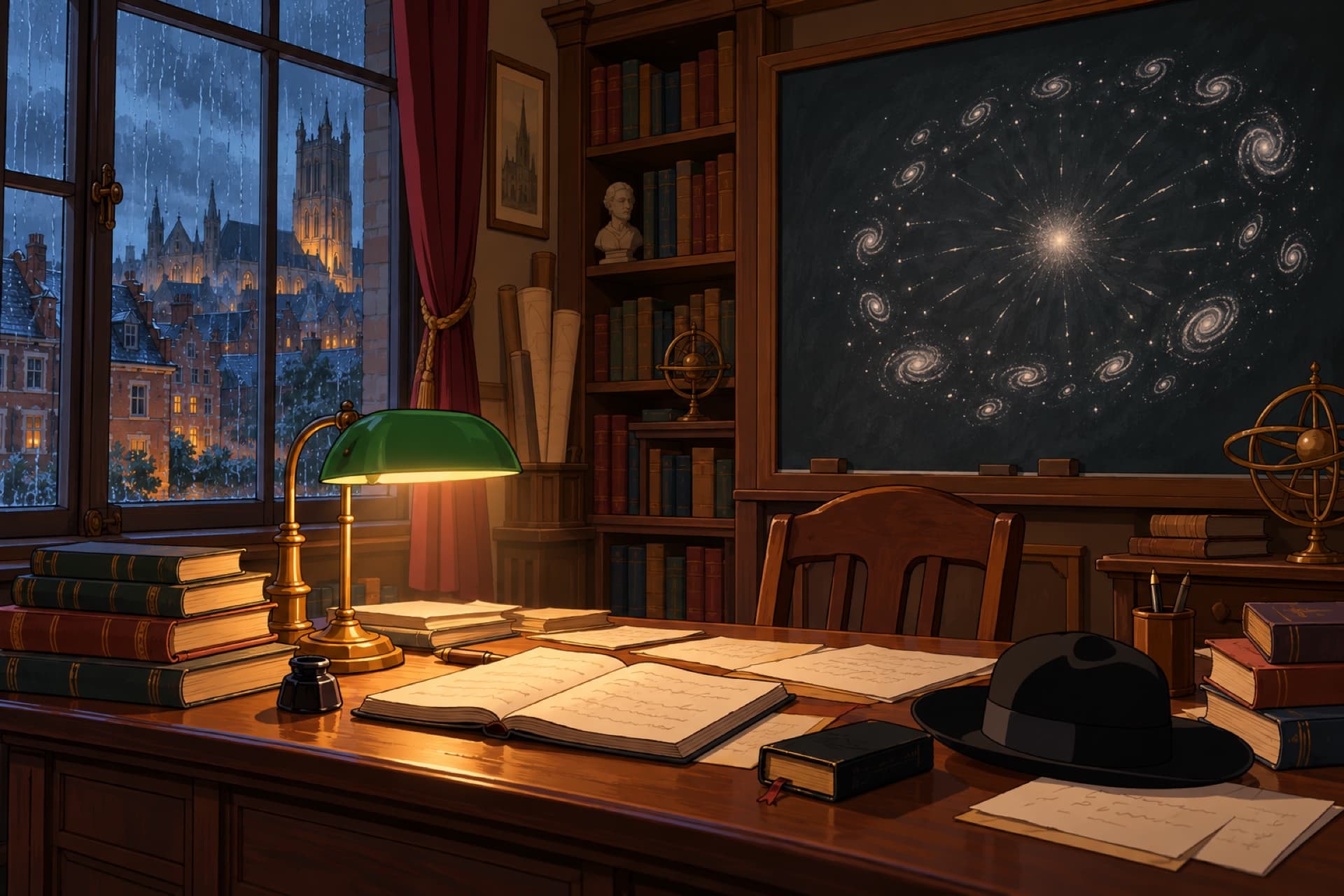
In 1931, a Belgian physicist named Georges Lemaître, who was also a Catholic priest, proposed that the universe began from a single “primeval atom.” Not everyone liked it. The great English astronomer Arthur Eddington wrote:
“Philosophically, the notion of a beginning of the present order of Nature is repugnant to me.”
Arthur Eddington, “The End of the World,” Nature (1931)
Look at what Eddington objected to. He didn't say the idea lacked evidence. He said a beginning was repugnant to him, philosophically.
Fred Hoyle, a Cambridge astronomer, thought the universe had always existed. In 1949, on BBC radio, he gave the rival idea a nickname. He called it the “big bang.” The name stuck. His theory didn't.
Sources:Lemaître's 1931 “primeval atom” letterEddington's 1931 lectureHow Hoyle named the big bang
A hiss from every direction
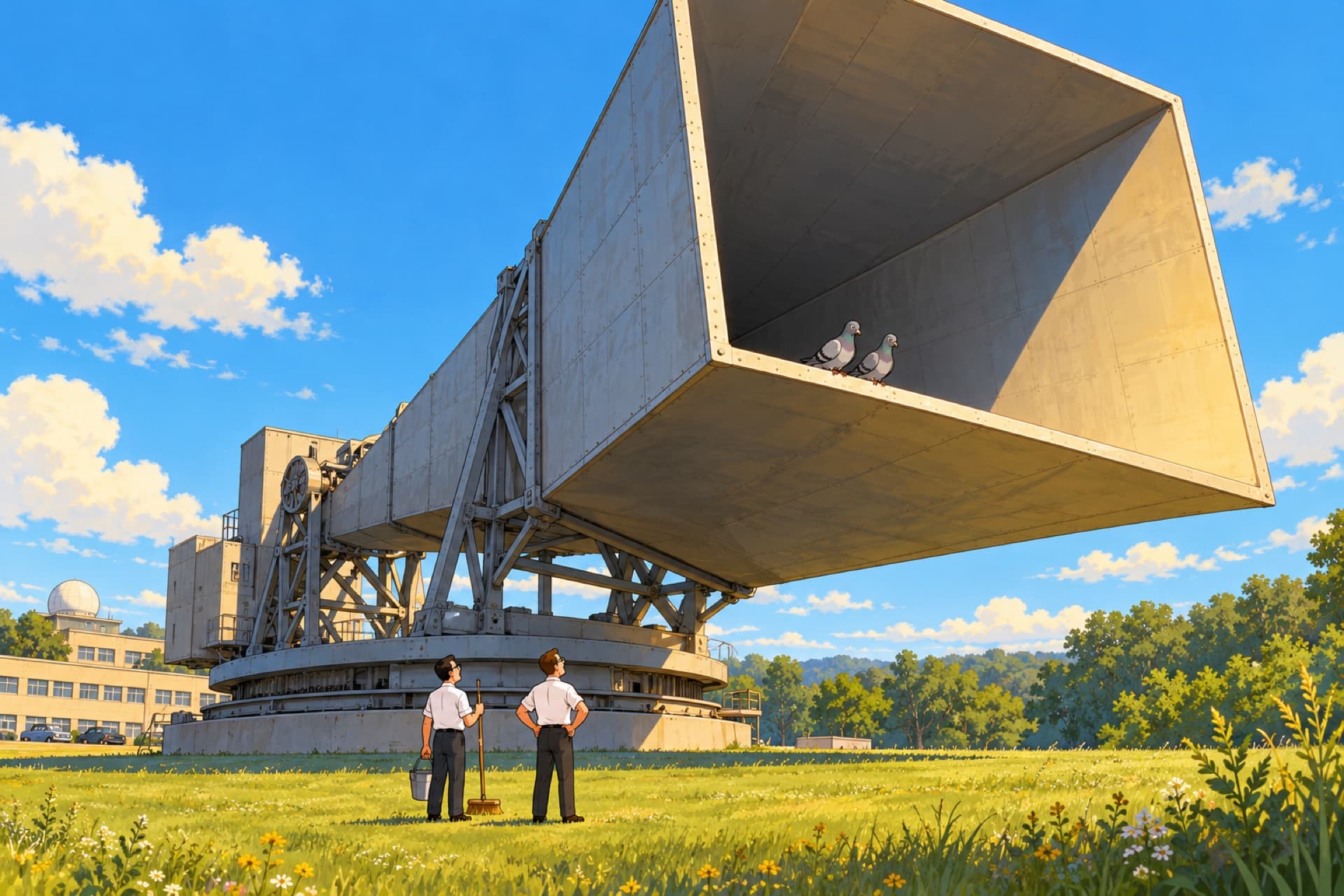
In 1964, two scientists at Bell Labs in New Jersey, Arno Penzias and Robert Wilson, kept hearing a faint hiss in their giant horn antenna. It came from every direction in the sky. They found a pair of pigeons nesting inside, and the mess the pigeons had left all over the horn. So they sent the pigeons away and cleaned it out. The hiss stayed.
That hiss turned out to be the afterglow of the hot early universe, still in the sky today, just as the Big Bang had predicted. It won Penzias and Wilson the Nobel Prize in Physics in 1978. Satellites have since mapped that glow across the whole sky in fine detail: COBE, then WMAP, then Planck.
Sources:Robert Wilson, “The Cosmic Microwave Background Radiation,” Nobel lecture (1978)The 1978 Nobel PrizeThe cosmic microwave backgroundThe 2006 Nobel Prize (COBE)Planck's 2013 results
A band of theologians
The scientists noticed what it meant. Penzias said the data were “exactly what I would have predicted, had I nothing to go on but the five books of Moses, the Psalms, the Bible as a whole.”
Robert Jastrow, the founding director of NASA's Goddard Institute, called himself an agnostic. He ended his book on the Big Bang like this:
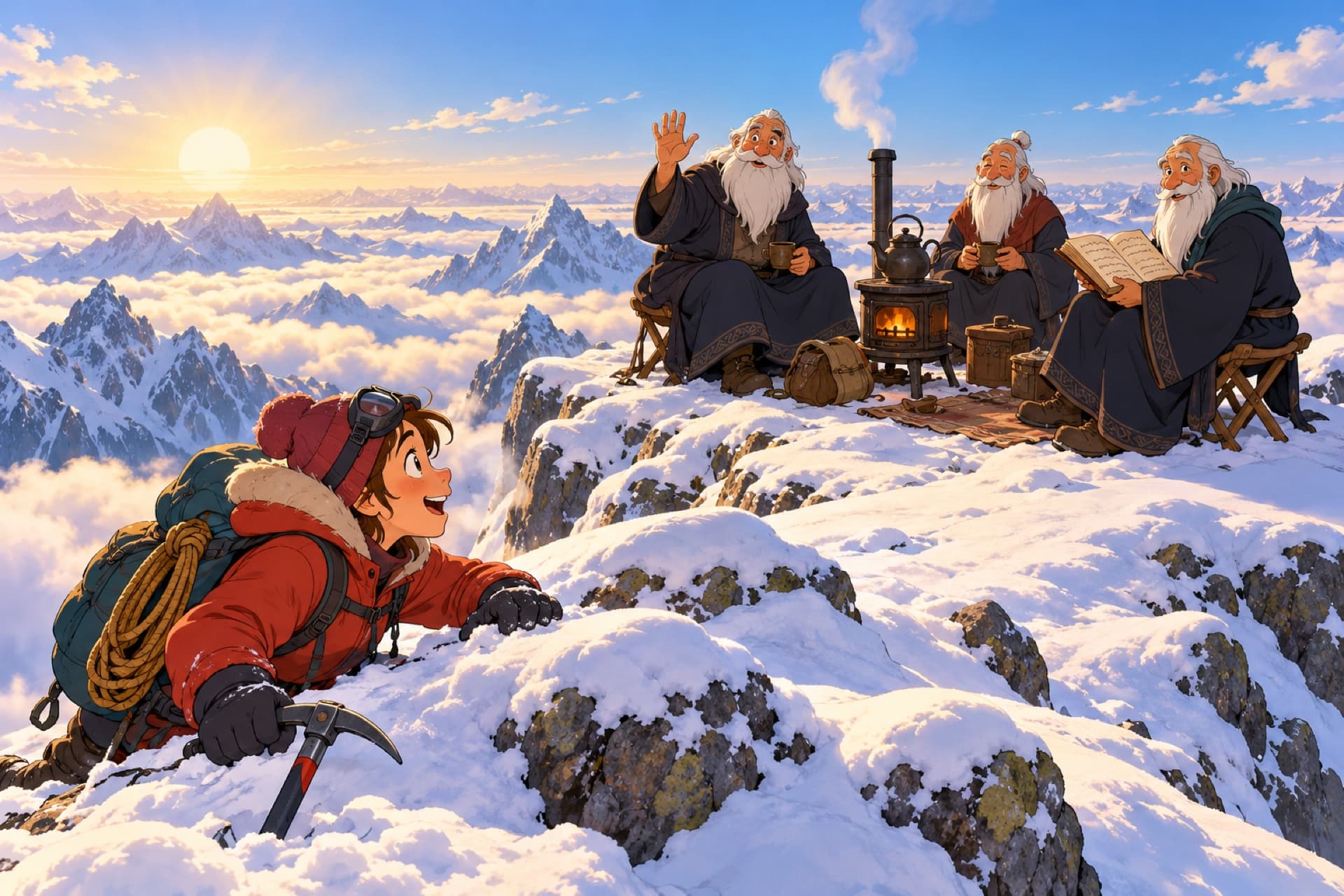
“For the scientist who has lived by his faith in the power of reason, the story ends like a bad dream. He has scaled the mountains of ignorance, he is about to conquer the highest peak; as he pulls himself over the final rock, he is greeted by a band of theologians who have been sitting there for centuries.”
Robert Jastrow, God and the Astronomers (1978)
Jastrow wrote that as an agnostic. After the long climb, science had reached the place where the Bible's first sentence was already standing.
Sources:Penzias in The New York Times, 1978Jastrow, God and the Astronomers
Who began it?
Science can follow the universe back to its beginning. It can't tell us who began it. But think it through:
- Everything that begins to exist has a cause.
- The universe began to exist.
- So its cause must stand outside space, time, and matter, with the power to bring them into being.
Genesis gives that cause a name: God. Christians disagree about how long ago the beginning was, but not about who made it.
So who made God? The rule is that whatever begins needs a cause. The one who made time didn't begin.
Lift up your eyes
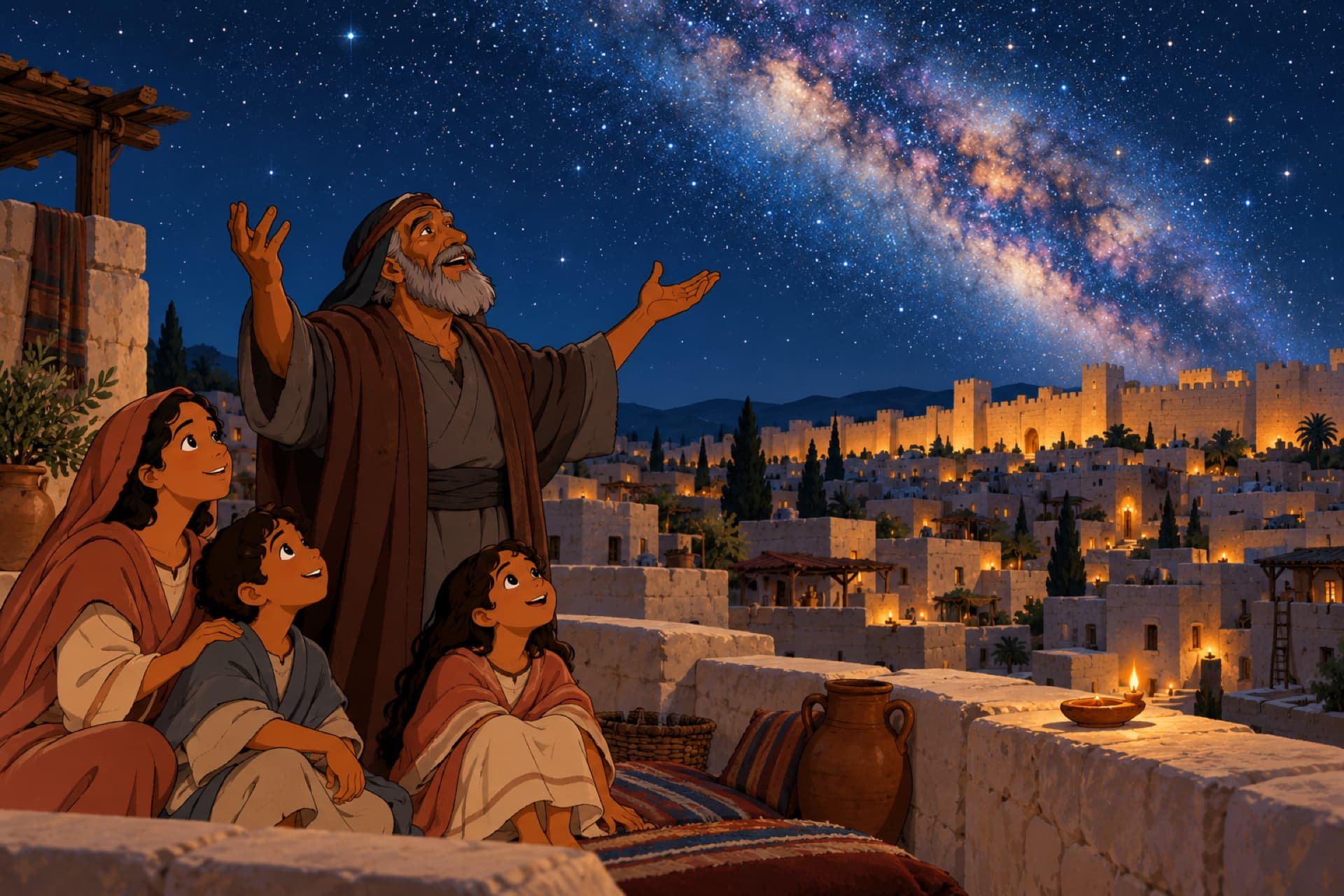
Long before any telescope, the prophet Isaiah told his people to do what you can do tonight:
“Lift up your eyes and look to the heavens: Who created all these? He who brings out the starry host one by one and calls forth each of them by name.”
Isaiah 40:26
The God Isaiah points to didn't light the stars and walk away. He brings them out one by one, and he calls each of them by name.
Sources:Isaiah 40:26
Check yourself
What did Aristotle teach about the world, and what does the Bible's first sentence say?Show the answer
Aristotle taught that the world had no beginning and had always been here. Genesis 1:1 says, “In the beginning God created the heavens and the earth.”
What did Edwin Hubble find in 1929?Show the answer
The galaxies are rushing away from us, and the farther away they are, the faster they go. The universe is expanding.
Run the expansion backward. Where does it lead?Show the answer
The galaxies crowd closer until everything is so hot and dense it glows. As far back as physics can follow, everything comes to a beginning: space, time, and matter, all starting together.
Who gave the big bang its name, and what did he believe?Show the answer
Fred Hoyle, a Cambridge astronomer, on BBC radio in 1949. He thought the universe had always existed. The name stuck. His theory didn't.
What was the hiss in the Bell Labs horn antenna?Show the answer
It wasn't the pigeons: the hiss stayed after they were gone and the horn was cleaned. It was the afterglow of the hot early universe, just as the Big Bang had predicted, and it won Penzias and Wilson the Nobel Prize.
If everything that begins needs a cause, who made God?Show the answer
The rule is that whatever begins needs a cause. God didn't begin. The one who made time stands outside it.
Ask him
The God who began it all isn't far away. In Athens, the city where Aristotle had taught, the apostle Paul told the crowd why God made every nation:
“…so that they would seek him and perhaps reach out for him and find him, though he is not far from any one of us.”
Acts 17:27
So you don't have to settle this from a distance. Christians believe the God who made the stars came near in Jesus, and the rest of this series follows the evidence for that. You can start tonight. Go outside, look up, and ask him.
You could say it out loud: God, if you're there, show me. I want to know you.

Sources:Acts 17:22–28