
Did Jesus really exist?
Evidence outside the Bible
A 5-minute video▶ Watch the one-minute ShortWatch the whole series on YouTube
The short answer
Yes. Nearly every historian of the ancient world, Christian or not, agrees that Jesus lived, gathered followers, and was crucified under Pontius Pilate. Roman and Jewish writers who had no love for his followers wrote about him too.
Ask the skeptics first
Start with the scholars who trust the Bible least. Bart Ehrman is an agnostic who has spent his career arguing with what Christians believe. Ask him whether Jesus existed:
“He certainly existed, as virtually every competent scholar of antiquity, Christian or non-Christian, agrees.”
Bart Ehrman, Forged (2011)
Christian, Jewish, agnostic, or atheist, nearly all of them accept the basics. A Jewish teacher named Jesus lived in the first century and gathered followers, and the Romans crucified him under the governor Pontius Pilate.
E. P. Sanders and John Dominic Crossan disagree about almost everything else, but both treat Jesus's life and his crucifixion under Pilate as history. The real question isn't whether he existed. It's who he was.

Sources:Ehrman, Forged (2011)Historicity of JesusMykytiuk, “Did Jesus Exist? Searching for Evidence Beyond the Bible” (Biblical Archaeology Review)
The paper trail starts early
Within about twenty years of the cross, Paul was writing letters we still have. He had stayed with Peter in Jerusalem, and he met “James, the Lord's brother.” Around AD 70, Mark wrote the earliest Gospel, while people who had known Jesus were still alive.
Compare Alexander the Great. The oldest accounts of his life that survive were written about three hundred years after he died, and nobody doubts he lived.
Sources:Galatians 1:18–19Pauline epistles: when they were writtenWhen Mark was writtenThe oldest histories of Alexander
A Roman who despised Christians
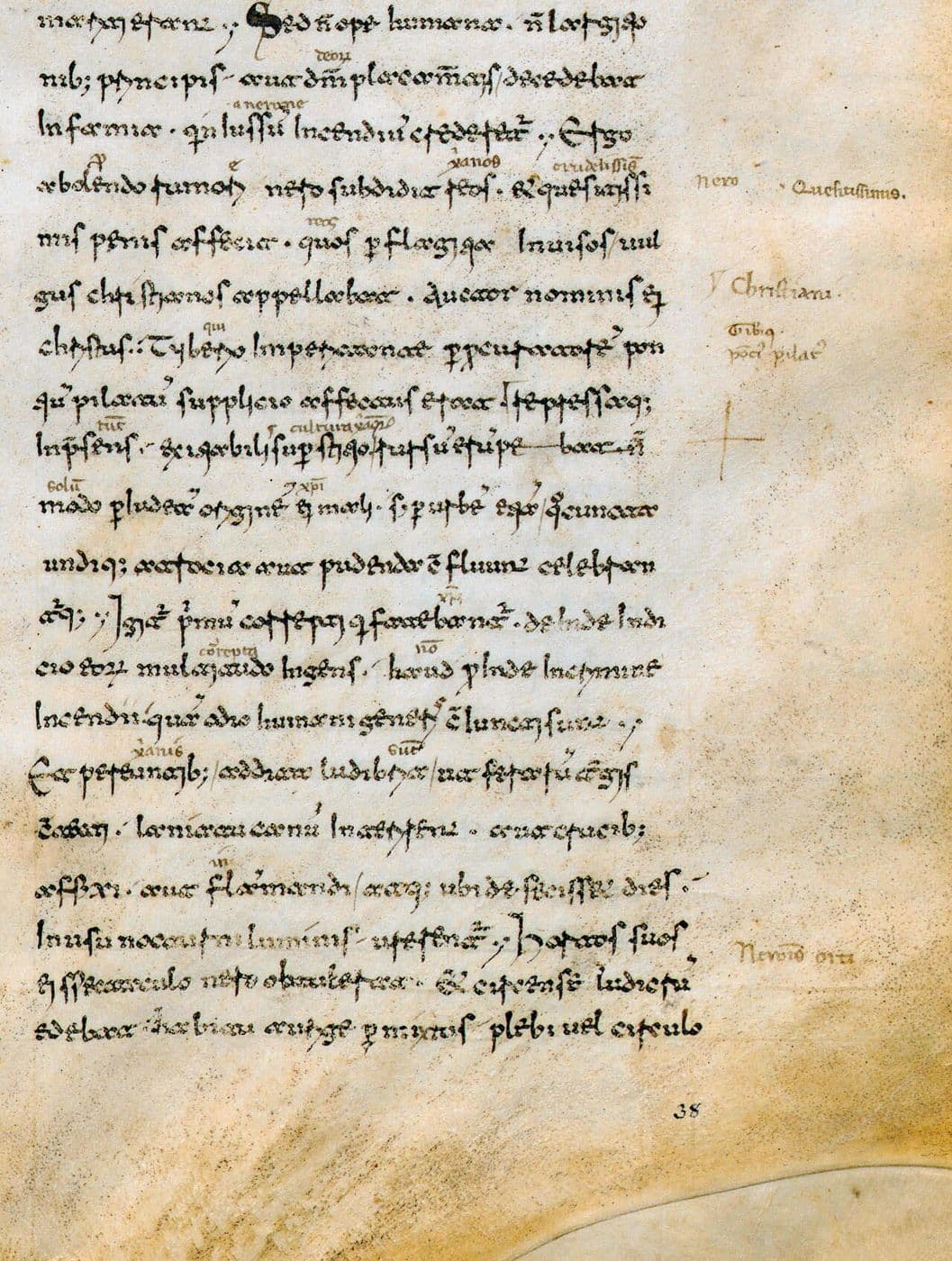
Tacitus was a Roman senator, and around AD 116 he wrote a history of the emperors. When he reaches the great fire of Rome, he says Nero blamed it on “a class hated for their abominations, called Christians by the populace.” Then he explains the name:
“Christus, from whom the name had its origin, suffered the extreme penalty during the reign of Tiberius at the hands of one of our procurators, Pontius Pilatus, and a most mischievous superstition, thus checked for the moment, again broke out.”
Tacitus, Annals 15.44, tr. Church and Brodribb (1876)
Tacitus had no reason to help the church, and he still names the man, how he died, the emperor, and the governor. Luke dates the story by the same two rulers: “In the fifteenth year of the reign of Tiberius Caesar—when Pontius Pilate was governor of Judea.”
Sources:Tacitus, Annals 15.44, tr. Church and Brodribb (1876)Tacitus on JesusLuke 3:1
A Jewish historian who fought Rome
Josephus was a Jewish priest and general who fought Rome, changed sides, and wrote his people's history in Rome around AD 93. He was no Christian, and he mentions Jesus twice. The first time, he writes:
“Now there was about this time Jesus, a wise man… for he was a doer of wonderful works… And when Pilate, at the suggestion of the principal men amongst us, had condemned him to the cross, those that loved him at the first did not forsake him.”
Josephus, Antiquities 18.63–64, tr. Whiston
Christian copyists later added a few words to that passage, like “He was the Christ.” Most scholars, Christian or not, still think its core is Josephus's own. The second time is in passing. Telling how a high priest had men stoned in AD 62, Josephus names one of them: “the brother of Jesus, who was called Christ, whose name was James.”
Sources:Josephus, Antiquities 18.63–64 and 20.200, tr. WhistonJosephus on Jesus
Two more Romans
Around AD 112, Pliny, a Roman governor, wrote to the emperor Trajan to ask what to do about the Christians. They told him they “met on a stated day before it was light, and addressed a form of prayer to Christ, as to a divinity.”
And the Roman writer Suetonius says the emperor Claudius expelled the Jews from Rome over “Chrestus,” which many scholars read as a garbled “Christ.” Acts says it too: “Claudius had ordered all Jews to leave Rome.”

Sources:Pliny, Letters 10.96, tr. Melmoth and BosanquetPliny the Younger on ChristiansSuetonius, Claudius 25.4, tr. Rolfe (1914)Acts 18:2
“Christians just forged all this”
No Christian forger calls the faith “a most mischievous superstition.” And a forger who invented Jesus's brother would hardly bury him in one line about a high priest.
Why don't more Romans mention him? Roman historians wrote about emperors, wars, and senators. A Jewish teacher executed in a far province was nothing to them, until his followers turned up in Rome. That is when Tacitus notices them.
Check yourself
What do nearly all historians, Christian or not, agree about Jesus?Show the answer
He lived in the first century, he gathered followers, and the Romans crucified him under Pontius Pilate.
According to the Roman historian Tacitus, which Roman official had Jesus executed?Show the answer
Pontius Pilate, the governor of Judea from about AD 26 to 36, while Tiberius was emperor.
Why does Tacitus's report carry weight?Show the answer
He despised Christians and had no reason to help them, and he still names Christus, how he died, the emperor Tiberius, and the governor Pilate.
How does Josephus mention James?Show the answer
In passing, as “the brother of Jesus, who was called Christ,” while telling how a high priest had men stoned in AD 62.
How soon after Jesus does the written record start?Show the answer
Within about twenty years, in Paul's letters. The oldest surviving accounts of Alexander the Great were written about three hundred years after he died.
What history leaves you with
Put together what even skeptical historians admit. He lived in the first century. He taught and gathered followers. Pilate had him crucified under Tiberius. And within a lifetime his followers were praying to him as God, from Judea to Rome.
Why would anyone pray to a man Rome had crucified? His first followers said why: “Christ died for our sins according to the Scriptures, that he was buried, that he was raised on the third day.”
History can bring you this far. John says why he wrote his Gospel: “that you may believe that Jesus is the Messiah, the Son of God, and that by believing you may have life in his name.” So don't stop at what historians admit. Read Mark; it takes about an hour. And ask him yourself: Jesus, if you're who you said, show me, and I'll follow you.

Sources:Historicity of Jesus1 Corinthians 15:3–4John 20:30–31