
Is the Bible made up?
Would you make this up?
A 7-minute video▶ Watch the one-minute ShortWatch the whole series on YouTube
The short answer
If the disciples made it up, they were terrible at it. People who invent a story make themselves the heroes, and the Gospels make their heroes look like cowards. What they wrote about Jesus, and what it cost them to say it, points to something that really happened.
The parts you'd cut
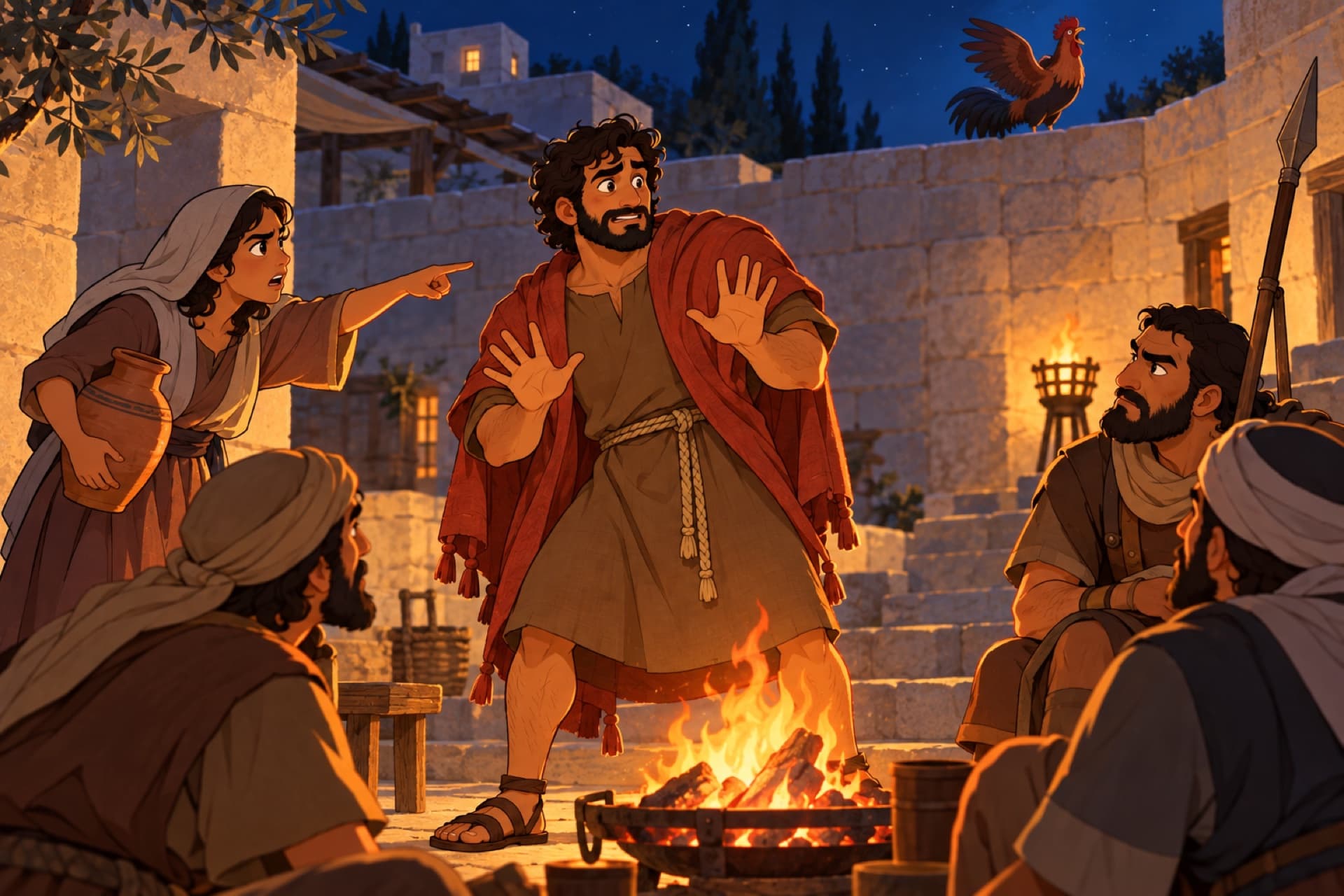
Peter led the twelve. The night Jesus was arrested, a servant girl spotted him by a fire, and he swore, “I don't know this man you're talking about.” Then the rooster crowed, “and he broke down and wept.”
An hour earlier, Jesus had asked his closest friends to keep watch while he prayed, and they kept falling asleep. His own family came to take charge of him, “for they said, ‘He is out of his mind.’” And when the soldiers came for Jesus, “everyone deserted him and fled.”
A cursed Messiah
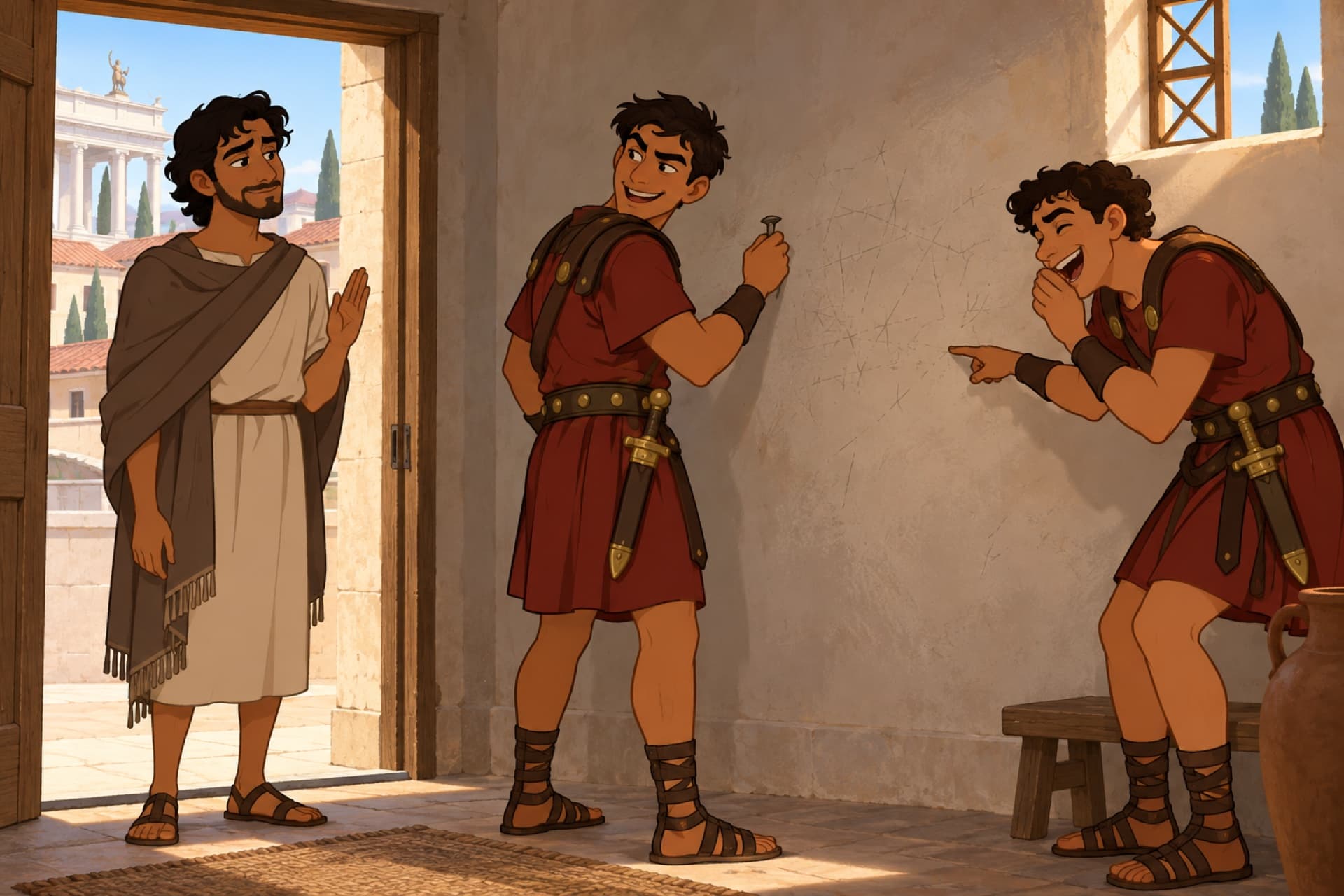
Worst of all, their Messiah died on a cross, and the Law said, “anyone who is hung on a pole is under God's curse.” Paul knew exactly how it sounded: “We preach Christ crucified: a stumbling block to Jews and foolishness to Gentiles.” Romans laughed. On a wall in Rome, someone scratched a man worshiping a crucified figure with a donkey's head, and wrote, “Alexamenos worships his god.”
They even kept things about Jesus himself. He lined up for a “baptism of repentance for the forgiveness of sins,” and John protested, “I need to be baptized by you.” On the cross he cried, “My God, my God, why have you forsaken me?”
Sources:Deuteronomy 21:231 Corinthians 1:18–25The Alexamenos graffitoMatthew 3:13–15Mark 15:34
Why historians take it seriously
Historians call this the criterion of embarrassment: people rarely invent what makes their own side look bad. Even skeptical scholars use it. It's why nearly all of them agree Jesus was baptized by John and crucified under Pilate.
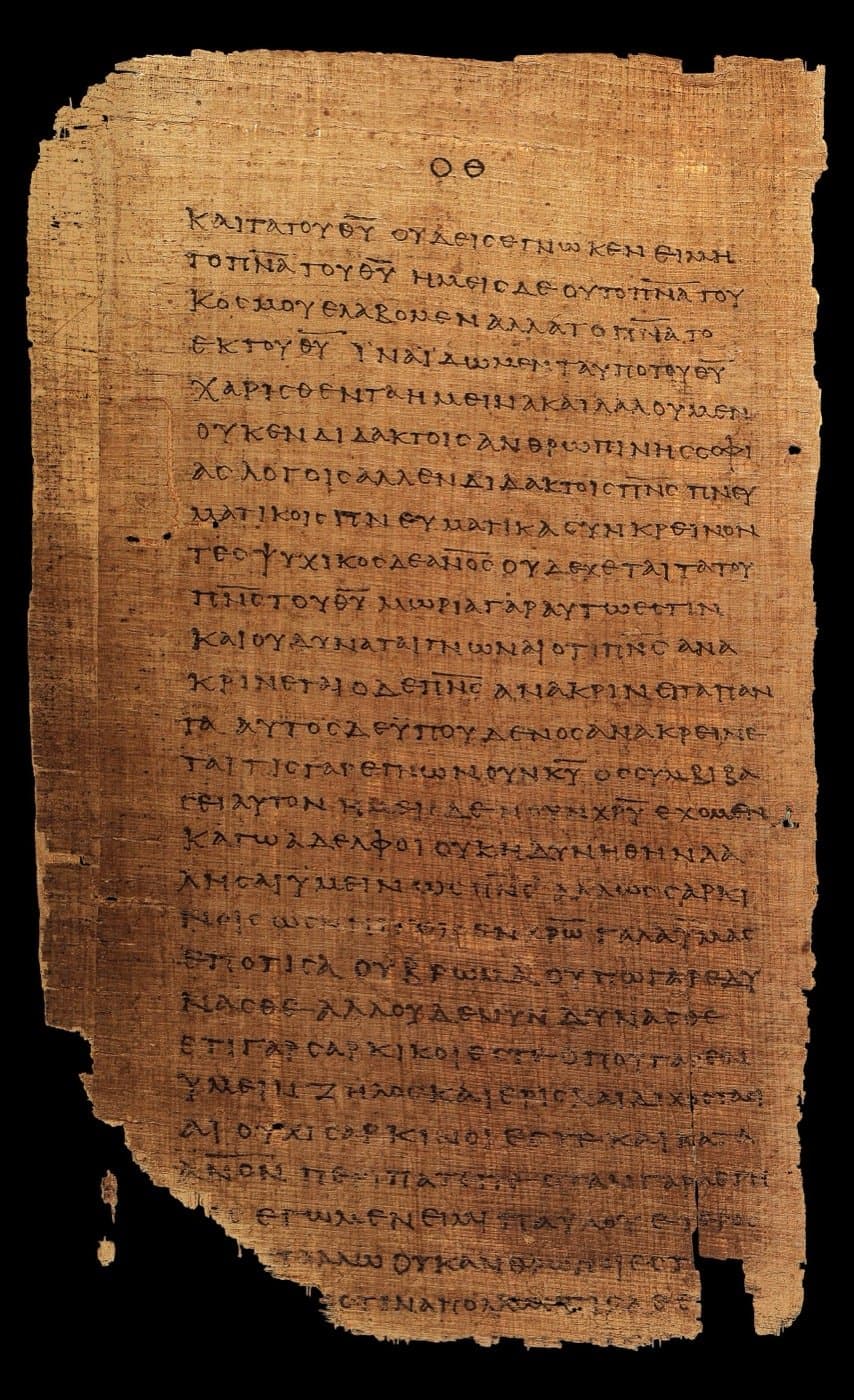
“Maybe those are just lessons, not history.” Then why do they turn up outside the Gospels? About twenty years after the cross, in a letter nearly every scholar agrees Paul wrote, he says of Peter, “I opposed him to his face.” These details cost the church something.
Sources:Criterion of embarrassmentHistoricity of JesusGalatians 2:9–11Pauline epistles (dates and authorship)
Who did he say he was?
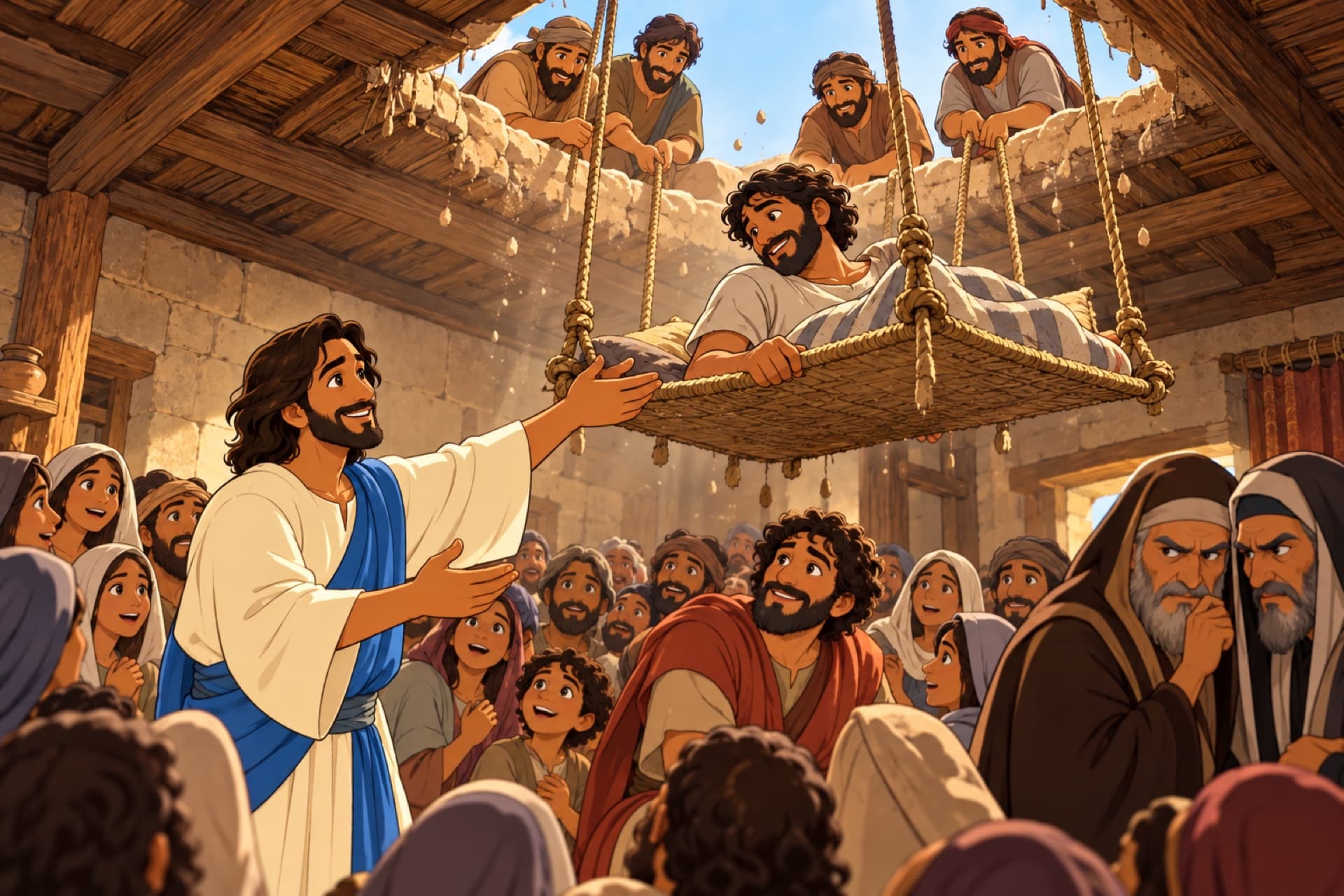
So they were honest about themselves. Now hear what they say Jesus claimed. When four friends lowered a paralyzed man through a roof, Jesus told him, “Son, your sins are forgiven.” The teachers of the law said what everyone was thinking: “Who can forgive sins but God alone?” Jesus didn't correct them. He told the man to get up, and “he got up, took his mat and walked out in full view of them all.”
In the temple courts he said, “Before Abraham was born, I am!” That is the name God gave himself at the burning bush, “I am who I am,” and his listeners picked up stones to stone him.
On trial for his life, the high priest asked him straight out, “Are you the Messiah, the Son of the Blessed One?” “I am,” said Jesus. “And you will see the Son of Man sitting at the right hand of the Mighty One and coming on the clouds of heaven.” The high priest tore his clothes.
Not just a good teacher
Nice teachers don't talk like that. C. S. Lewis, the Oxford scholar who had been an atheist, put it plainly:
“You can shut him up for a fool, you can spit at him and kill him as a demon or you can fall at his feet and call him Lord and God, but let us not come with any patronizing nonsense about his being a great human teacher. He has not left that open to us.”
C. S. Lewis, Mere Christianity (1952)
A legend that grew over time? These claims are already in Mark, the earliest Gospel. About thirty years after the cross, Paul, a Jew who prayed to one God, took Isaiah's words about God alone, “Before me every knee will bow,” and wrote them about Jesus: “at the name of Jesus every knee should bow.” A liar? Liars lie to get something, and this claim got him crucified. A lunatic? Read the Sermon on the Mount: “Love your enemies and pray for those who persecute you.” If those don't fit, one is left: Lord. Paul says God settled it. Jesus was “appointed the Son of God in power by his resurrection from the dead.”

Sources:Lewis, Mere Christianity (1952), as quoted in Lewis's trilemmaIsaiah 45:22–23Philippians 2:9–11Matthew 5:44Romans 1:4
Could he have staged the prophecies?
His followers said Jesus kept promises the prophets wrote centuries before him. A skeptic asks a fair question: couldn't he have read the prophecies and acted them out? Some, yes. He rode into Jerusalem on a donkey on purpose, a public claim to be the king Zechariah promised, and the crowd understood. On trial for his life, he made no defense, as Isaiah wrote: “he did not open his mouth.” Now look at the rest, and when each one happened:
- Before he was born: a son of David whose kingdom God would establish (2 Samuel 7:12). Matthew traces Jesus's family line to David (Matthew 1:1). Nobody picks their ancestors.
- Before he was born: a ruler from Bethlehem (Micah 5:2). His family lived in Nazareth, and Luke says a Roman census took them to Bethlehem in time for his birth (Luke 2:1–7). People already expected the Messiah from there, and some used it against him (John 7:41–42).
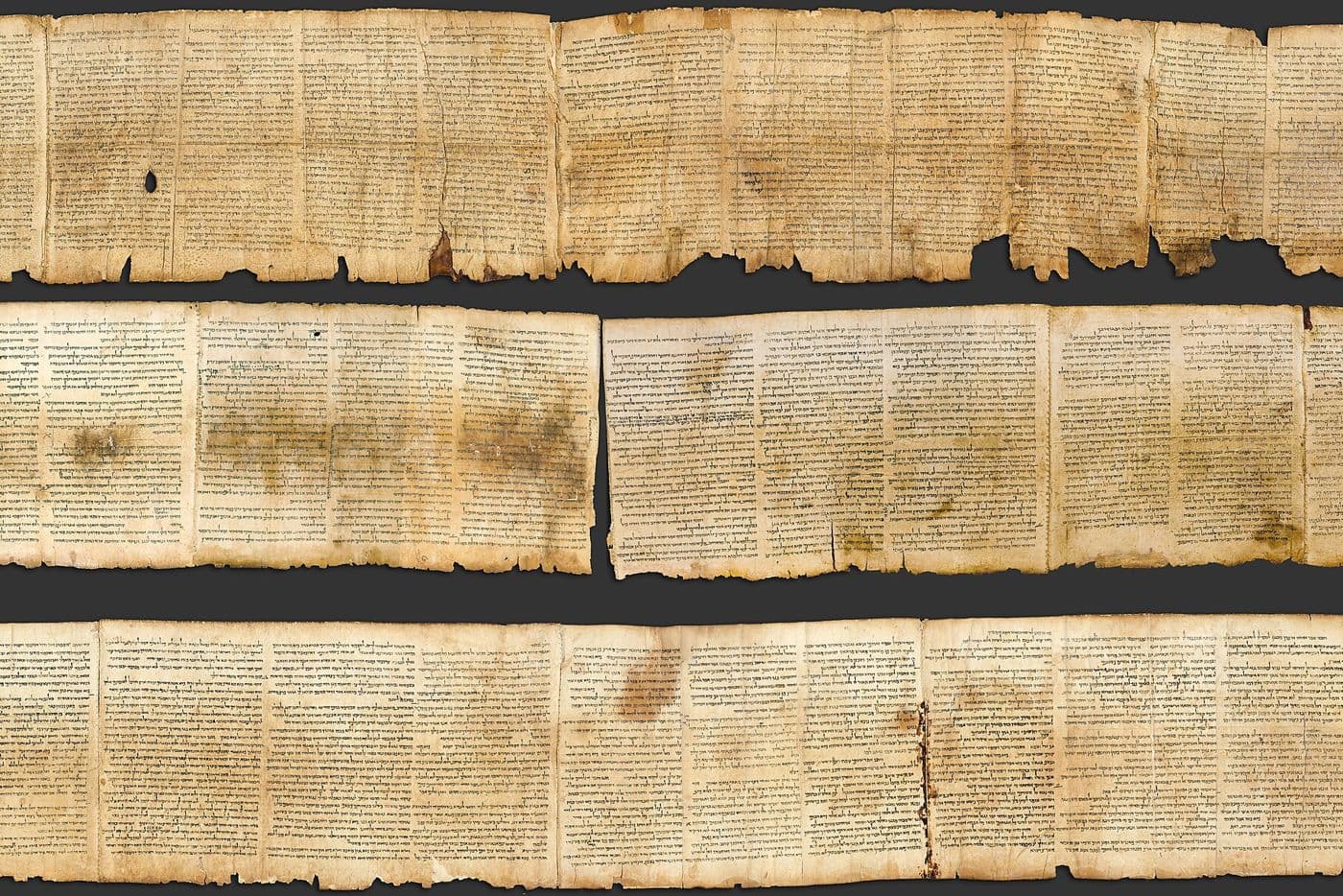
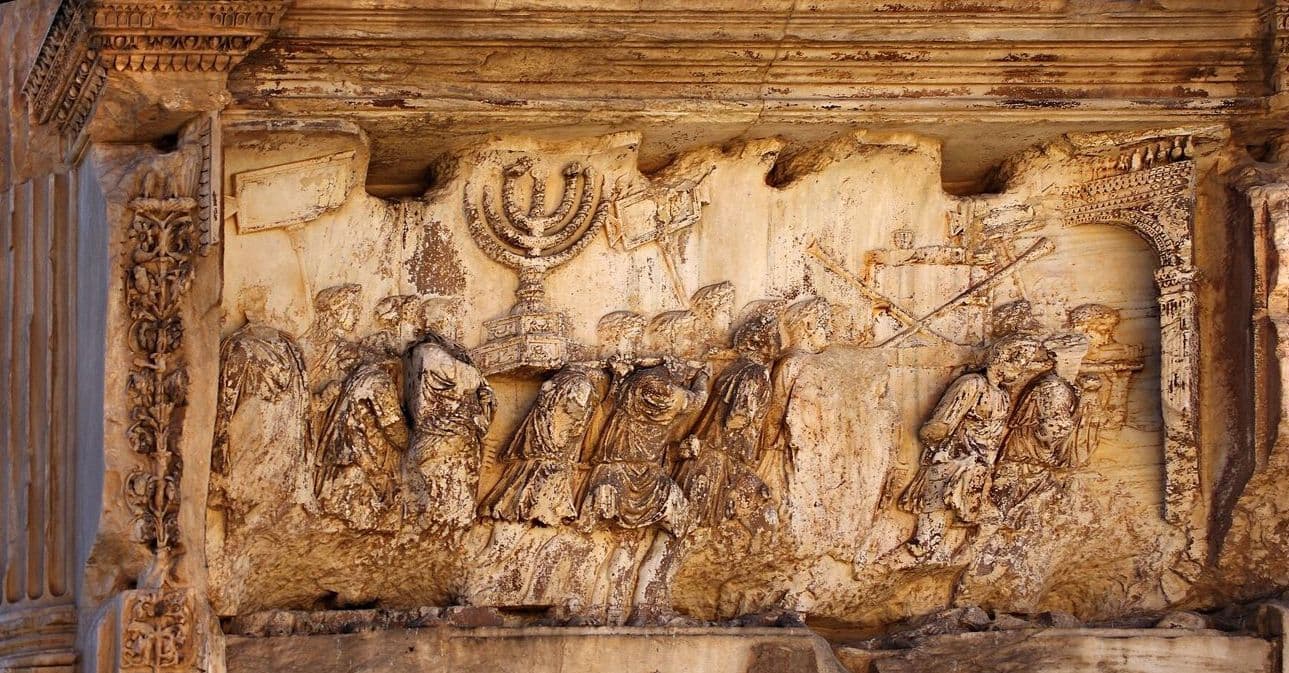
- Before he was born: the Anointed One put to death, then the city and the sanctuary destroyed (Daniel 9:26). He was crucified around AD 30, and Rome burned the Temple in AD 70. Nobody picks the century they're born in.
- Nailed to a cross: “Let the Lord rescue him” (Psalm 22:8). The chief priests mocked him in nearly those words: “He trusts in God. Let God rescue him now” (Matthew 27:41–43). His enemies chose what they said.
- Nailed to a cross: “numbered with the transgressors” (Isaiah 53:12). He was crucified between two rebels (Mark 15:27). Pilate decided who died beside him.
- Nailed to a cross: lots cast for his clothes (Psalm 22:18). The four soldiers on duty split his clothes and threw dice for his undergarment (John 19:23–24).
- After he died: “not one of them will be broken” (Psalm 34:20). The soldiers broke the other men's legs, found Jesus already dead, and left his alone (John 19:32–36).
- After he died: “the one they have pierced” (Zechariah 12:10). A soldier drove a spear into his side, and John says he saw it (John 19:34–37).
- After he died: “with the rich in his death” (Isaiah 53:9). Joseph of Arimathea, a rich member of the council that condemned him, laid him in his own new tomb (Matthew 27:57–60; Mark 15:43).
- After he died: “nor will you let your faithful one see decay” (Psalm 16:10). On the third day the tomb was empty, and Peter told a Jerusalem crowd the psalm was about him (Acts 2:29–32).
Only two were in his hands. Three came before he was born, three while he hung nailed to a cross, and four after he was dead. A dead man can't arrange anything. These depended on his family tree, a small town, the calendar, and what his enemies, Roman soldiers, and a rich stranger did. You'll see lists of three hundred or more fulfilled prophecies; many of those are echoes and patterns rather than predictions. These are some of the hardest to explain away. Could the writers have bent the story to fit? They wrote while witnesses were still alive, and they kept the details that made them look bad.
Sources:Jesus and messianic prophecyMark 11:1–10 · Zechariah 9:9Isaiah 53 · Mark 15:1–52 Samuel 7:12 · Matthew 1:1Micah 5:2 · Luke 2:1–7 · John 7:41–42Daniel 9:26Read Psalm 22Matthew 27:35–66John 19:23–37Acts 2:22–32
What are the odds?
Take the ten that were out of his control. In 1958, Peter Stoner, a professor of mathematics and astronomy, worked through estimates like these with his students and put the odds of one man fulfilling just eight such prophecies at 1 in 10¹⁷. Even his grandson now says those estimates need rechecking. So set your own. Call each of the ten a coin flip, and it's like calling ten flips in a row, though being born in one small town is far less likely than a coin flip. Give each a 1 in 10 chance, and all ten together come to one in ten billion, more than the number of people alive on Earth. At 1 in 100 each, it's a hundred billion billion to one.
This treats the ten as independent, and critics argue the Gospel writers shaped some details. Be as skeptical as you like with the numbers: the odds still stack up fast. Jesus put it more simply: “Everything must be fulfilled that is written about me in the Law of Moses, the Prophets and the Psalms.”
Sources:Stoner, Science Speaks, ch. 3 (with his grandson's notes)Peter StonerWorld populationLuke 24:44
What changed them?
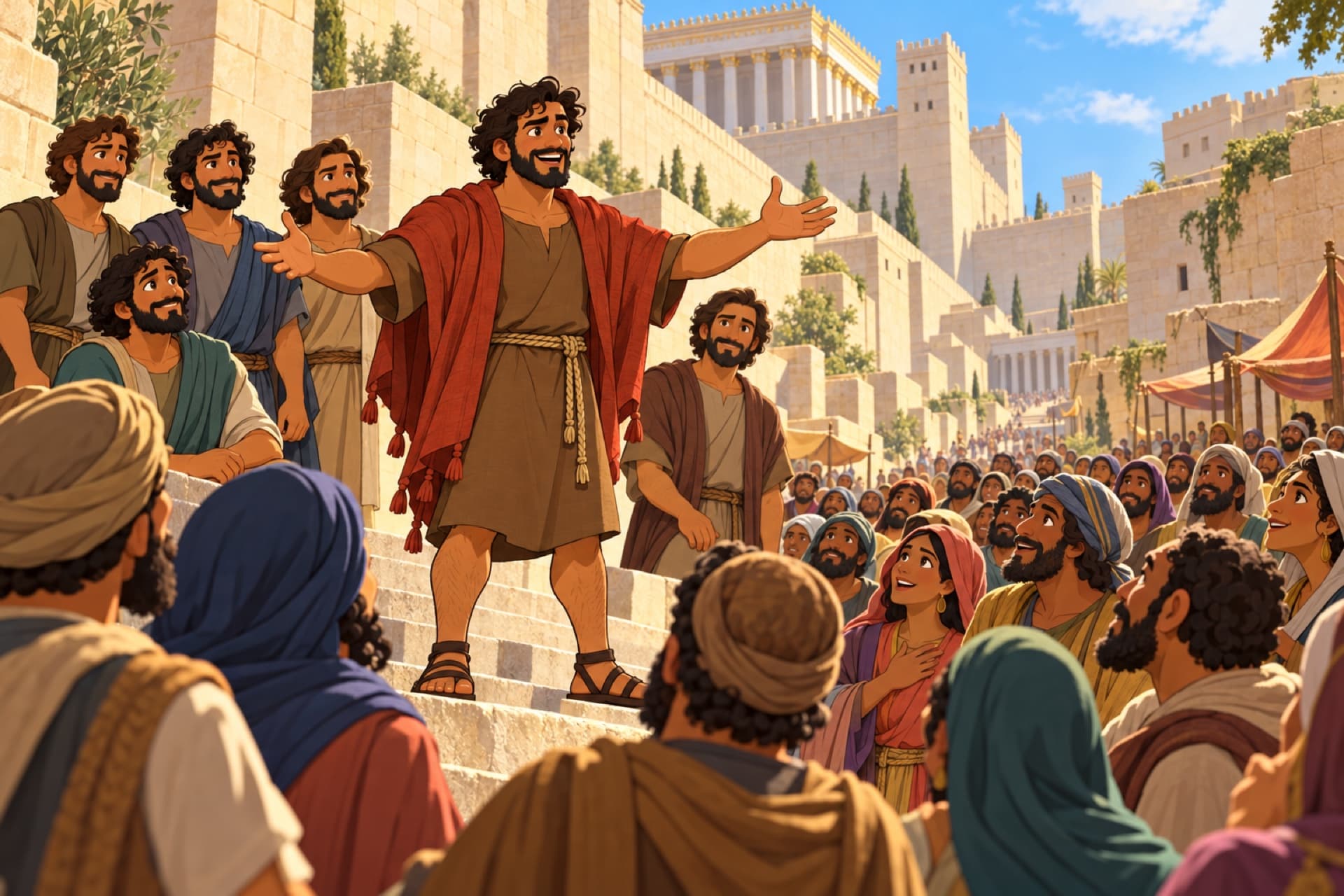
A crucified Messiah was a contradiction, and his friends had run. It should have ended there. Instead, fifty days later, Peter, the man who swore he never knew him, stood up in Jerusalem, the city where Jesus was crucified, and said, “God has raised this Jesus to life, and we are all witnesses of it.”
The men who had Jesus killed couldn't explain it either: “When they saw the courage of Peter and John and realized that they were unschooled, ordinary men, they were astonished and they took note that these men had been with Jesus.” They gave one answer: they had seen him alive.
And it cost them. King Herod “had James, the brother of John, put to death with the sword.” About AD 96, a letter from the church in Rome remembered Peter and Paul among the pillars of the church who “contended even unto death.” People die for lies they believe. But would you die for a story you knew you had made up?
Sources:Acts 2:14–41Acts 4:1–13Acts 12:1–21 Clement 5, tr. J. B. LightfootFirst Epistle of Clement (date)
Check yourself
Name two things a storyteller inventing heroes would have cut.Show the answer
Any two: Peter swearing he didn't know Jesus, the disciples falling asleep and running away, Jesus's family saying he was out of his mind, a Messiah dying on a cross.
What is the criterion of embarrassment?Show the answer
People rarely invent what makes their own side look bad, so historians take embarrassing details seriously.
Why were the teachers of the law shocked when Jesus forgave the paralyzed man?Show the answer
“Who can forgive sins but God alone?” Jesus was doing what only God does, and he healed the man in full view of them all.
Which of the prophecies could Jesus have arranged himself?Show the answer
Two: riding into Jerusalem on a donkey and staying silent at his trial. He couldn't pick his ancestors, his birthplace, or his century, and four came true after he was dead.
What turned Peter from a man who denied Jesus into a witness?Show the answer
He said he had seen Jesus alive: “God has raised this Jesus to life, and we are all witnesses of it.”
Who do you say he is?
Jesus once asked Peter, “Who do you say I am?” Peter answered, “You are the Messiah.” Then he denied him. After Jesus rose, he found Peter by the lake, at a charcoal fire, and asked him three times, “Do you love me?” Three denials, three questions. Then he gave him work to do: “Feed my sheep.”
That's why they kept the embarrassing parts. This was never a story about heroes. It's about a Savior who forgives the people who fail him, and that includes you.
So answer his question yourself. Read Mark's Gospel, and watch Peter fall and be found. And pray: Jesus, if you are who you said you are, show me, and I'll follow you.

Sources:Mark 8:27–29John 21:9–17