
Jesus paid a ransom. Who got paid?
The cross as the early church told it
A 8-minute video▶ Watch the one-minute ShortWatch the whole series on YouTube
The short answer
Nobody was paid off. We were captives to sin, death, and the devil, and Jesus gave his life to buy us back for God. That's how the early church told the cross: the charge against us was nailed to the cross, and the captor wasn't paid. He was beaten.
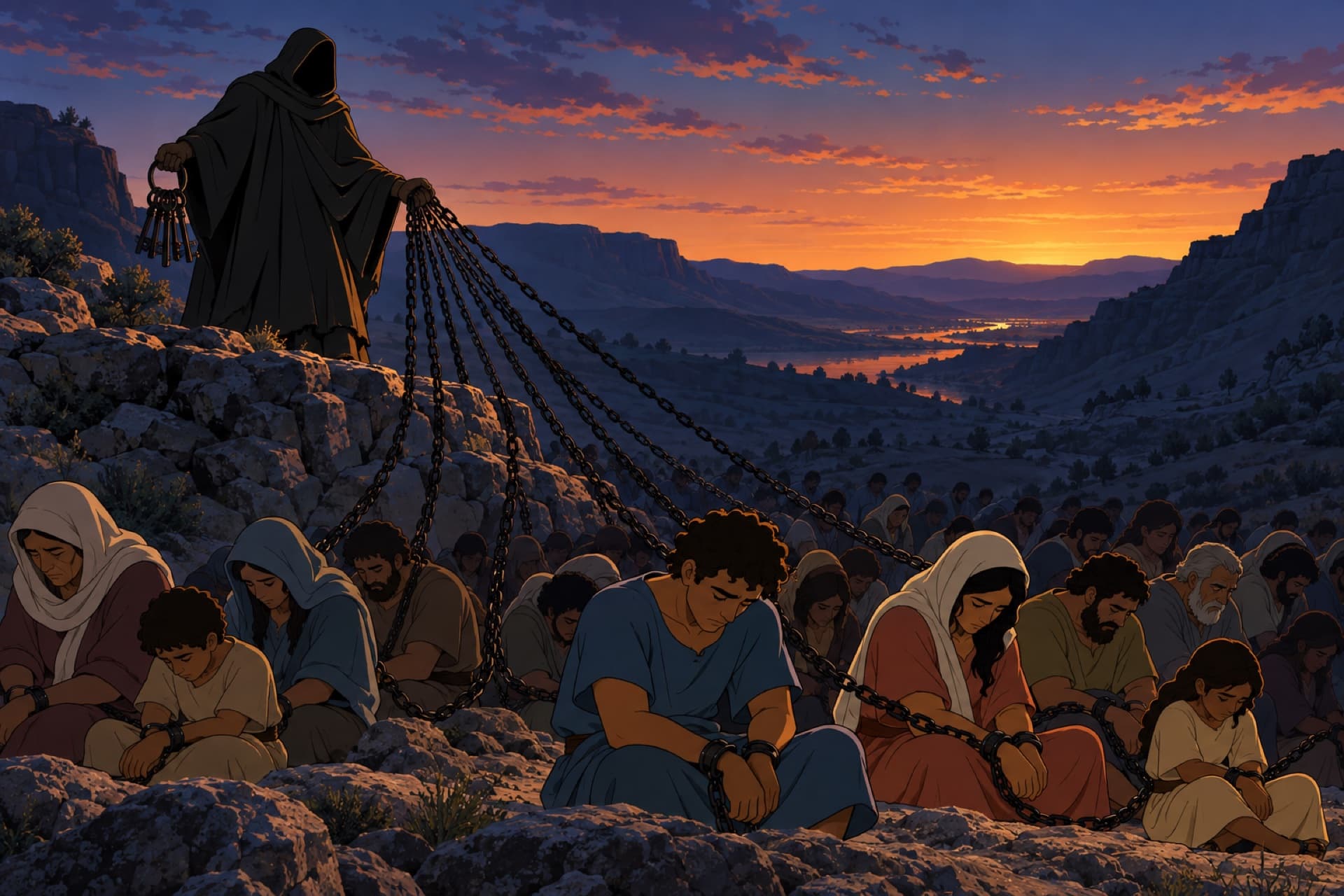
Captives
Jesus said, “the Son of Man did not come to be served, but to serve, and to give his life as a ransom for many.” A ransom is the price that sets a captive free. So who was holding us? And who got paid?
Start with the problem. Jesus said, “everyone who sins is a slave to sin.” And Paul: “the wages of sin is death.” Behind sin and death, someone is holding the chain. Jesus shared our humanity “so that by his death he might break the power of him who holds the power of death—that is, the devil.”
John says “the whole world is under the control of the evil one.” So his power is real. But it isn't his own, and it only works because of our sin. Scripture calls him “the tempter” and “the accuser”: he leads us into sin, then charges us with it.
Sources:Mark 10:32–45John 8:34Romans 6:16, 23Hebrews 2:14–151 John 3:81 John 5:19Luke 4:5–8Colossians 1:13Matthew 4:3Revelation 12:10Chris White, “The Scapegoat and Atonement” (2026)
The Redeemer
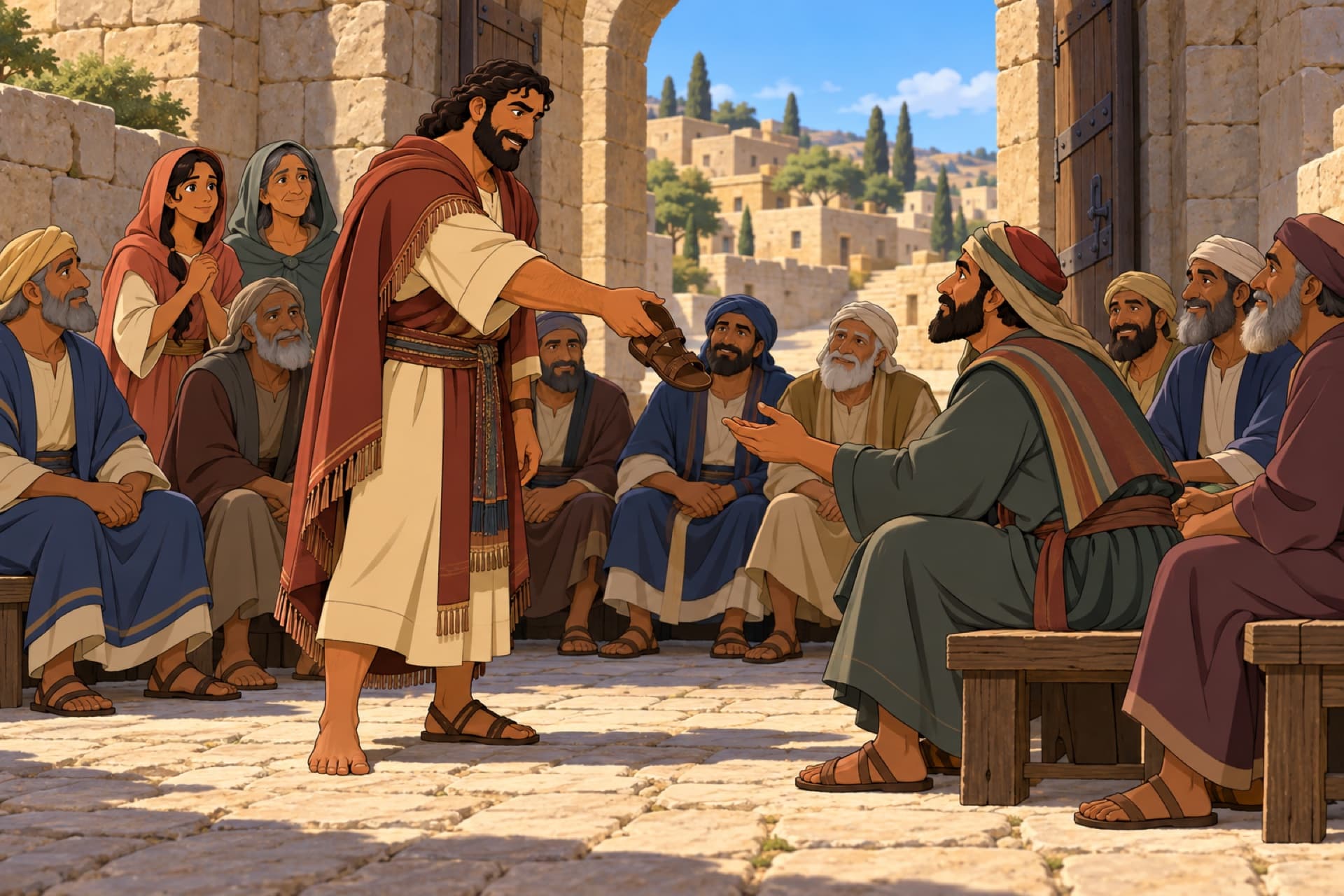
Scripture's answer to captivity is a Redeemer, and it starts in Egypt. God told Moses: “I will free you from being slaves to them, and I will redeem you with an outstretched arm.” That night a lamb died for every house: “When I see the blood, I will pass over you.” Paul: “Christ, our Passover lamb, has been sacrificed.”
Israel's law gave a slave a family redeemer: “one of their relatives may redeem them.” Boaz was that guardian-redeemer for Ruth. So the Son of God became our relative, to buy us back.
But no one else could pay. “No one can redeem the life of another or give to God a ransom for them.” Then: “But God will redeem me from the realm of the dead.” And through Hosea: “I will redeem them from death.”
Sources:Exodus 6:6Exodus 15:13Deuteronomy 7:8גָּאַל (gā'al), Strong's H1350Exodus 12:1–131 Corinthians 5:7Leviticus 25:47–49Ruth 3:9; 4:1–14Hebrews 2:14–17Psalm 49:7–8, 15Hosea 13:14
The price
When Jesus came, he told us what the price would be: his own life. The Greek word, lutron, was the price that freed a slave or a prisoner. Paul: Christ “gave himself as a ransom for all people.” Not silver or gold, Peter says, “but with the precious blood of Christ, a lamb without blemish or defect.” And heaven sings to him: “with your blood you purchased for God persons from every tribe and language and people and nation.”
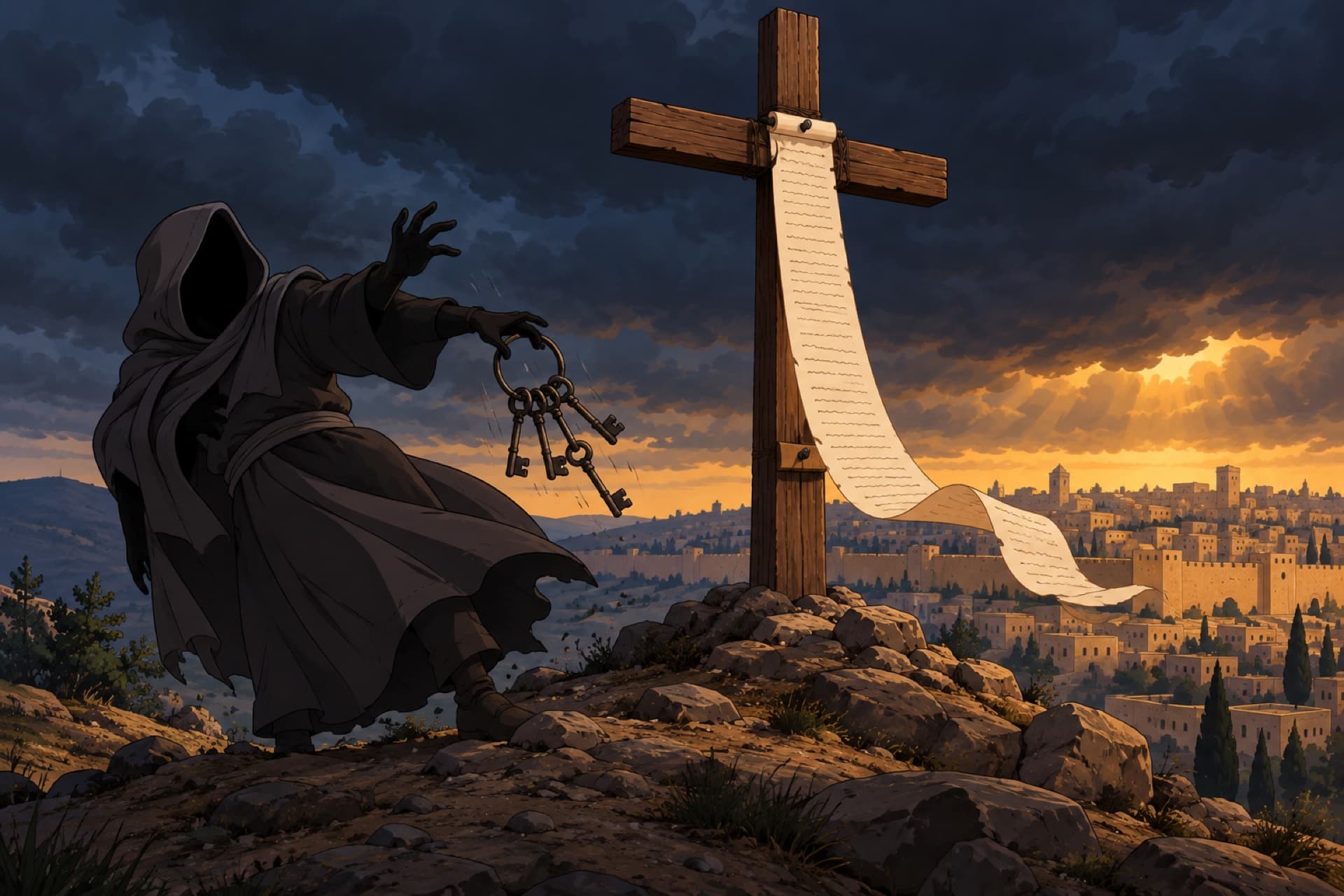
And the captor lost his grip:
“…forgave us all our sins, having canceled the charge of our legal indebtedness… nailing it to the cross. And having disarmed the powers and authorities, he made a public spectacle of them…”
Colossians 2:13–15
That charge was the only hold the devil had on us, and it's been torn up.
Sources:Mark 10:45, Greek interlinearλύτρον (lutron), Strong's G30831 Timothy 2:5–61 Peter 1:18–19Revelation 5:9Colossians 2:13–15Colossians 2:14, Greek interlinear
What the early church believed
The early church generally explained the cross this way. In 1931 the Swedish bishop Gustaf Aulén named it Christus Victor: Christ the Victor. In the second century, the Epistle to Diognetus said God “gave His own Son as a ransom for us, the holy One for transgressors.”
Around 180, Irenaeus, taught by a disciple of John, wrote: “when Satan is bound, man is set free.” So yes, they said he died in our place, but they talked about it as a rescue.
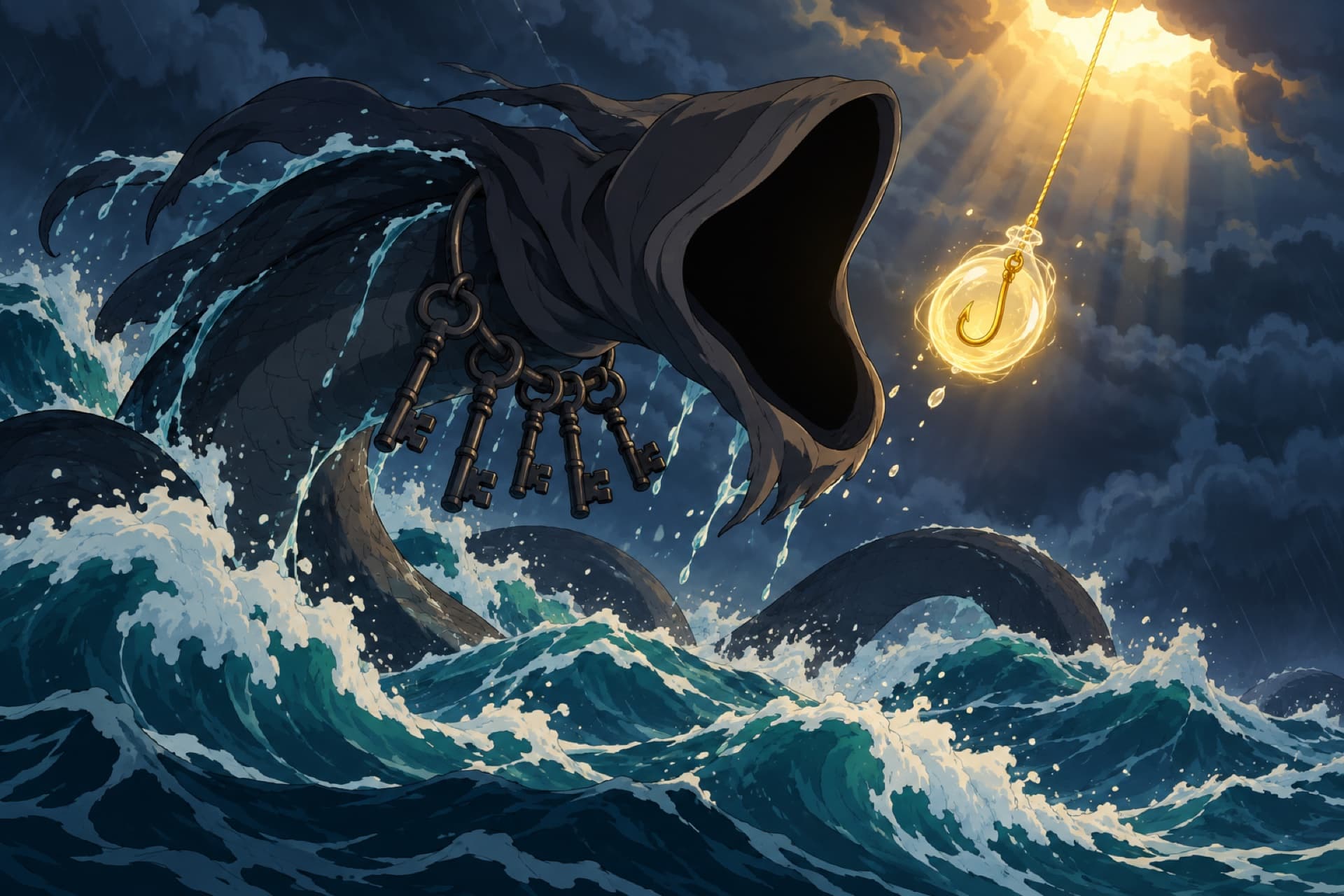
Later, Gregory of Nyssa turned it into a picture: God came hidden in our flesh, “that so, as with ravenous fish, the hook of the Deity might be gulped down along with the bait of flesh.” Paul says the rulers didn't see it coming: “for if they had, they would not have crucified the Lord of glory.” And the Eastern churches still sing it every Easter: “Christ is risen from the dead, trampling down death by death…”
Sources:Gustaf Aulén, Christus Victor (1931)Christus VictorRevelation 1:17–18Epistle to Diognetus 9, tr. Roberts and Donaldson, ANF 1Irenaeus, Against Heresies 5.21.3, tr. Roberts and Rambaut (1885)Irenaeus to Florinus, on Polycarp and John (Eusebius, Church History 5.20)Gregory of Nyssa, The Great Catechism 24, tr. Moore and Wilson (1893)1 Corinthians 2:6–8The Paschal troparion (Orthodox Church in America)
Who got paid?
But who got paid? Origen asked it first:
“…to whom did He give His soul as a ransom for many? Surely not to God. Could it be then to the evil one?…”
Origen, Commentary on Matthew 16.8, tr. Hastings Rashdall (1919)
Gregory of Nazianzus answered: “If to the Evil One, fie upon the outrage!” And the Father, he said, “neither asked for Him nor demanded Him.”
Here's what Scripture does tell us. The price was his blood. We were bought out of sin, death, and the devil's hand, and we were bought for God. But it never says who was paid. Bible teacher Chris White puts it plainly: “Satan is not paid; he is defeated.”
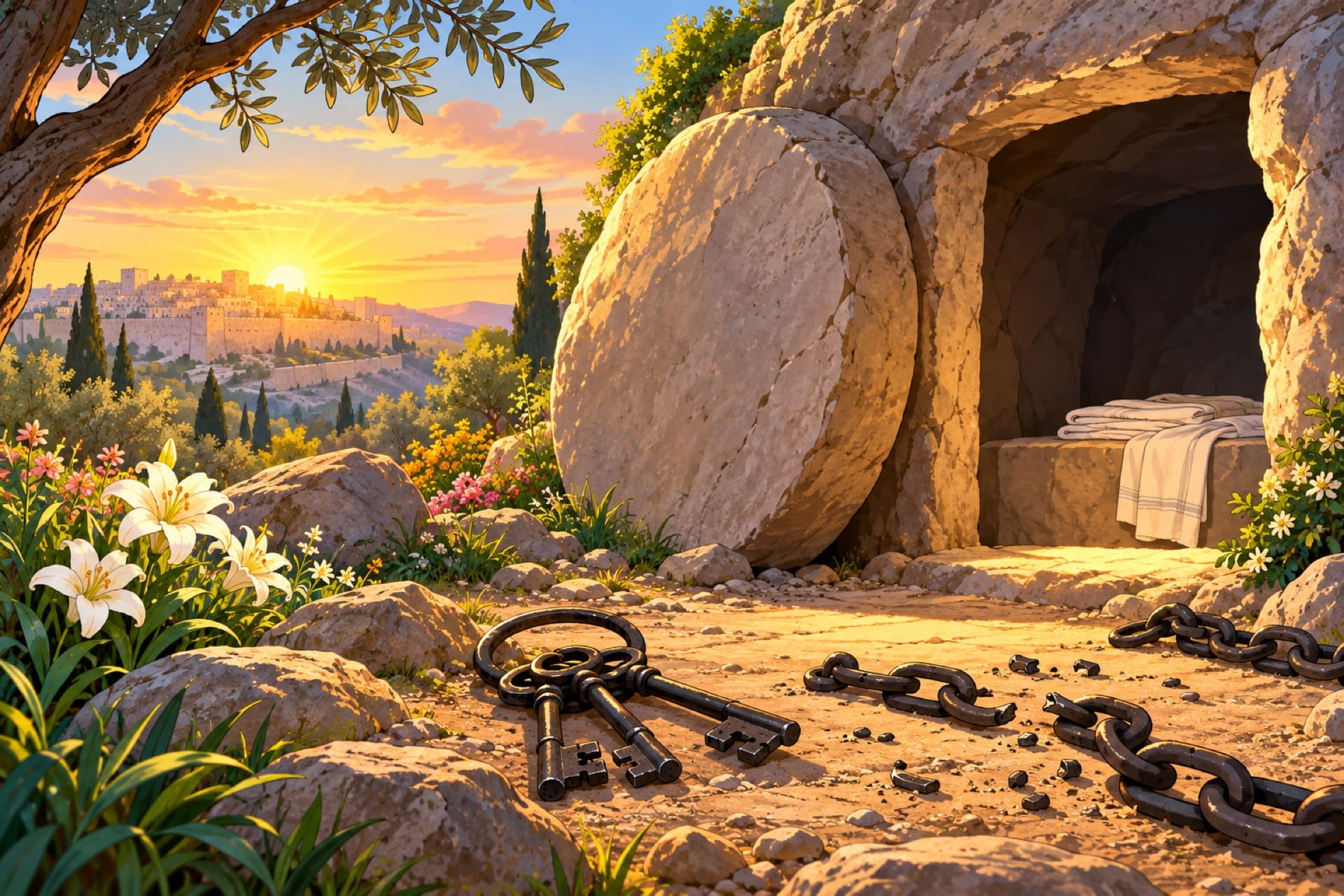
Sources:Origen, Commentary on Matthew 16.8, tr. Hastings Rashdall, The Idea of Atonement in Christian Theology (1919)Gregory of Nazianzus, Oration 45.22, tr. Browne and Swallow (1894)1 Peter 1:18–19Titus 2:14Hosea 13:14Hebrews 2:14–15Revelation 5:9Chris White, “The Scapegoat and Atonement” (2026)
The turn
For about a thousand years, that's how most Christians told it. Then in 1098 Anselm of Canterbury set aside the argument “which we are wont to make use of.” He started from debt: “it is not right to cancel sin without compensation or punishment.”
In the 1500s the Reformers made it penal. John Calvin: “the guilt which made us liable to punishment was transferred to the head of the Son of God.” The cross stopped being mainly a rescue and became mainly a penalty.
But can God forgive without being paid? White points to Jesus: “Friend, your sins are forgiven.” And Paul tells us, “Forgive as the Lord forgave you.” In his parable, Jesus says the master “canceled the debt and let him go.” And in Israel, sacrifice cleansed: “It is the blood that makes atonement for one's life.” “The blood of Jesus, his Son, purifies us from all sin.”

Sources:Anselm, Cur Deus Homo 1.7, tr. Sidney Norton Deane (1903)Anselm, Cur Deus Homo 1.12, tr. Sidney Norton Deane (1903)Calvin, Institutes 2.16.5, tr. Henry Beveridge (1845)Luke 5:17–26Chris White, The Deformation, Part 4 (2025)Colossians 3:13Matthew 18:23–35Leviticus 17:11Leviticus 16:14–191 John 1:7
The hardest texts
To be fair, the penal view has real verses behind it. Isaiah: “the punishment that brought us peace was on him.” Paul: “Christ redeemed us from the curse of the law by becoming a curse for us.” “God made him who had no sin to be sin for us.” And God presented Christ as a “sacrifice of atonement.”
But read them again with the ransom in mind. He did carry what was ours, like the goat that would “carry on itself all their sins to a remote place.” Galatians says redeemed: a ransom word. He was made sin as the sin-bearer, not the sinner.
And Romans 3's word, hilastērion, is the word Hebrews uses for the lid of the ark, the atonement cover. Some Bibles translate it “propitiation,” which sounds like calming an angry God. But in the Greek Bible Paul read, it's the gold lid where the blood was sprinkled, where God said, “There… I will meet with you.” Read that way, Jesus isn't a payment to calm God down. He's the place where our sin is covered and God meets us.
So did Jesus die in our place? Yes, he did. That's not where the two views part. They part over who was holding us, and what his death broke.
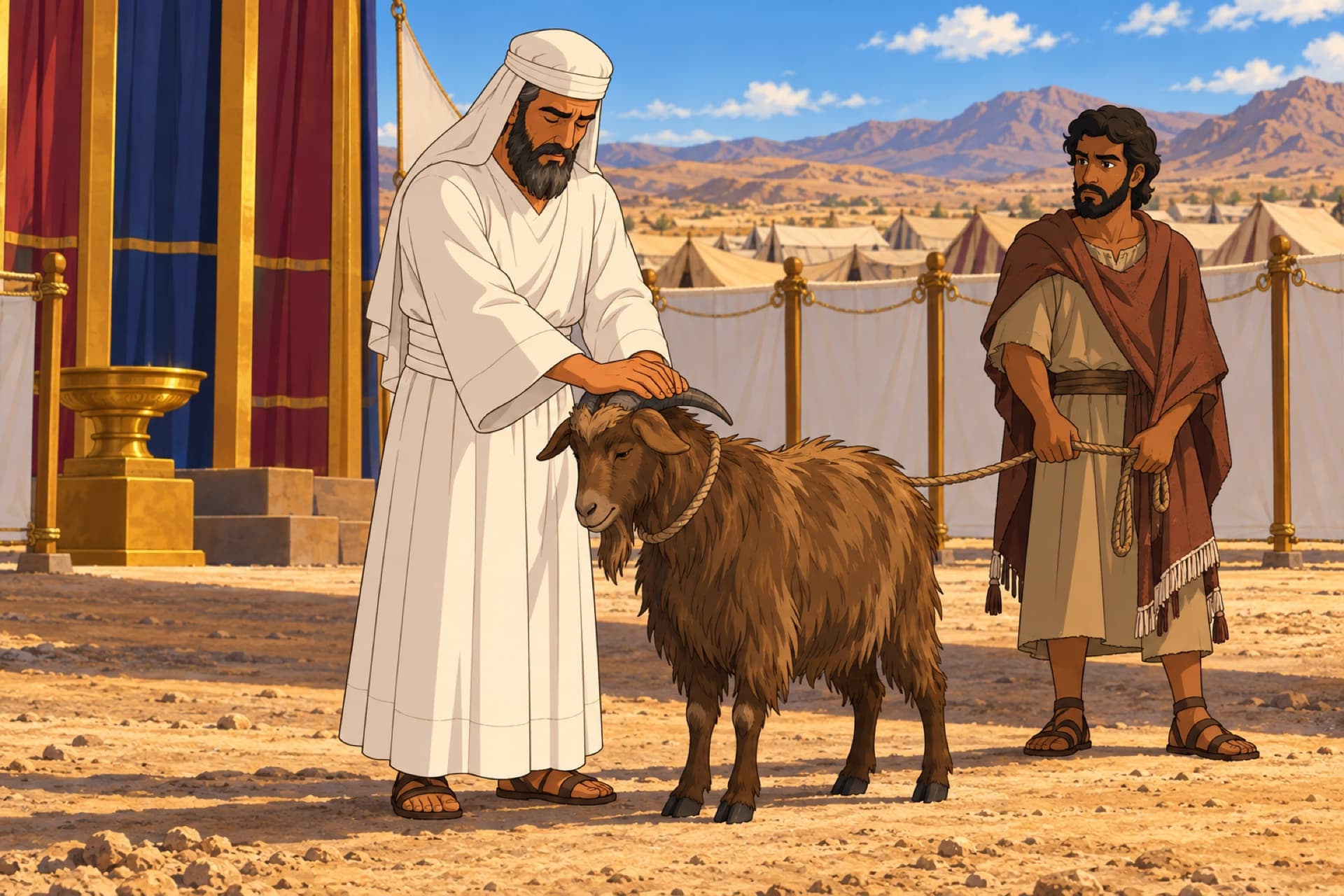
Sources:Isaiah 53:4–6Galatians 3:132 Corinthians 5:21Romans 3:23–25Leviticus 16:10, 20–221 Peter 2:24Romans 3:25, Greek interlinearHebrews 9:5, Greek interlinearἱλαστήριον (hilastērion), Strong's G2435Romans 3:25 (ESV)Exodus 25:17–22Exodus 25:17–22, Septuagint Greek
Check yourself
What is a ransom?Show the answer
The price that sets a captive free. Jesus said he came “to give his life as a ransom for many.”
Who was holding us captive?Show the answer
Sin, death, and the devil, whose hold rested on the charge our sin brought against us.
What did God do with the charge against us?Show the answer
He canceled it, nailing it to the cross, and disarmed the powers and authorities (Colossians 2:13–15).
So who got paid?Show the answer
Scripture never says. The price was his blood, and we were bought for God. The captor wasn't paid off: he was defeated.
When did Christians start telling the cross mainly as a debt and a penalty?Show the answer
Anselm started from debt in 1098, and the Reformers made it penal in the 1500s. For about a thousand years before that, most Christians told it as a rescue.
You were bought
And if he bought you, you belong to him. “You are not your own; you were bought at a price. Therefore honor God with your bodies.” How you live shows whose you are. Even Luther taught children to say it: Christ “purchased and won me from all sins, from death, and from the power of the devil.”
Jesus said, “Repent and believe the good news!” You can tell him now: Jesus, you gave your life to buy me back. I turn from my sin. Set me free. I'm not my own; I belong to you. You are my Lord and my Redeemer. Amen.
So who got paid? Not the captor. He didn't keep a thing. Jesus paid with his life, and what he bought was you. “Do not fear, for I have redeemed you; I have summoned you by name; you are mine.”
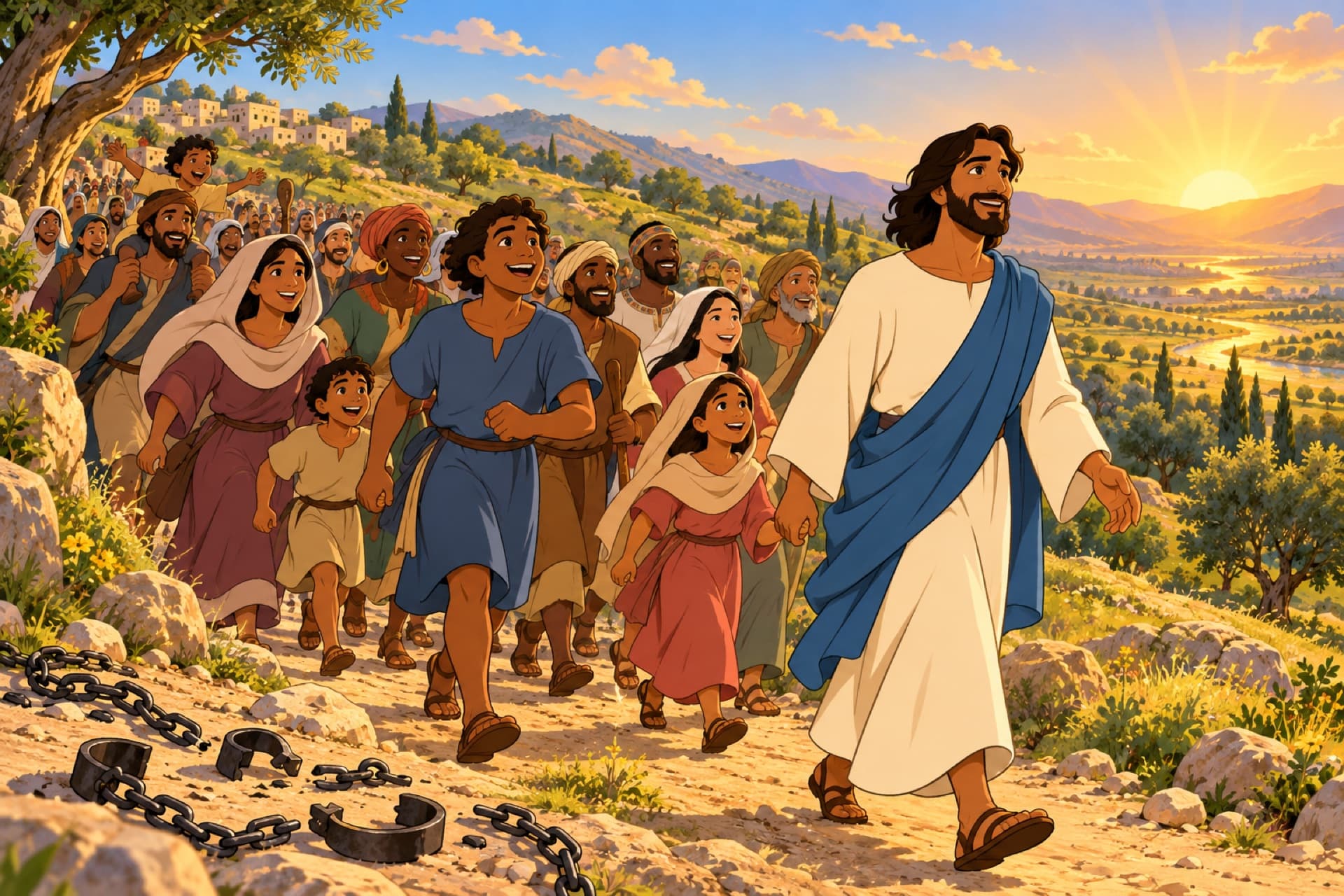
Sources:1 Corinthians 6:19–20Titus 2:14Luther, Small Catechism, the Second Article, tr. Bente and Dau, Triglot Concordia (1921)Mark 1:14–15Isaiah 43:1–3