Thirty years a preacher. Then he heard, “Your faith is dead.”
Howard Pittman's near-death experience, 1979
Howard Pittman was a Baptist preacher and a policeman, and in 1979 he was declared dead in an ambulance in Mississippi. He says that at the gate of heaven he listed thirty years of good works, and God answered, “Your faith is dead,” because he had called Jesus Lord every day but never made Him Lord. His story is one man's memory, not Scripture. But the warning at its center is Jesus's own: “Not everyone who says to me, ‘Lord, Lord,’ will enter the kingdom of heaven, but only the one who does the will of my Father who is in heaven” (Matthew 7:21). It asks every reader the same question: is He your Lord?
Read his story ↓His testimony (1992), restored by Precious Testimonies (2017)His book, PlaceboHis ministry, carried on by his family
A good man in an ambulance
Howard Pittman was a policeman for 26 years, in New Orleans, with the Louisiana State Police, and in Baltimore. He worked the night shift so he could study at the Southern Baptist seminary in New Orleans, and on his Saturdays off he handed out tracts on street corners, preached in jails, and prayed for the sick. He and his wife Joyce took 32 abused and neglected children into their home.
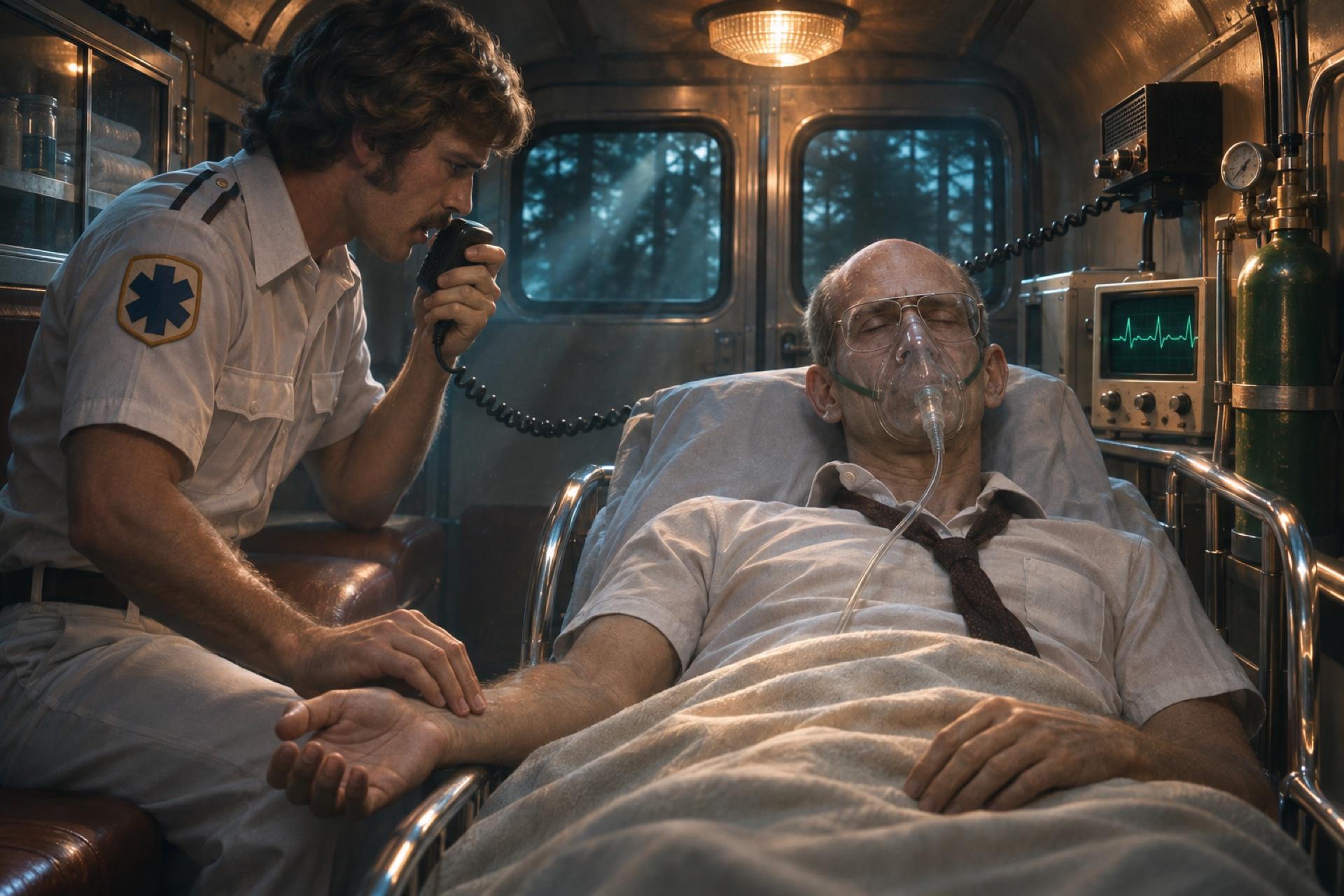
In the summer of 1979 he was running for sheriff in Mississippi, one of the leading candidates a week before the primary. On Friday, August 3, he walked into his bank and dropped to his knees. Then came a pain, he says, “like a mule would kick me in the midsection.” An ulcer had burst an artery behind his stomach. Nineteen miles from the hospital he lost consciousness, and the paramedic radioed ahead that the patient had died.
Keep that record in mind. It is the record he took with him.
Sources:Howard Pittman's testimony (about 1987), 6:12–10:22Howard Pittman with Mark Cowart (2015), 2:08–7:56Howard Pittman with Mark Cowart (2015), part 2, 1:14–2:25Howard Pittman's testimony (1992, restored by Precious Testimonies), 18:10
The voice that said, “Just don't breathe”
Howard says he passed into a darkness so complete that no human language could describe it. He calls it the veil, the door between this world and the next. A verse came down out of the dark in front of his eyes, Hebrews 9:27: “It is appointed unto all men once to die, after this the judgment.” He knew his time had come, and he asked God to add to his life, as He had added fifteen years to King Hezekiah's (Isaiah 38:5).
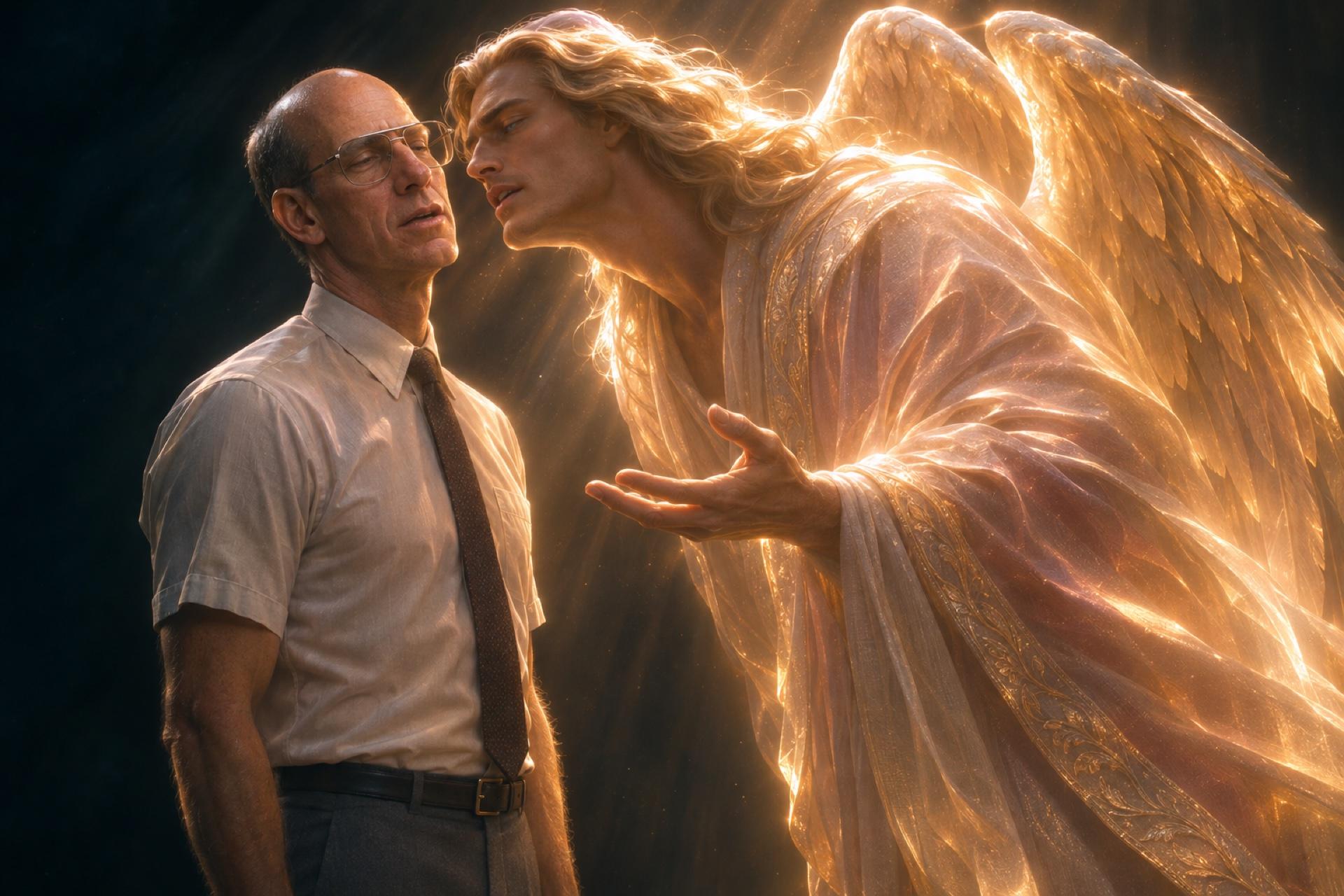
Then out of the darkness came “the most beautiful voice I've ever heard in my life.” It told him: “Stop. No more pain. Peace, rest, security, all that you've ever wanted, just don't breathe.” He was breathing by willpower alone, and he nearly obeyed. Then he remembered that he had just asked God for more life. He cried out in his spirit, “You are not God,” and the voice fled. He believes it was Satan, who could not kill him and needed him to give up.
Notice the word the voice chose. “Security” was the teaching Howard had grown up with: once you're saved, you're saved forever, no matter what. A comforting word in a beautiful voice is not proof that it comes from God. “Satan himself masquerades as an angel of light” (2 Corinthians 11:14), and so John writes:
“Dear friends, do not believe every spirit, but test the spirits to see whether they are from God, because many false prophets have gone out into the world.”
1 John 4:1
Sources:Howard Pittman with Mark Cowart (2015), 8:02–13:11Hebrews 9:27Isaiah 38:52 Corinthians 11:141 John 4:1
The bigger question What do the hospital studies show? Read the research →
The war he was shown
Flesh and blood can't cross the veil, Howard says, so angels took his spirit out of his body, out of darkness into light. The ambulance went on down the road with “Howard Pittman's body, but it didn't have Howard Pittman.” The first thing the angels showed him was a verse of Scripture acted out like a stage play:
“For our struggle is not against flesh and blood, but against the rulers, against the authorities, against the powers of this dark world and against the spiritual forces of evil in the heavenly realms.”
Ephesians 6:12
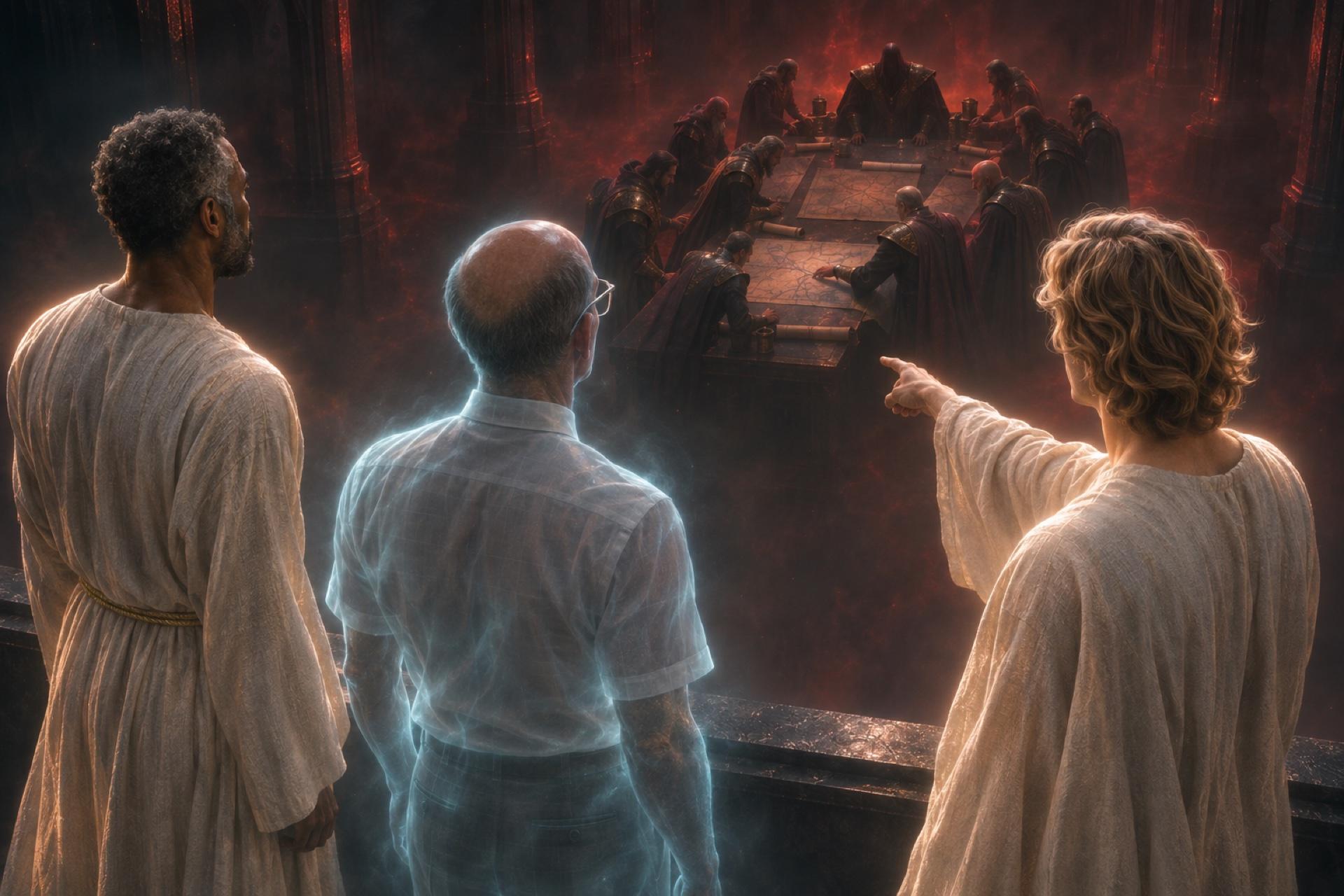
He saw a long table, and the devil sitting at it with his princes. Satan has divided the world into territories, Howard says, with a prince over each one and as many demons under him as his plan for that place needs. A continent that is no threat to the kingdom of darkness might be a single principality. America is many, and even one person can be a principality, depending on the threat.
They let him see the outline of a plan, and he knew it. It was the one John saw, the beast “given power to wage war against God's holy people and to conquer them” (Revelation 13:7), a plan to capture the world and the church. Howard believed it was working. He called what he heard in many churches “cotton candy religion,” all hot air, and he used Paul's phrase for it: “things taught by demons” (1 Timothy 4:1). Satan deceived a third of the angels, Howard said, and Paul calls him “the god of this age” (2 Corinthians 4:4).
Sources:Howard Pittman with Mark Cowart (2015), 13:34–22:28Howard Pittman's testimony (1992, restored by Precious Testimonies), 31:27Ephesians 6:12Revelation 13:7–81 Timothy 4:1Revelation 12:42 Corinthians 4:4
Three orders of spirits
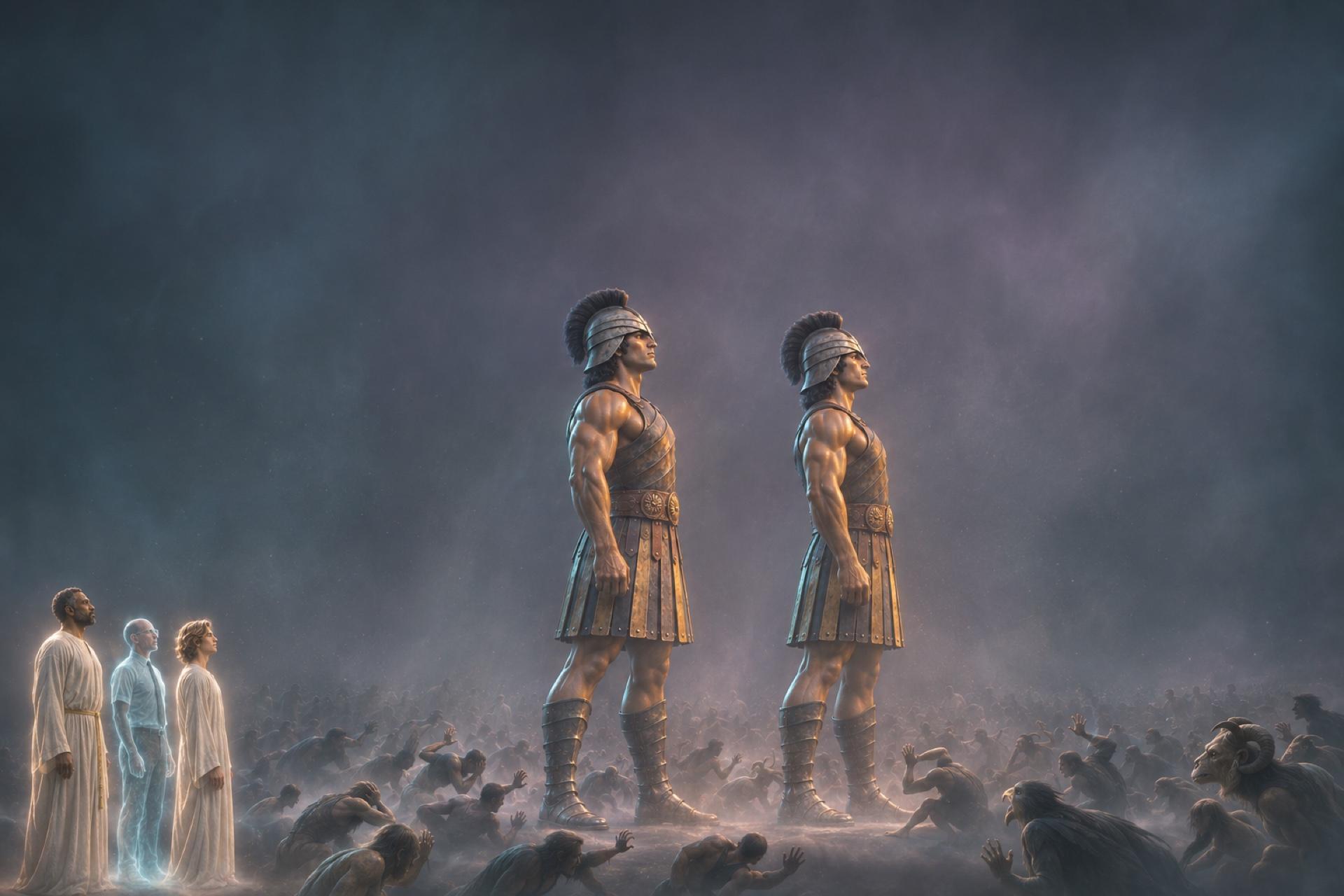
Howard says the princes come from the strongest order, the giant warring demons, angels who fell with Satan. If we could see one in this world, he would stand 12 to 14 feet tall. Their work is strife and war, in the world, in the church, and in the home. They live by two emotions, hate and fear: “They hate all humans, and they fear their boss. There's no love in there at all.”
The second order is the spirit of greed. “He's been in your house. He's been in my house,” Howard says. “The more he gets, the more he wants.” The third is the religious demons, whose job is to give each person whatever religion he is comfortable with and to make the way of Jesus Christ look suspect. He also spoke of a frog-like spirit, like the “three impure spirits that looked like frogs” John saw (Revelation 16:13), sent to tear down the Bible's moral code. “God's got a moral code,” Howard says, “and you better abide by it, because you're going to give an account of it one day.”
The Bible doesn't give us Howard's orders and ranks, so we hold them as his vision. But it plainly teaches the war, and it tells us who has already won it:
“And having disarmed the powers and authorities, he made a public spectacle of them, triumphing over them by the cross.”
Colossians 2:15
Sources:Howard Pittman, Demons: An Eyewitness Account (2008), 45:26–47:21Howard Pittman with Mark Cowart (2015), 19:30–22:33Howard Pittman with Mark Cowart (2015), part 2, 6:50–9:16Daniel 10:131 Timothy 6:10Revelation 16:13Romans 14:12Colossians 2:15
The highway home
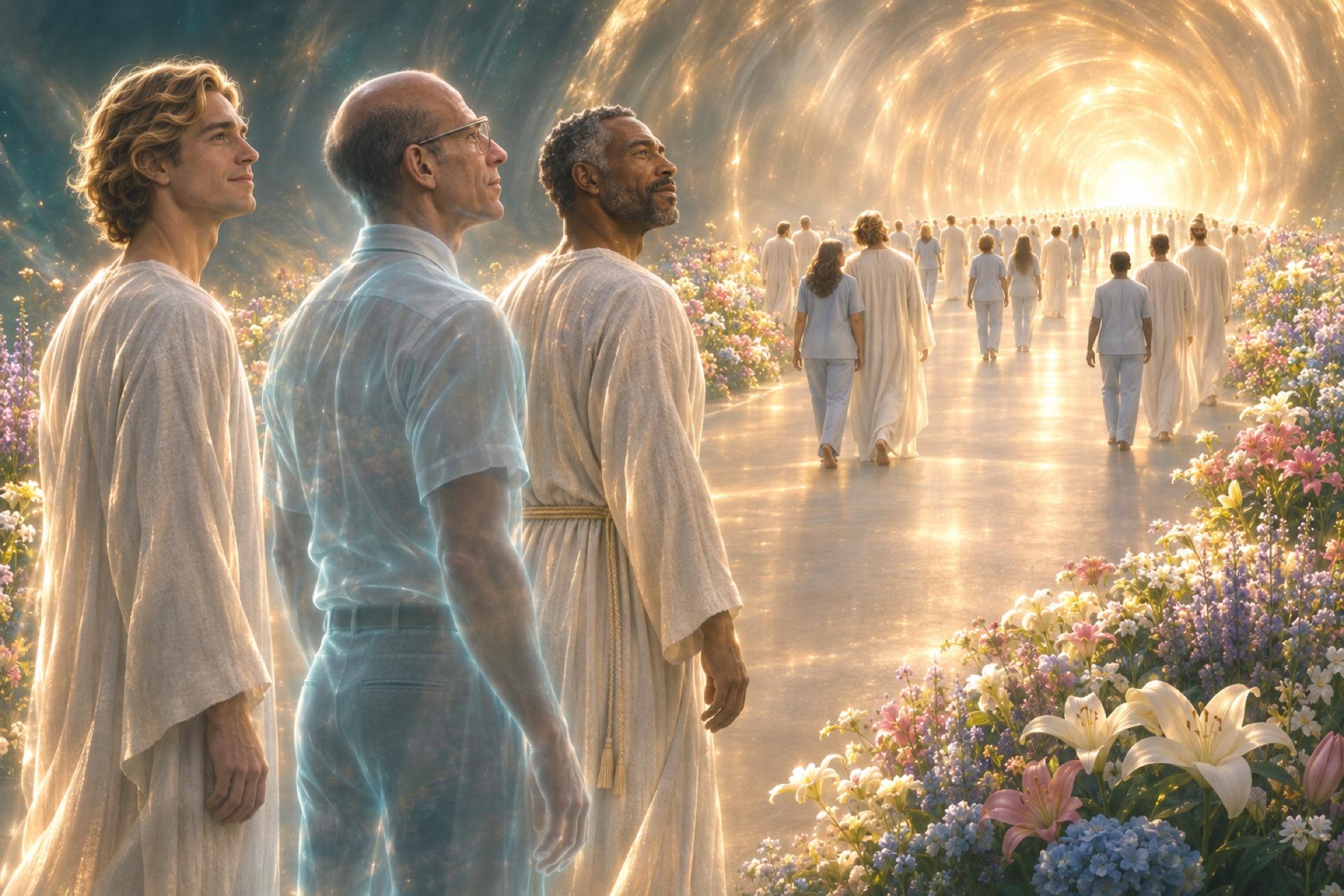
All through it, Howard kept asking, “Is He gonna let me live?” He knew only God could send him back. But first the angels showed him another place, like a tunnel running through the sky. A highway ran through it, lined with flowers whose colors were alive, and at the far end shone a light so brilliant there were no shadows anywhere, “yet soft enough to look at.”
People were walking on the highway. At first they looked ordinary, then “super extraordinary.” “Those are God's children going home,” the angels told him. “There is a heavenly highway where only the redeemed can walk,” Howard said, in words that echo Isaiah's highway, “the Way of Holiness” (Isaiah 35:8).
The saints had no age, neither old nor young nor middle-aged, and Howard says they were neither male nor female. He couldn't tell what race they had been. But he insisted you will be “the same unique individual there that you are here,” as Paul says: “then I shall know fully, even as I am fully known” (1 Corinthians 13:12).
Sources:Howard Pittman with Mark Cowart (2015), 23:40–23:57Howard Pittman's testimony (1992, restored by Precious Testimonies), 38:02–46:31Isaiah 35:81 Corinthians 13:12
Fifty out of two thousand
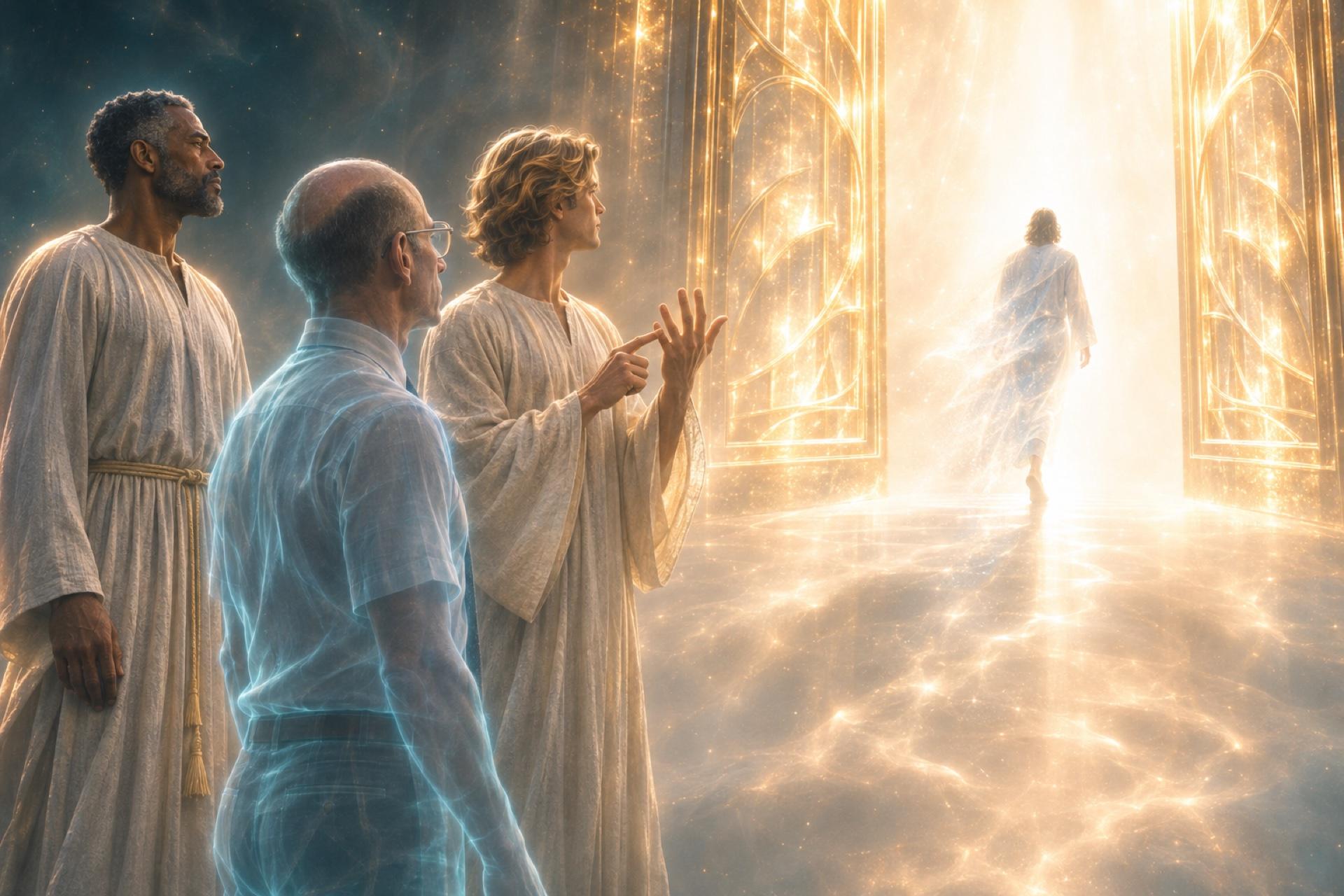
At the gates of heaven he watched them go in. He counted fifty in the fifteen minutes between the paramedic's call and the hospital, out of about two thousand people who died in that time. “Only 50 out of 2,000 made it,” he said. “Two and a half percent.”
That number is his account of a vision, and the Bible gives no percentage. But Jesus did say the road to life is narrow, and few find it:
“Enter through the narrow gate. For wide is the gate and broad is the road that leads to destruction, and many enter through it. But small is the gate and narrow the road that leads to life, and only a few find it.”
Matthew 7:13–14
Howard asked his hearers, “Would you have been in that number?” And he went straight on to God's mercy: the Lord is patient, “not wanting anyone to perish, but everyone to come to repentance” (2 Peter 3:9).
Sources:Howard Pittman with Mark Cowart (2015), 24:09Howard Pittman with Mark Cowart (2015), 33:05–34:28Howard Pittman's testimony (1992, restored by Precious Testimonies), 53:54Matthew 7:13–142 Peter 3:9
“Your faith is dead”
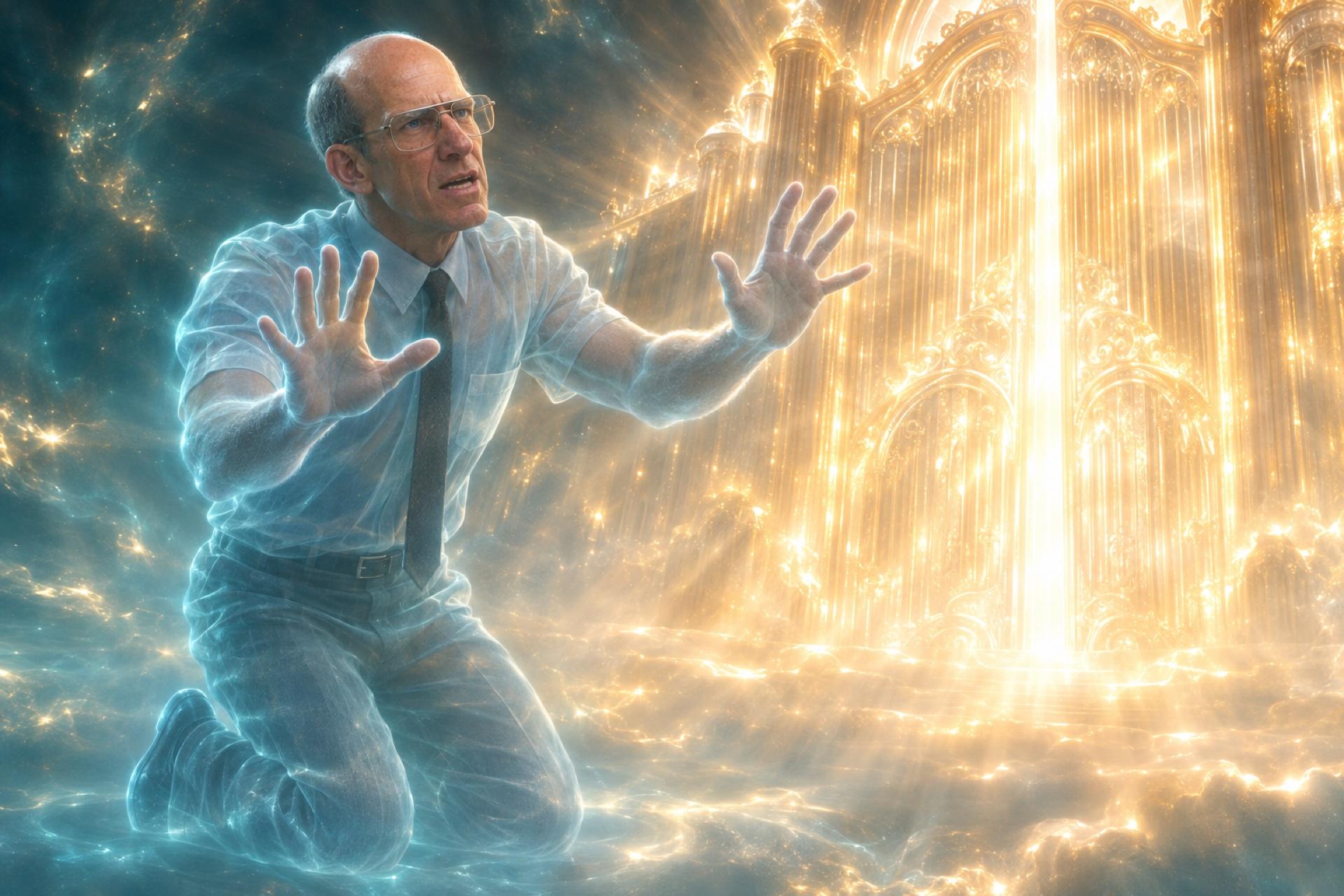
An angel told Howard that if he went through the gate he could not come back, so he stood outside and pleaded with a God he could not see. He reminded Him of all his good works. God let him finish. Then He answered in a voice like thunder:
“Your faith is dead. Your works are in vain. The life that you lived and offered to Me as a life of Christian service is an abomination that I rejected in the Pharisee.”
God's words, as Howard Pittman remembers them
God went on: “What made you think I would accept it from a Laodicean-type Christian? In fact, untold millions are living the same kind of life that you live, and they stand in danger of My everlasting wrath.” Howard couldn't believe it. He was a preacher and a teacher, and he had just listed his good works. “No, Lord, wait. You don't understand.” The answer came: “You didn't do those works for Me. You did them for a false god.”
“Lord, I worked for You,” Howard protested. “I called You Lord every day.” The answer came: “Yes, you did, but you never made Me Lord.” Howard says God named the false god he had served all along: self.
This is the heart of his story, and it isn't new. Jesus said it first: “Why do you call me, ‘Lord, Lord,’ and do not do what I say?” (Luke 6:46). Isaiah says even “all our righteous acts are like filthy rags” (Isaiah 64:6). Howard put it this way: “To call Him Lord gives Him a title. To make Him Lord promotes Him to ruler of life.” Jesus calls each of us to deny ourselves, take up our cross daily, and follow Him (Luke 9:23).
Howard lay on his face and couldn't move. The angels took him away to regain his composure, then brought him back to plead a second time, and this time he never opened his mouth. Then, Howard says, God's voice softened. He saw that he had been pleading for the wrong life, one made from dust, when inside it was a life that would never end, “a life that was precious to Him.” He realized that God was his Father, and that he had hurt Him. “Had He reached down and picked me up and dropped me in hell, I would have said amen.” He asked for nothing more, and God gave his life back.
Sources:Howard Pittman with Mark Cowart (2015), 24:21–27:45Howard Pittman's testimony (1992, restored by Precious Testimonies), 63:46Revelation 3:15–16Matthew 7:21Luke 6:46Isaiah 64:6Luke 9:23
A message for the church
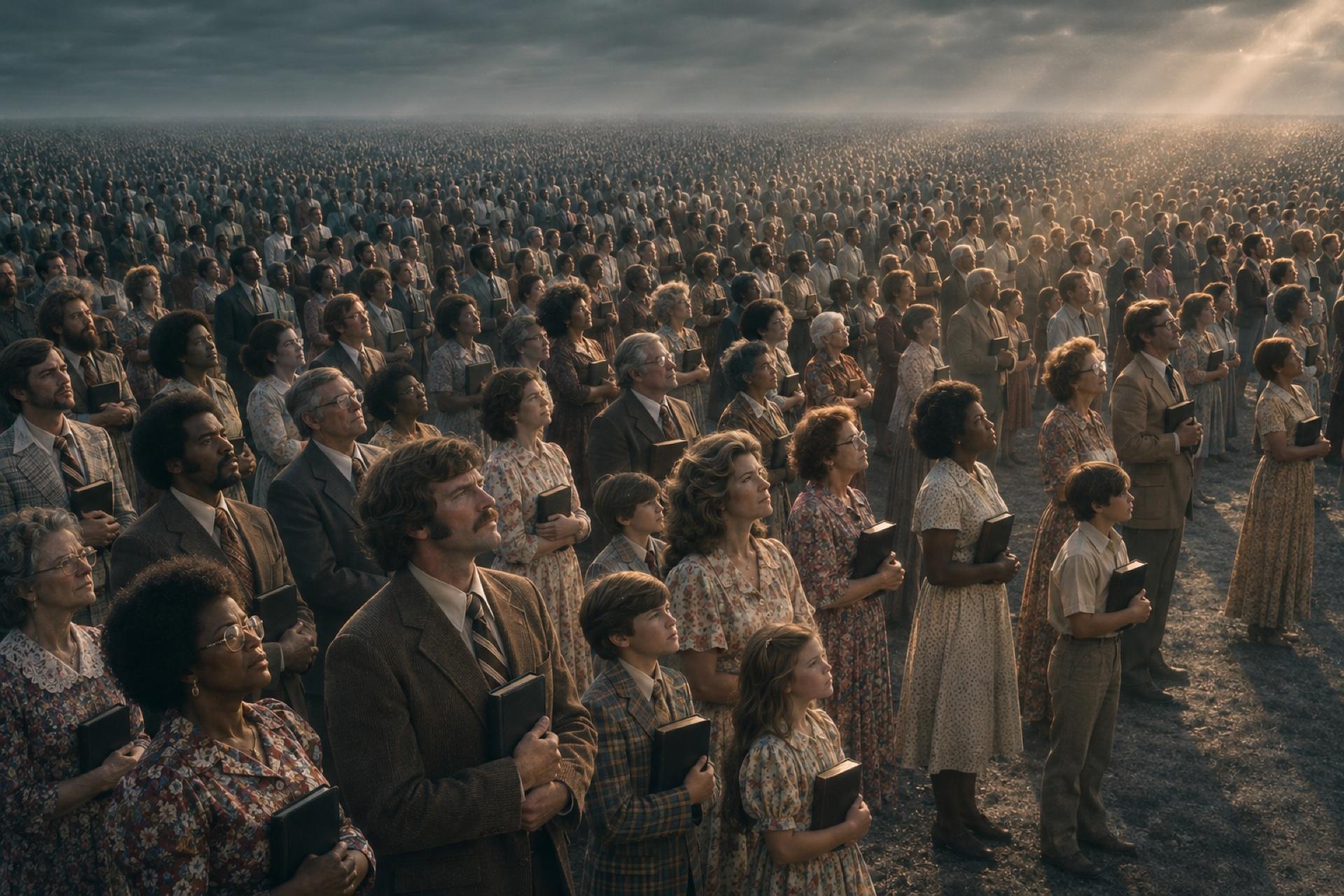
Howard says he lost his sight of this world in the ambulance on Friday afternoon and didn't get it back until Monday morning. He came back with a five-point message for the church, and with orders not to ask anyone to hear it. God was sending him to His church. Howard didn't know which church that was, but God did, and all Howard had to do was go wherever he was asked.
Point one: this is the Laodicean church age, when most so-called Christians are just that, so-called, “mouth professors and not heart possessors.”
Point two: your adversary is personal and powerful, Satan the devil. Point three: if you expect to see any of God's power in your life, “you're going to have to live the life. Not talk it, you got to walk it.”
Point four: as it was in the days of Noah, so it will be at the coming of the Son of Man (Matthew 24:37), when people live for two things, wealth and pleasure; so keep your eye on the eastern sky.
Point five: Jesus will baptize “with the Holy Spirit and fire” (Matthew 3:11), and Howard read it to mean the fire will burn up the chaff in the Christian.
The warning behind point one is Jesus's own, to the church at Laodicea:
“I know your deeds, that you are neither cold nor hot. I wish you were either one or the other! So, because you are lukewarm—neither hot nor cold—I am about to spit you out of my mouth.”
Revelation 3:15–16
And to that same lukewarm church He made His offer: “Here I am! I stand at the door and knock. If anyone hears my voice and opens the door, I will come in and eat with that person, and they with me” (Revelation 3:20).
Sources:Howard Pittman, Demons: An Eyewitness Account (2008), 3:28Howard Pittman with Mark Cowart (2015), 27:56–31:22Matthew 24:37Matthew 3:11–12James 1:22Revelation 3:15–16Revelation 3:20
The stranger who typed the book
Howard wrote his story out longhand, in a book he called Placebo, and he couldn't type it without a pile of mistakes. He told his wife he would have to find someone to type it. The next morning the doorbell rang. A young man of about thirty stood there: “You're Howard Pittman? I come to type your testimony for you.”
The young man wouldn't stop for lunch, or for dinner. Howard put an air bed down behind him for the night. By lunch the next day the book was finished, and he said he had to go back to California the way he came, by thumb. He wouldn't even take a bus ticket. Then he was gone.
Only then did the policeman in Howard start asking questions. Who was he? How did he know Howard's name, or that there was a book to type? The manuscript didn't have a single typing error. “Could be supernatural,” Howard said, “but I don't dare tell people this. I don't know.” We don't know either, and we don't need to know.
“Do not forget to show hospitality to strangers, for by so doing some people have shown hospitality to angels without knowing it.”
Hebrews 13:2

Sources:Howard Pittman with Mark Cowart (2015), part 2, 11:04–15:42Hebrews 13:2
Born again, all the way
Much of what Howard taught afterward he drew from Jesus's parable of the sower (Matthew 13). He saw in it four people who hear the word. The first doesn't take it in. The second receives it with joy, “like a house afire,” and slowly loses it when trouble comes. The third receives it but goes through life holding it in one hand and the world in the other. Only the fourth keeps the word and bears fruit.
“But the seed falling on good soil refers to someone who hears the word and understands it. This is the one who produces a crop, yielding a hundred, sixty or thirty times what was sown.”
Matthew 13:23
“One out of four made it,” he said. He tied it to Jesus's words to Nicodemus: “no one can see the kingdom of God unless they are born again” (John 3:3). The Greek word there, gennaō, is used both of a child conceived (Matthew 1:20) and of a child born (Matthew 2:1). Howard saw a birth that has to go all the way through. Two of the four, he said, were conceived but never delivered. And faith with no action, James says, “is dead” (James 2:17).

Sources:Howard Pittman with Mark Cowart (2015), part 2, 3:00–6:29Matthew 13:1–23John 3:3Strong's G1080, gennaōMatthew 1:20Matthew 2:1James 2:17
Not every road up the mountain
In seminary, Howard said, professors taught that getting to heaven is like climbing a mountain: some go up one side and some go up another, but they all reach the top. He heard the same thing in churches later: “You're a good old boy, you're going to make it… God loves you, don't worry about it.” And all the while, he said, the devil is “laughing all the way to the bank.”
God does love you. But Jesus never called Himself one path among many:
“Jesus answered, “I am the way and the truth and the life. No one comes to the Father except through me.””
John 14:6

Sources:Howard Pittman with Mark Cowart (2015), 34:53–35:18John 14:6Acts 4:12
Make Him Lord
Howard said the most important message was simple: “be real.” We can't be perfect, he said, “but we can try. And when we fail along the way, we need to repent.” Jesus knows what we are, not only what we say.
Here is the good news under his warning. No one is saved by a record of good works, his or ours: “it is by grace you have been saved, through faith… not by works, so that no one can boast” (Ephesians 2:8–9). Jesus gave his life as a ransom for many (Mark 10:45), broke the power of the devil, who held the power of death (Hebrews 2:14–15), and rose. He isn't asking for your record. He is asking for you: “You are not your own; you were bought at a price” (1 Corinthians 6:19–20).
“If you declare with your mouth, ‘Jesus is Lord,’ and believe in your heart that God raised him from the dead, you will be saved” (Romans 10:9). Howard ended his talks with a prayer you can pray today: I have called you Lord without making you Lord, and I repent. Jesus, come into my life and be Lord of all of it, every day of my life.

Sources:Howard Pittman with Mark Cowart (2015), part 2, 15:59–16:40Howard Pittman's testimony (1992, restored by Precious Testimonies), 72:16–74:40Ephesians 2:8–9Mark 10:45Hebrews 2:14–151 Corinthians 6:19–20Romans 10:9
The bigger question Who saw Jesus alive after he died? →