Demons came for him. Then Jesus walked in.
Karl Falken's near-death experience, 1995
In 1995 Karl Falken, an engineer in East Texas, stopped breathing on his living room floor. He says two creatures came through the wall to take his soul, and when he told them he was a baptized, tithing Christian, they laughed and read him a list of sins he had never dealt with. He called on the name of Jesus Christ, and they were thrown out of the house. Then Jesus walked in. Karl's story is one man's memory, and Scripture is the measure of it. But at its center is what the Bible promises: “Everyone who calls on the name of the Lord will be saved” (Romans 10:13).
Read his story ↓His interview on Touching The Afterlife (2023)
One word on the living room floor
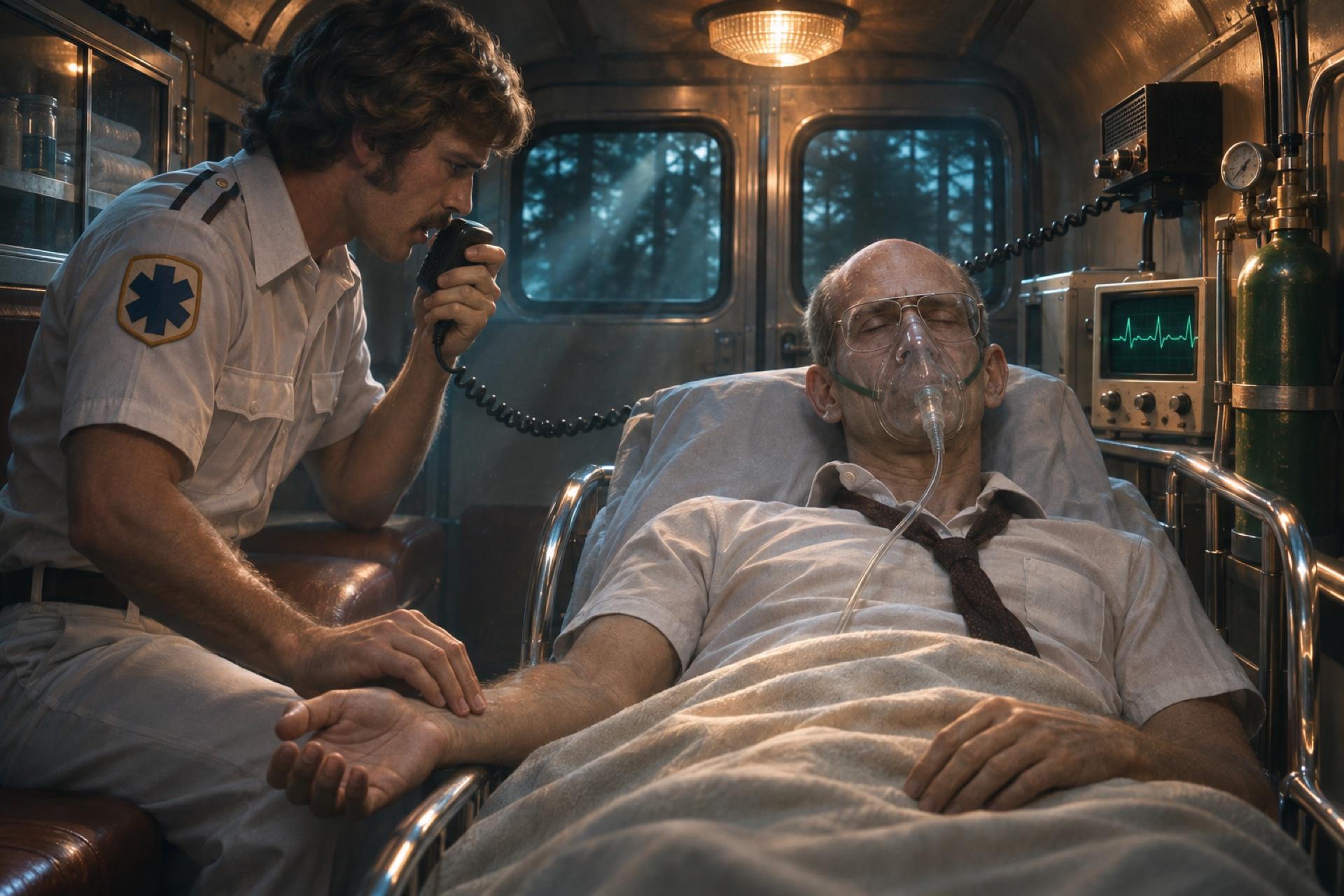
In the winter of 1995 Karl was out of work when the old gas furnace in his house failed. At about three in the morning, tired and groggy from the gas, he struck a match. The blast threw him across the hallway. His eyebrows were gone, his face was red, and part of his hand was charred like a third-degree burn.
He had no money for a doctor. His throat became infected, and for three days he couldn't eat or drink. On the third night he lay down on couch cushions on the floor, and the fluid in his lungs rose until he couldn't breathe. Everyone was asleep. He couldn't call for help, and he couldn't help himself.
“The only option I now had was to pray to God for help,” he says. As his mind shut down, he managed one last word: help.

Sources:Karl Falken on Touching The Afterlife (2023), 4:14–11:14Romans 10:13
Out of his body
As soon as he prayed, the pain was gone, even the low ache from the scoliosis he was born with. He stood up in a room full of light with no shadows, and through the window he could see single grains of dirt in his neighbor's lawn at midnight. He thought he was healed. Then he looked down and saw his body on the cushions. “I'm not healed,” he said. “I'm dead.”
His hand went through the door handle, so he walked through the door. He tried to wake his wife, and his hand went right through her.

Sources:Karl Falken on Touching The Afterlife (2023), 11:50–15:37James 2:26
The bigger question What do the hospital studies show? Read the research →
“I'm a Christian”
Then he felt evil, the kind that makes the hair on the back of your neck stand up. Two creatures walked through his living room wall, about the size of a man but not human, covered in short black fur, with solid yellow eyes. They were laughing at him, and they carried heavy gray manacles. They spoke to him mind to mind, in thoughts, pictures, and feelings, and he understood that to them he wasn't a person at all, only “food and fuel for their purposes.” They had come to take his soul, and they showed him hell: “incredible suffering just beyond language to describe.”
“Be alert and of sober mind. Your enemy the devil prowls around like a roaring lion looking for someone to devour.”
1 Peter 5:8
Karl protested. “I'm a Christian. I'm baptized. I confess Christ as my Savior. I'm born again. I go to church and I give tithes.” They thought that was funny. They said they had him because he had sinned and had not dealt with his sins, and they read him a list: snapping at a slow cashier, small things he had stolen, harm he had never set right. His church had told him that confessing was enough, so he had never paid anyone back or even apologized to the people he had hurt.
The accusers were demons, and Scripture calls the devil “the accuser of our brothers and sisters” (Revelation 12:10). But the sins they named were real ones. Jesus warned that not everyone who says to him “Lord, Lord” will enter the kingdom (Matthew 7:21), and that people will give account “for every empty word they have spoken” (Matthew 12:36). The law of Moses told a person who had wronged someone to confess, repay in full, and add a fifth (Numbers 5:7).

Sources:Karl Falken on Touching The Afterlife (2023), 17:01–22:18Karl Falken on Theological Dark Web (2025), 47:50–48:20Revelation 12:101 Peter 5:8Matthew 7:21Matthew 12:36Numbers 5:7
The name, and the one who came
Karl didn't know what to do. Then he remembered one thing a friend named Dave had told him: if you ever meet a demon, rebuke it in the name of Jesus Christ. With the creatures in his face, he said, “I rebuke you in the name of Jesus Christ,” and “it was like a wrecking ball hit them.” They were thrown out of the room and out of the house. “Resist the devil,” James writes, “and he will flee from you” (James 4:7).
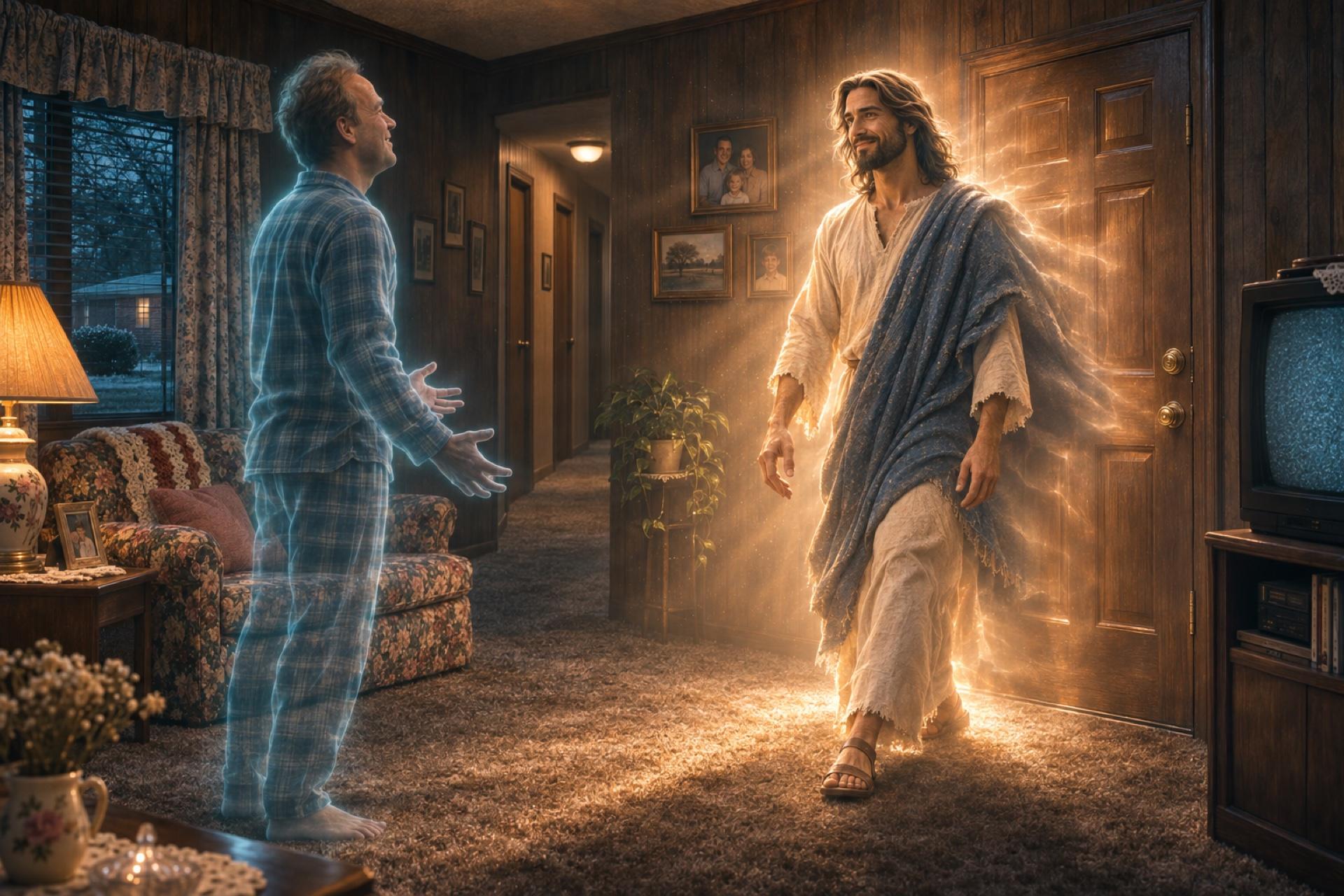
Then Karl felt something coming that was not evil but good, “incredible purity, love, holiness,” and Jesus Christ walked in through his front door. He let Karl know this wasn't how He really looks. He came the way Karl would expect to see Him, so that he would know Him: a white tunic, a blue robe over one shoulder, and empty hands. Jesus knew every sin the demons had named. “He knew everything about me,” Karl says, “and he still loved me unconditionally.” There is “no condemnation for those who are in Christ Jesus” (Romans 8:1).
Jesus also told him he was disappointed. Because Karl had called on His name, he could go to heaven, but as the least of the saints, with nothing of worth to show for a life that had held so much purpose. Karl came to see why: he had served out of duty. “What you do is not as important as why you do it,” Karl says. He had been working to stay out of hell and to earn a reward. “And I didn't love God.”
“If I give all I possess to the poor and give over my body to hardship that I may boast, but do not have love, I gain nothing.”
1 Corinthians 13:3
Sources:Karl Falken on Touching The Afterlife (2023), 3:32Karl Falken on Touching The Afterlife (2023), 22:36–27:52James 4:7Romans 8:11 Corinthians 13:3
Another option
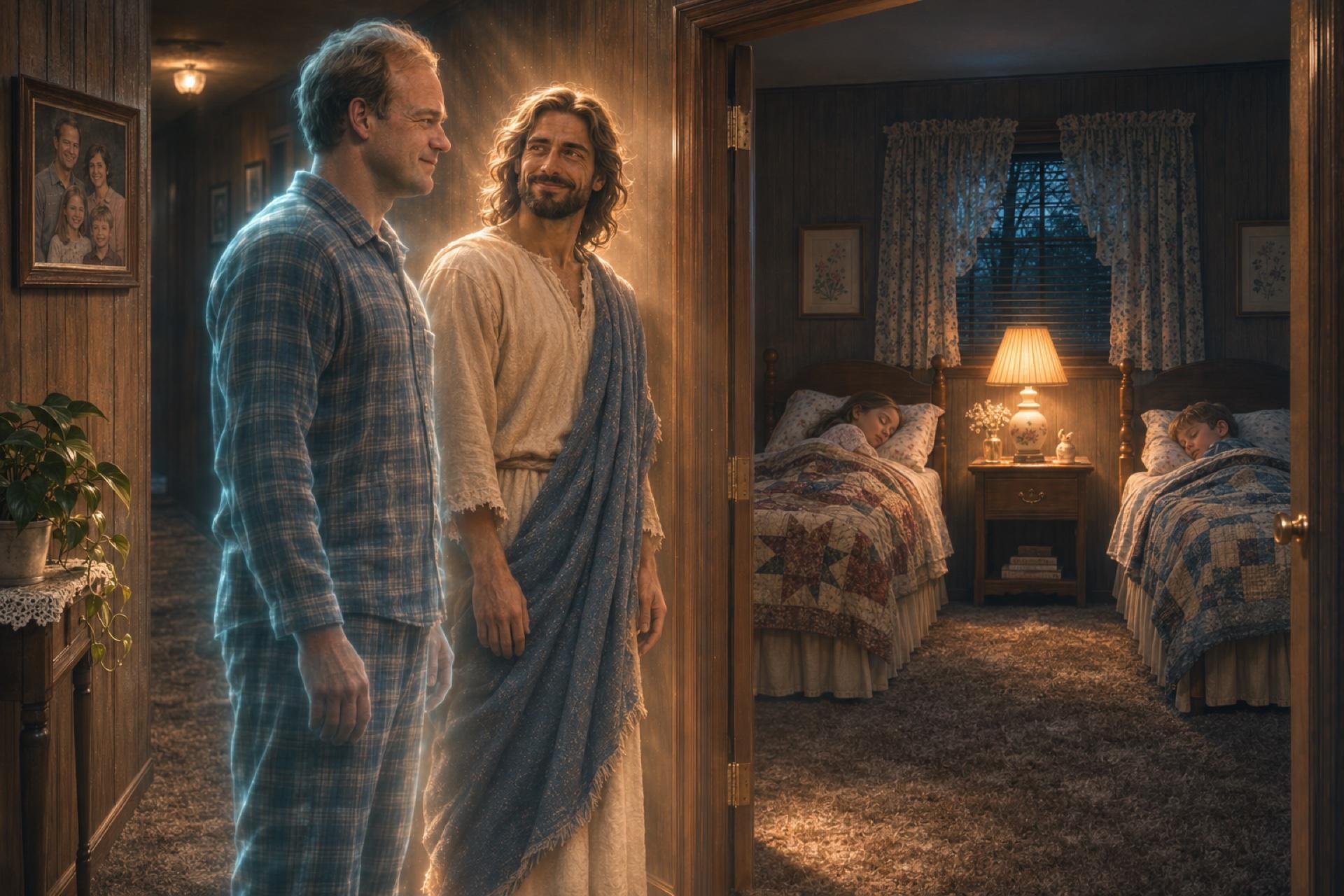
Then Jesus gave him another option. “If you don't come back to this life, your children aren't going to make it,” Karl remembers Him saying. “I can resurrect your body and put you back into this life so you can raise your children right.”
There was a catch. Jesus would not accept a life of duty a second time, and if Karl went back and failed to get it right, he could still go to hell. Karl was terrified of hell. But he loved his children enough to risk it for their sake, and he could tell that going back was what Jesus wanted. So he agreed.
That is a frightening choice, and Paul doesn't make it smaller: “continue to work out your salvation with fear and trembling.” But the next words tell why no one has to make it alone:
“For it is God who works in you to will and to act in order to fulfill his good purpose.”
Philippians 2:13
Sources:Karl Falken on Touching The Afterlife (2023), 29:03–30:11Proverbs 22:6Philippians 2:12–13
The river and the island
Before he went back, Jesus told Karl that God had put a gift of healing in him before he was born, and that Karl would heal his own body. Karl says every Christian should be able to minister healing, though Paul asks, “Do all have gifts of healing?” (1 Corinthians 12:30). Jesus asked him if he wanted to, and he said yes.
Then the scene changed. Karl stood with Jesus on the bank of a broad, flat, muddy river, and Jesus told him to build a boat of reeds. Jesus stepped in first, Karl pushed off, and a little way downstream lay a long, low island. Over the island was an image of Karl's own body lying there, enormous: “like 20 feet high from the back to the top of the chest,” and a hundred yards or more long. The damaged organs showed red. His crooked spine, which had hurt him all his life, didn't show as damaged at all.
Karl reached out, and his arm seemed to stretch like rubber into the body. He touched the throat, and the red faded and it became clear. He touched the lungs, and they cleared too. Last of all, he pulled the boat back up to the head and touched his eyes, and they cleared.
“Praise the Lord, my soul, and forget not all his benefits— who forgives all your sins and heals all your diseases.”
Psalm 103:2–3

Sources:Karl Falken on Touching The Afterlife (2023), 30:42–36:33Karl Falken on Touching The Afterlife (2023), 41:101 Corinthians 12:30Psalm 103:2–3
Jesus stood still
The vision broke off at the foot of the island, and Karl was back in his living room with Jesus. Then the two creatures came back through the same wall. Jesus was standing right at Karl's left, and Karl thought, you won't get far, Jesus is right here. But Jesus didn't say a word or make a move, and they kept coming. So Karl rebuked them himself in the name of Jesus Christ, and they were knocked out of the room.
Afterward he understood why. When Jesus sent out his disciples, He told them, “Heal the sick, raise the dead, cleanse those who have leprosy, drive out demons” (Matthew 10:8). Driving out demons is work Jesus gave his people to do, Karl says, and he came to believe the demons knew Jesus would not do it for him. “He fully expects us to know who he is, who we are, and who our enemy is,” Karl says. “God will not do for us what he's given us to do for ourselves.”
That authority is real, and it is Jesus's own. He gave it to his followers, and in the same breath told them what matters more.
“I have given you authority to trample on snakes and scorpions and to overcome all the power of the enemy; nothing will harm you. However, do not rejoice that the spirits submit to you, but rejoice that your names are written in heaven.”
Luke 10:19–20

Sources:Karl Falken on Touching The Afterlife (2023), 36:57–40:38Matthew 10:1–8Luke 10:19–20
Every question
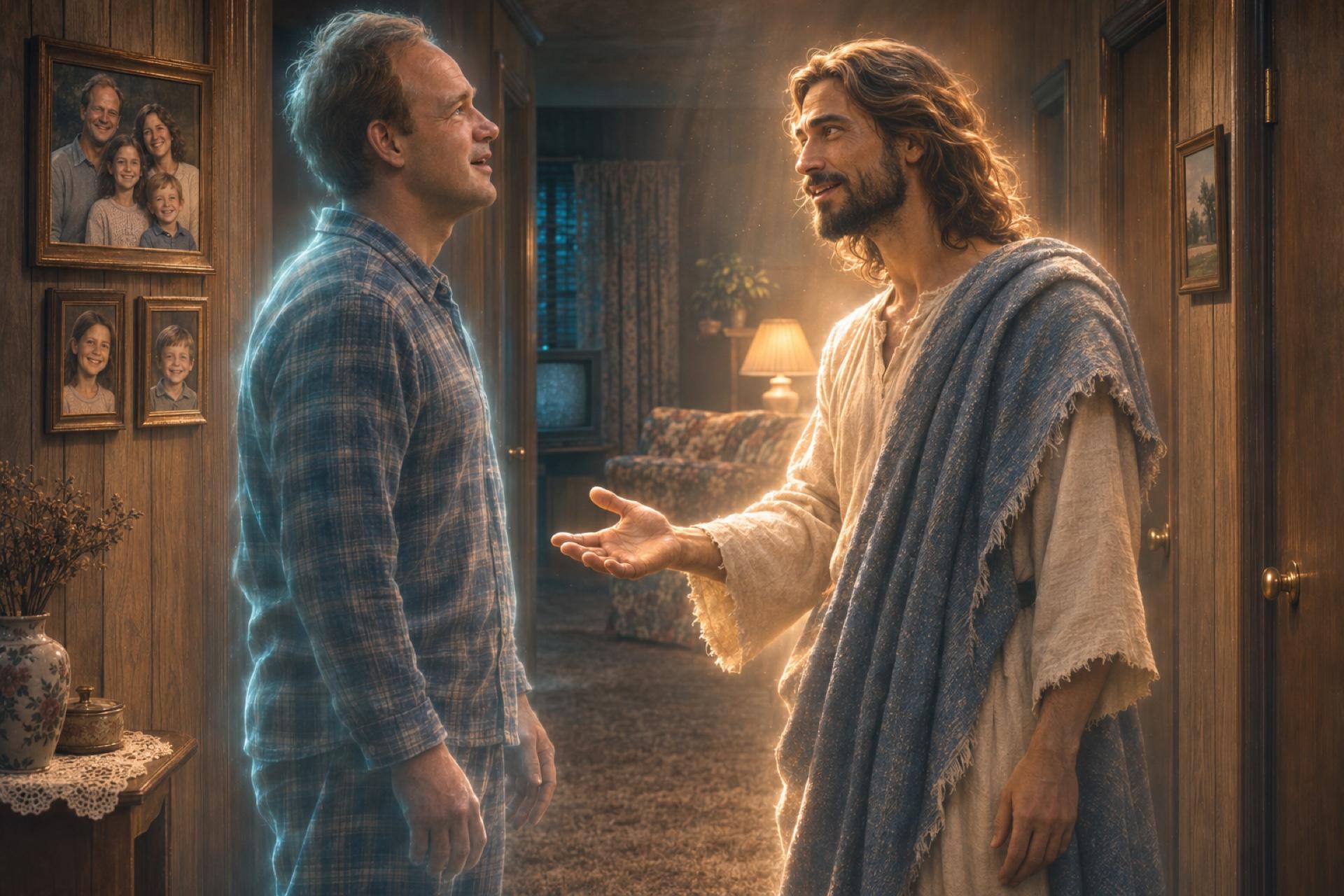
Jesus stood in the front hall, about to leave, and told Karl it was time to go back into his body. Then Karl remembered his list. Years before, he had read Caught Up into Paradise, Dr. Richard Eby's account of his own near-death experience, the first Christian one Karl had read. In it God offered to answer any question Eby asked, and Eby's questions struck Karl as basic. So Karl had written down the questions he would ask if he ever had the chance.
Face to face with Jesus, he found Him “awesome” and “truly terrifying.” “I could sense in his power that with a thought he could annihilate me.” And Jesus knew every thought, the list included. “Karl, would you like the answers to my list of questions?” Karl figured any list of His had to be better than his own, and said yes. “My list of questions is all questions,” Jesus told him, “but your mind is too small to comprehend that.” He would have to become one with Him and share His mind.
Karl said yes, and he felt himself drawn into Jesus, with his own personality still intact. He saw the scope of everything God is doing, and it had no end: an infinite creation, and a celestial city. John, who saw the risen Jesus in His glory, knew that fear too.
“When I saw him, I fell at his feet as though dead. Then he placed his right hand on me and said: “Do not be afraid. I am the First and the Last.””
Revelation 1:17
Sources:Karl Falken on Touching The Afterlife (2023), 2:06–3:09Karl Falken on Touching The Afterlife (2023), 41:35–46:35Psalm 139:2Revelation 1:17
History from God's side
Then, Karl says, walls came down around one subject: the history of mankind, from the creation of Adam and Eve to the very end. Jesus showed him one life at a time. When God creates a person, Karl says, He also creates every history that person could have. People have free will and make real choices, but within the boundaries God sets. “No person's life is ever going to get to a point where it's out of God's control.”
Then two lives together, then a family, a town, a state, a nation, an empire. For God it was as easy as two times two, and all of it was ordered and full of purpose. History has a role for a villain, a “vessel of wrath,” Karl says, but no one has to play it. “You can start in a good role and go bad, or you can start in a bad role and you can go good.” In his written account he adds that even the devil's attempts to oppose God “ultimately work towards God's goals.”
Joseph told the brothers who sold him the same thing: “You intended to harm me, but God intended it for good” (Genesis 50:20).
“I make known the end from the beginning, from ancient times, what is still to come. I say, ‘My purpose will stand, and I will do all that I please.’”
Isaiah 46:10

Sources:Karl Falken on Touching The Afterlife (2023), 48:20–53:29Karl Falken on Theological Dark Web (2025), 86:55–87:19Karl Falken, “Three Unique and Interesting Points from my NDE in 1995,” Arts of Thought (October 10, 2023)Romans 9:22Genesis 50:20Isaiah 46:10
The question that matters
Jesus showed it to him again from another angle, and then a third time, until Karl realized it wasn't for his entertainment and paid close attention. This time every life was a thread. It was white while a person lived righteously, and it darkened with sin: beige for everyday white lies and laziness, then brown, and black for the worst. When a person died, the thread turned gold for heaven or red for hell. A family's threads twisted together, families into communities, and communities into the thick bundles of empires, and where the bundles met, Karl says, a few people who understood God's ways could turn history.
At the end of time the threads split into two bundles. Karl had worked as a machinist, and he says he can measure by eye to one part in a thousand. By his estimate the gold bundle was 2.5 percent. Jesus, he says, was grieved: “I died so that everyone could go to heaven. Nobody needs to go to hell.” Karl works out from it that if about a third of people profess Christ, only about 8 percent of them are saved.
Then he saw what was changing the colors. It was motive. A thread was white when a person acted out of selfless love, and any other motive changed its color, so “you have to maintain your Christian walk right up to the moment of death.”
The answer Karl brought back is a question: “What does this have to do with selfless love?” Whenever you have to choose between selfless love and something else, he says, “the only right answer is selfless love.” It is the answer to every question that really matters.
Jesus didn't only teach that love. He lived it to the end, and laid down his life.
“Greater love has no one than this: to lay down one's life for one's friends.”
John 15:13

Sources:Karl Falken on Touching The Afterlife (2023), 54:04–63:33Karl Falken, “Three Unique and Interesting Points from my NDE in 1995,” Arts of Thought (October 10, 2023)Matthew 7:142 Peter 3:9John 15:13
Alive
Then Karl felt himself begin to separate from Jesus, and a flood of what he had seen began pouring out of him. The thought that came from Christ was gentle but firm: “Karl, you don't need that. That's not for you to keep. Let it go.”
He was pulled back into his body, and it was dark again. His eyes were full of pus, but the burn didn't hurt. He rinsed his eyes and could see, and the pus didn't come back. His hand was almost healed, and he could breathe. “It's so good to be alive,” he thought, and he cooked himself breakfast at midnight.
His wife came to the kitchen door and asked what he was doing. He told her he had died, God had raised him and healed him, and he was hungry. She shook her head and told him to stop making so much noise. She had slept through it all and never saw him die. All she saw was her husband, his eyebrows still burned off, cooking at midnight. “That was the first time my testimony got rejected,” he says, “and it was far from the last time.”
“I will not die but live, and will proclaim what the Lord has done.”
Psalm 118:17

Sources:Karl Falken on Touching The Afterlife (2023), 63:42–67:59Karl Falken, The Ultimate Question (2023)Psalm 118:17
Weighing it by Scripture
A near-death experience is not Scripture, and Karl's is no exception. Where his story agrees with the Bible it stands on solid ground: the name of Jesus drove the demons out, Jesus knew his sins and loved him anyway, and Jesus cares why we serve, not only what we do.
Some of what Karl says he saw goes past what the Bible teaches, and there we hold to the Bible. He says each human spirit is literally a piece of God, and that for a time he was one with Jesus and the Father. Scripture says God formed the first man from the dust and breathed life into him (Genesis 2:7), and made us in His image (Genesis 1:27). We are His creatures, and by grace His children, but never pieces of Him. The Father, the Son, and the Holy Spirit are one God, and no one else becomes part of Him. Karl also says the Holy Spirit wasn't in heaven because He is here with us now. He is here, but He is fully God, and no place is without Him (Psalm 139:7–8). When Karl says he saw other worlds with life on them, Scripture says nothing of it, so we build nothing on it.
Two of his claims need a firmer answer. Karl says millions of Christians have lost their salvation because they didn't know to rebuke the demons at that moment. But no one is saved by knowing the right words. Jesus told his disciples to rejoice not that the spirits submit to them but that their names are written in heaven (Luke 10:20), and at the cross He “disarmed the powers and authorities” (Colossians 2:15). Even the archangel Michael didn't rebuke the devil in his own strength; he said, “The Lord rebuke you!” (Jude 9). And Jesus says of his sheep, “no one will snatch them out of my hand” (John 10:28). In the same way, no one's thread stays white by the purity of his own motives. We are saved by grace through faith, “not by works, so that no one can boast” (Ephesians 2:8–9), and the selfless love Karl saw is the fruit of that grace, not the price of it.
In his written account Karl says the lost suffer “infinite tortures for an infinite duration” as they experience it, but that from God's side their spirits are purged and taken back into God, and heaven forgets them. Jesus used the same word, eternal, for both destinies: “Then they will go away to eternal punishment, but the righteous to eternal life” (Matthew 25:46). And the 2.5 percent, with the 8 percent he works out from it, are his own estimates from a vision, not numbers God has given.
So read Karl's story the way the Bereans heard Paul:
“They received the message with great eagerness and examined the Scriptures every day to see if what Paul said was true.”
Acts 17:11

Sources:Karl Falken on Touching The Afterlife (2023), 40:26–40:38Karl Falken on Touching The Afterlife (2023), 44:50–48:00Karl Falken on Touching The Afterlife (2023), 60:05–61:25Karl Falken, “Three Unique and Interesting Points from my NDE in 1995,” Arts of Thought (October 10, 2023)Genesis 2:7Genesis 1:27Deuteronomy 6:4Psalm 139:7–8Luke 10:20Colossians 2:15Jude 9John 10:28Ephesians 2:8–9Matthew 25:46Acts 17:11
Savior and Lord
Karl's own encouragement is plain: “This is the most important decision you can make: choosing your eternal destiny by choosing Christ to be your Savior and Lord.” He is Savior because he saves you from hell. He is Lord because he has a plan for your life, and “it's the best possible plan.”
Jesus gave his life as a ransom for many (Mark 10:45). By his death he broke the power of the devil, who held the power of death, and set free those who lived all their lives in fear of it (Hebrews 2:14–15). That is why one name could empty a room of demons: the one who bears it has already won.
You don't have to wait for your last breath to call on him. Jesus, I have sinned, and I can't free myself. Thank you for giving your life for me and rising again. I turn from my sin, and I give you my life. Be my Savior and my Lord.
“Everyone who calls on the name of the Lord will be saved” (Romans 10:13).

Sources:Karl Falken on Touching The Afterlife (2023), 75:06Mark 10:45Hebrews 2:14–152 Corinthians 5:15Romans 10:13
The bigger question Who saw Jesus alive after he died? →