
Did God say when the Messiah would come?
Daniel's 70 weeks
A 7-minute video▶ Watch the one-minute ShortWatch the whole series on YouTube
The short answer
Yes. In Babylon the angel Gabriel gave Daniel a countdown to “the Anointed One,” and said he would be put to death before the city and the Temple were destroyed. The Temple fell in AD 70. Count the years from the Persian orders to rebuild Jerusalem, and they land on the years of Jesus.
A clock in Babylon
If God sent a Messiah, did he say when? Long before Jesus, an angel gave an old man in Babylon a countdown to “the Anointed One.” The old man was Daniel, an exile in Babylon about 538 BC. Reading the prophet Jeremiah, he understood “that the desolation of Jerusalem would last seventy years” (Daniel 9:2). So he prayed for his ruined city.
While he was still praying, the angel Gabriel came “about the time of the evening sacrifice” (Daniel 9:21) and answered with a bigger number: “Seventy ‘sevens’ are decreed for your people and your holy city” (Daniel 9:24). Then he set the clock:
- A “seven” is seven years, the way a dozen is twelve.
- Seven “sevens”: 49 years.
- Seven and sixty-two make sixty-nine “sevens”: 483 years, from the order to rebuild Jerusalem to the Anointed One.
“From the time the word goes out to restore and rebuild Jerusalem until the Anointed One, the ruler, comes, there will be seven “sevens,” and sixty-two “sevens.””
Daniel 9:25
“The Anointed One” is mashiach in Hebrew, the word we say as “Messiah.” In Greek it's Christos: “Christ.” Daniel is told when the Messiah would come.

The order nobody can move
Then Gabriel says what happens, in this order:
“After the sixty-two “sevens,” the Anointed One will be put to death and will have nothing. The people of the ruler who will come will destroy the city and the sanctuary.”
Daniel 9:26
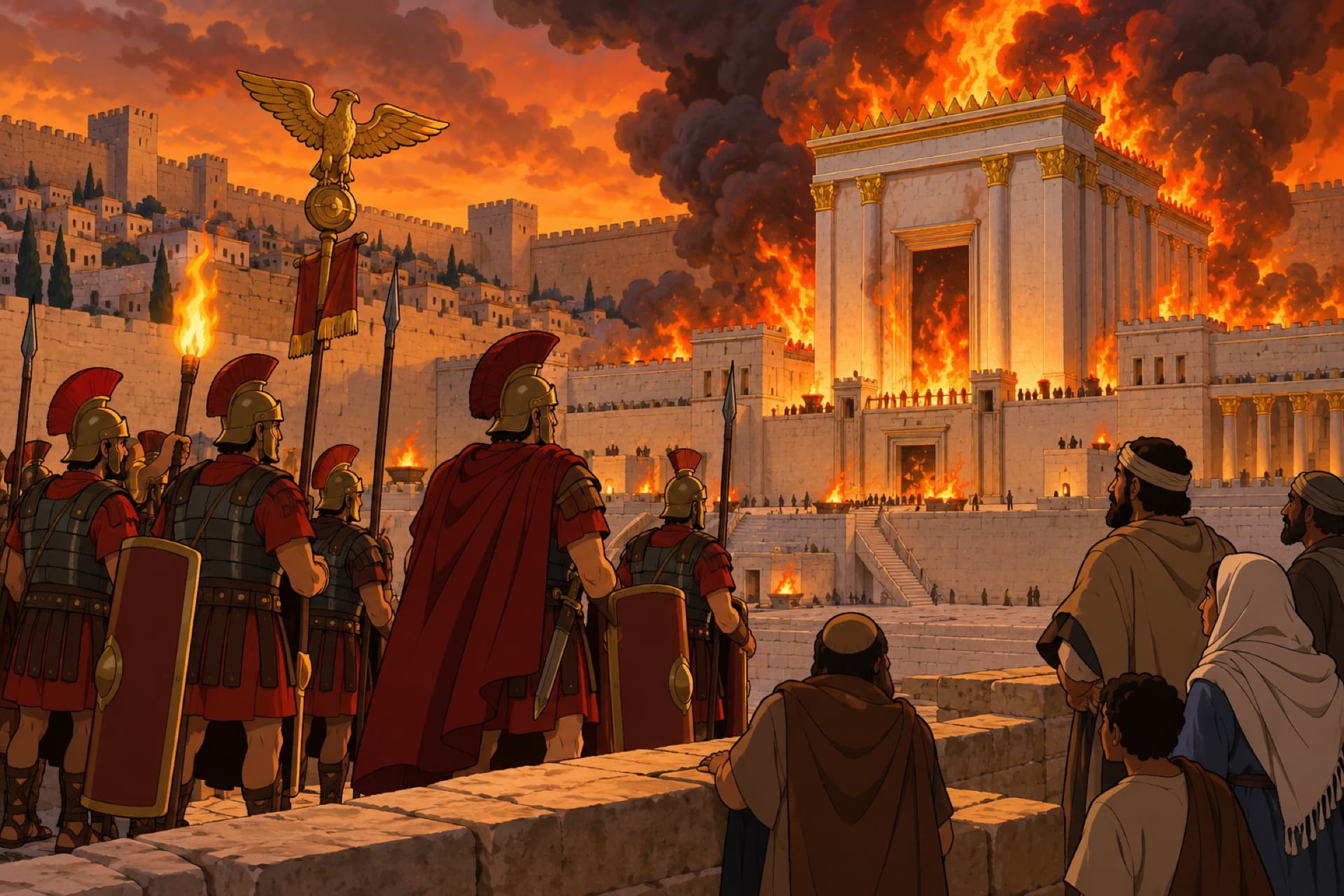
First the Messiah dies. Then the city and the Temple are destroyed. Rome burned the Temple in AD 70, and it has never been rebuilt. So whoever the Messiah is, he had to come, and die, before AD 70. That needs no arithmetic at all. And forty years before, Jesus looked at the Temple and said, “Not one stone here will be left on another” (Matthew 24:2).
Counting the years
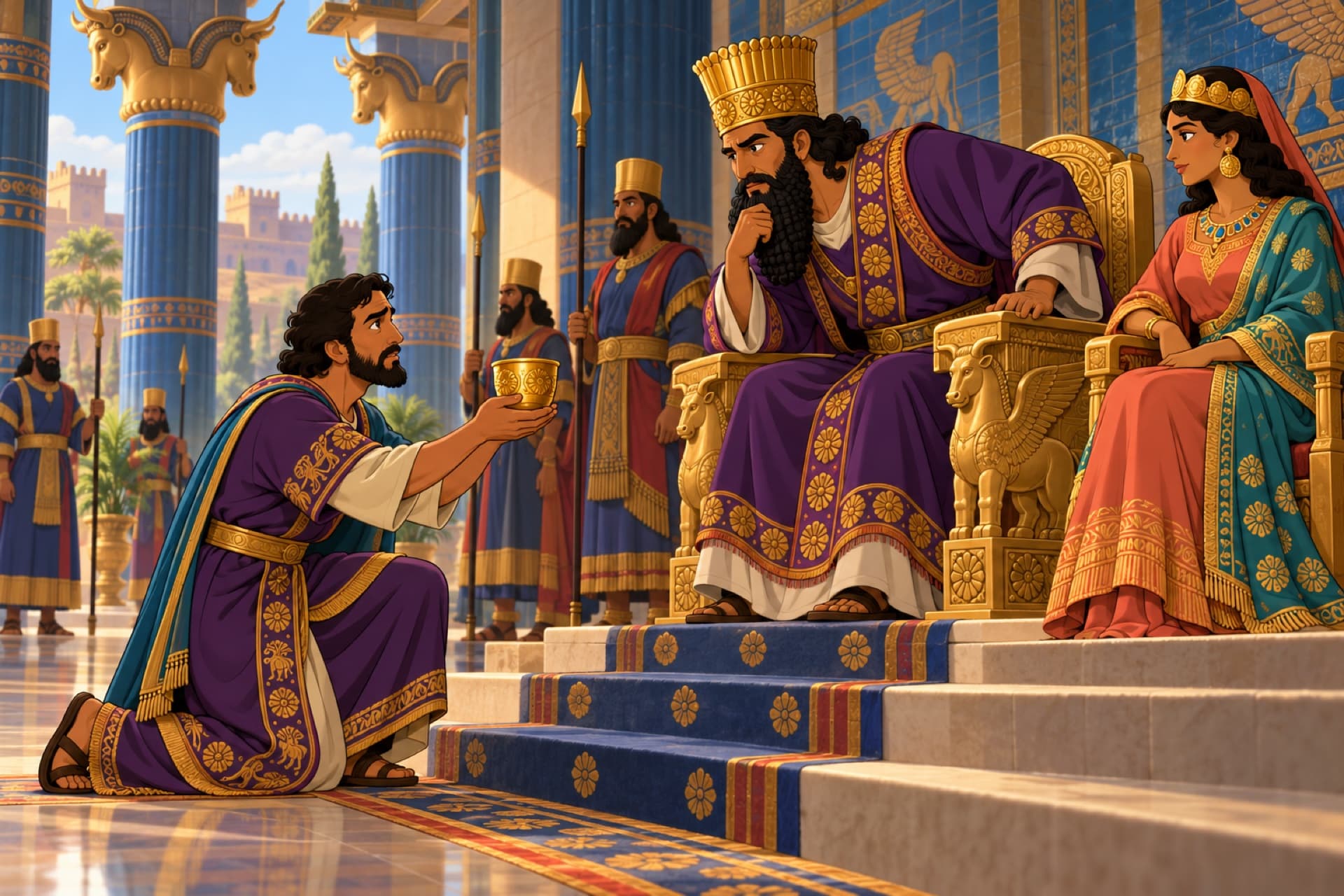
Now the clock itself. It starts when “the word goes out to restore and rebuild Jerusalem” (Daniel 9:25), and the Persian king Artaxerxes gave two such orders. Count from each:
- Ezra's order, “in the seventh year of King Artaxerxes” (Ezra 7:7): 458 or 457 BC. Count 483 years, and you reach AD 26 or 27.
- Nehemiah's order, “in the month of Nisan in the twentieth year of King Artaxerxes” (Nehemiah 2:1): 444 BC. Count 69 × 7 × 360 days, which is 173,880 days, and you reach AD 33.
The first count lands about when Jesus was baptized and began to preach, saying, “The time has come” (Mark 1:15). The second is the scholar Harold Hoehner's. He counted in 360-day years, the way Revelation counts prophetic time, where three and a half years are 1,260 days. He reached AD 33, the spring Jesus rode into Jerusalem on a donkey and was crucified.
Some have claimed it lands on the very day. We don't claim that: the start date is uncertain by weeks. But both counts land on the years of Jesus.
Sources:Daniel 9:25Ezra 7:11–26Ezra 7:7–8Ezra 9:9Luke 3:1, 21–23Mark 1:15Chronology of JesusNehemiah 2:1–8Revelation 12:6, 14Harold Hoehner, Chronological Aspects of the Life of Christ (1977), pp. 136–39
Written after the fact?
Many scholars say Daniel was written much later, around 165 BC, and that the “anointed one” who is killed was a Jewish high priest named Onias, murdered in 171 BC. But the numbers don't reach him. Even on their own reading, the sixty-two “sevens” run decades past 171 BC. James Montgomery, a critical scholar who held that reading, admitted it:
“…the 62 Weeks would then take us down some 65 years too far. We can meet this objection only by surmising a chronological miscalculation on part of the writer.”
James A. Montgomery, Daniel (1927), p. 393
He could only blame the writer's arithmetic. Counted from the order to rebuild Jerusalem, the numbers miss Onias. They land on Jesus.

Sources:James A. Montgomery, Daniel (International Critical Commentary, 1927), p. 393Prophecy of Seventy Weeks
Two centuries before the cross
So take the latest date anyone gives: Daniel was still written two centuries before the cross and the fall of the Temple. Eight copies of Daniel turned up among the Dead Sea Scrolls, the oldest copied around 125 BC. Line them up:
- About 165 BC: the critics' date for Daniel.
- About 125 BC: the oldest copy of Daniel found at Qumran.
- About AD 30: the cross.
- AD 70: the Temple falls.
Jesus himself called him “the prophet Daniel” (Matthew 24:15). And Josephus, a Jewish historian who never became a Christian, wrote around AD 93 that Daniel “did not only prophesy of future events, as did the other prophets, but he also determined the time of their accomplishment.” He says Daniel “wrote concerning the Roman government, and that our country should be made desolate by them.”

Sources:Book of DanielMatthew 24:15Josephus, Antiquities 10.267, 10.276, tr. Whiston
The people were waiting
And people at the time were watching the clock. Luke says, “The people were waiting expectantly” (Luke 3:15). Josephus writes of a prophecy “in their sacred writings” that “about that time, one from their country should become governor of the habitable earth.” Even the Roman historian Tacitus heard of it:
“…a firm persuasion, that in the ancient records of their priests was contained a prediction of how at this very time the East was to grow powerful, and rulers, coming from Judæa, were to acquire universal empire.”
Tacitus, Histories 5.13, tr. Church and Brodribb
Both men decided it meant the Roman general Vespasian. The people expected a ruler right then. They missed the very next line: the Anointed One would be put to death (Daniel 9:26).
Daniel's clock has one last “seven,” and it ends with the destroyer's end (Daniel 9:27). Jesus quoted it when he spoke of the Temple's fall and of his return (Matthew 24:15). Christians read that last “seven” in different ways. But every reading agrees on this: the King has already come, right on time.

Sources:Luke 3:15Josephus, Jewish War 6.5.4 (6.312), tr. WhistonTacitus, Histories 5.13, tr. Church and BrodribbDaniel 9:26Daniel 9:27Matthew 24:15–31
Did you know the time?
On the day Jesus rode into Jerusalem, he looked at the city and wept: “If you, even you, had only known on this day what would bring you peace” (Luke 19:42). And he said why it would fall: “because you did not recognize the time of God's coming to you” (Luke 19:44). And Daniel, as we've seen, had given them the time. Most of them missed it.
Jesus held the religious leaders responsible. When the Pharisees and Sadducees tested him by asking for a sign from heaven, he said, “You know how to interpret the appearance of the sky, but you cannot interpret the signs of the times” (Matthew 16:3). To the leaders who studied the Scriptures, he said, “These are the very Scriptures that testify about me, yet you refuse to come to me to have life” (John 5:39–40). They could read a red sky. They had Daniel's clock in their hands. And they missed the King standing in front of them.

Sources:Luke 19:41–44Matthew 16:1–3Luke 12:54–56John 5:39–40
Check yourself
What did Gabriel say would come after sixty-nine “sevens”?Show the answer
The Anointed One, the Messiah. Seven “sevens” and sixty-two “sevens” make sixty-nine: 483 years from the order to rebuild Jerusalem.
Why did the Messiah have to come before AD 70?Show the answer
Gabriel gave the order: first the Anointed One would be put to death, then the city and the sanctuary would be destroyed. Rome burned the Temple in AD 70.
Where do the counts from Artaxerxes's two orders land?Show the answer
From Ezra's order, 458 or 457 BC, on AD 26 or 27, about when Jesus began to preach. From Nehemiah's, 444 BC, counted in 360-day years as Harold Hoehner did, on AD 33, the spring Jesus rode into Jerusalem and was crucified.
What did James Montgomery, a critical scholar, admit about reading the “anointed one” as Onias?Show the answer
That the sixty-two “sevens” would “take us down some 65 years too far.” He could only call it “a chronological miscalculation on part of the writer.”
How do we know Daniel was written before Jesus?Show the answer
Even on the latest date anyone gives, about 165 BC, it was written two centuries before the cross. Eight copies turned up among the Dead Sea Scrolls, the oldest copied around 125 BC.
Who did Josephus and Tacitus think the prophecy was about, and what did the people miss?Show the answer
The Roman general Vespasian. The people expected a ruler right then, and missed the very next line: the Anointed One would be put to death.
Why did Jesus weep over Jerusalem?Show the answer
It would fall “because you did not recognize the time of God's coming to you” (Luke 19:44). Daniel had given them the time, and most of them missed it.
Right on time
Don't miss it now. “When the set time had fully come, God sent his Son” (Galatians 4:4). He came on time, he gave his life as a ransom to set you free (Mark 10:45), and he rose again (1 Corinthians 15:3–4).
The leaders had Daniel's clock in their hands and missed the King. Now it's in yours.
So read Daniel 9 and Luke 19 this week, and then talk to him. You could pray: Lord Jesus, you came right on time, for me. I turn from my sin. I trust you, and I will follow you.

Sources:Galatians 4:4Mark 10:451 Corinthians 15:3–4Daniel 9Luke 19