Is the Shroud of Turin real?
The Shroud of Turin
The short answer
We believe it is, and the case is far stronger than the headlines said: an image that works like a photographic negative, no paint, blood that tested as blood, wounds that match the Gospels, and a carbon date that has been challenged ever since it came out. The faith rests on an empty tomb and a risen Lord, not on a cloth. But the Shroud is a witness to that burial: the linen John saw lying in the tomb.
Follow the cloth from a lawyer's photograph in 1898 to a carbon date in 1988, and on to the labs' raw data, released only in 2017.
Read · 7 min ↓The bigger question Was Jesus's tomb really empty? →
▶ Watch the Short All the videos on YouTube
A linen cloth
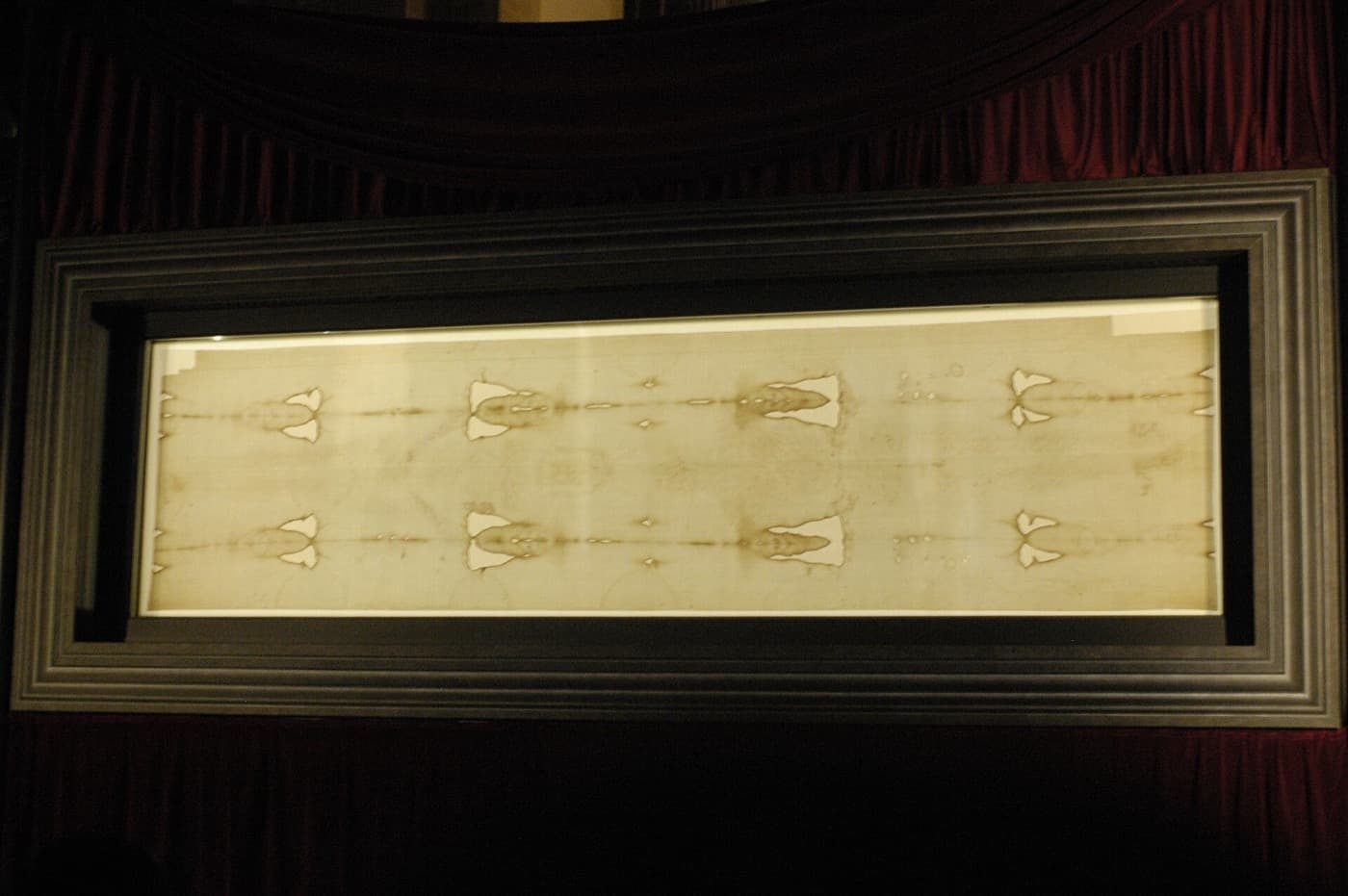
In a cathedral in Turin, in Italy, there's a linen cloth about fourteen feet long. On it is the faint image of a man with the wounds of a crucifixion. We believe it wrapped Jesus in the tomb, and there's more evidence for that than you might think.
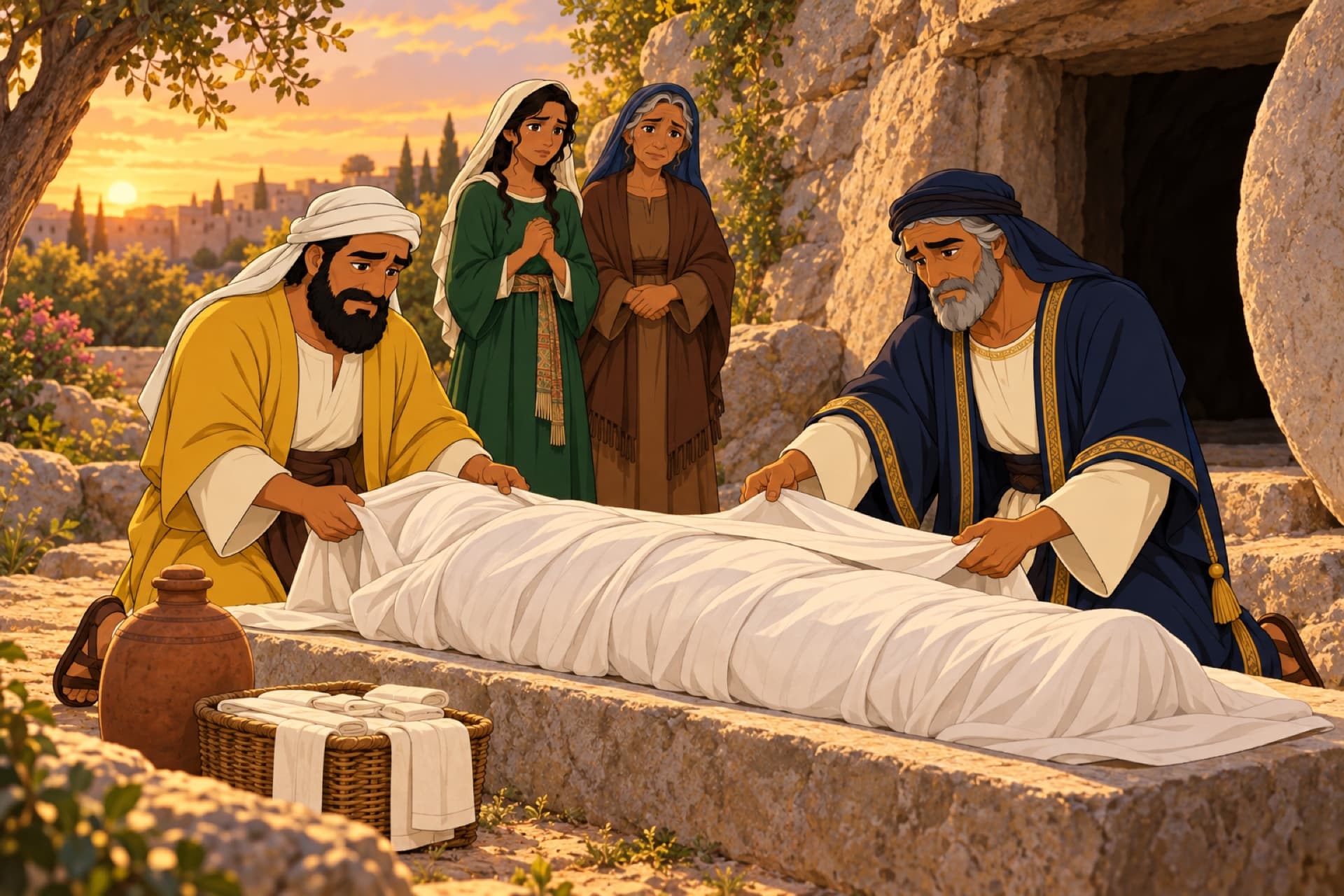
Start with what the Gospels say. On the Friday Jesus died, Joseph of Arimathea took care of the body:
“So Joseph bought some linen cloth, took down the body, wrapped it in the linen, and placed it in a tomb cut out of rock.”
Mark 15:46
Mark's word for that linen is sindon. That's where the Shroud gets its Italian name, the Sindone.
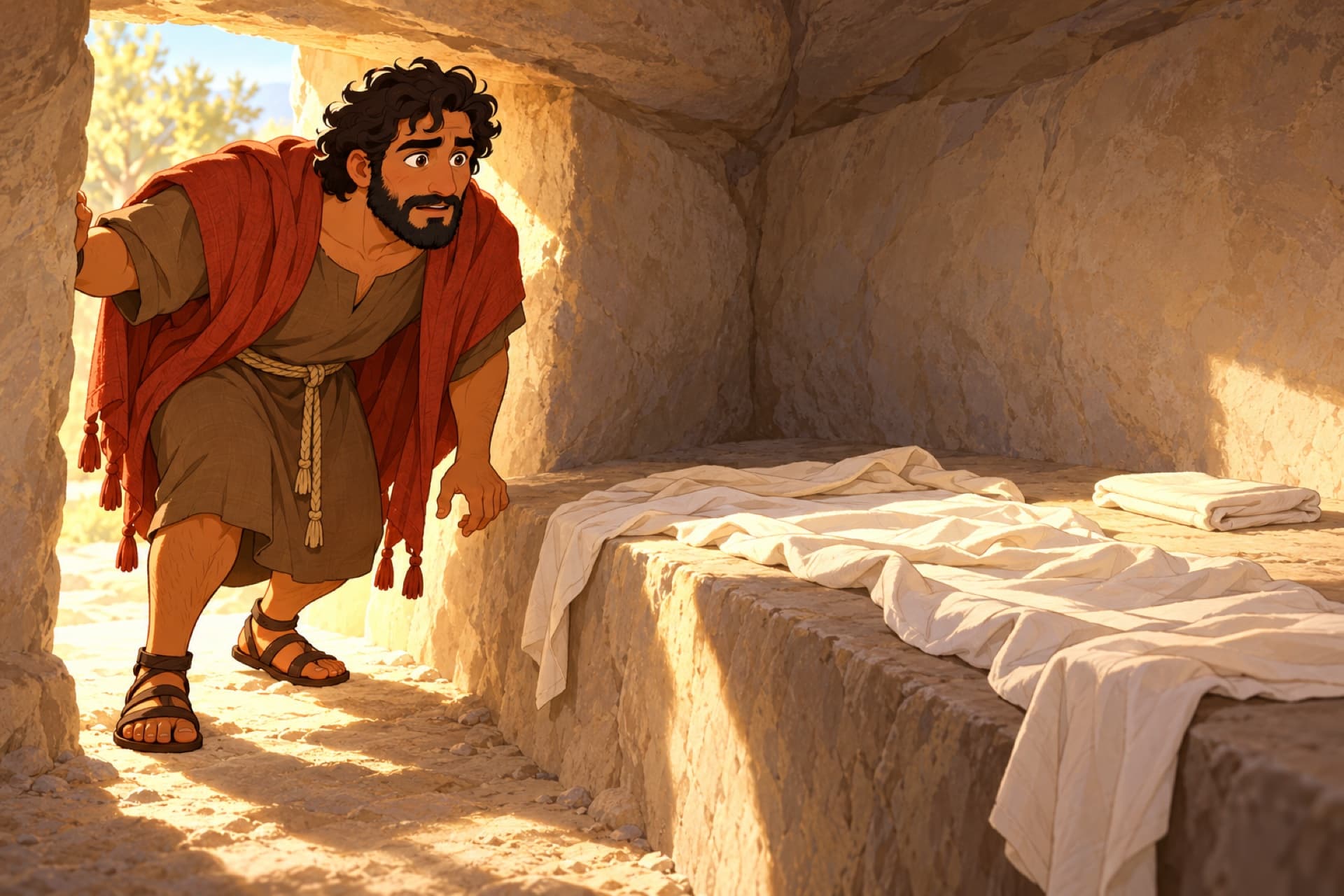
Two days later the tomb was empty. Peter went in, and “he saw the strips of linen lying there, as well as the cloth that had been wrapped around Jesus' head” (John 20:6–7). The body was gone, but the linen stayed behind. So could some of it still be here?
Sources:Mark 15:46Mark 15:46 in Greek (σινδών)John 20:1–7Shroud of Turin (history, dating and image)
Where it has been
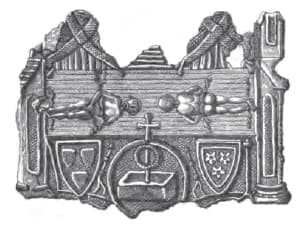
The cloth we call the Shroud first shows up in history in the 1350s, in a small church in Lirey, in France. Pilgrims came to see it held up. One of the badges they bought was found in the river Seine, in Paris, in 1855. It shows the long cloth, with the front and back of a body on it.
In 1532 it nearly burned. Fire broke out in the chapel at Chambéry where it was kept, and molten silver from its case burned through the folded cloth. Nuns sewed patches over the holes. You can still see them in photos of the cloth: the triangles running down both sides.
Sources:History of the Shroud of TurinThe Lirey pilgrim badge (Musée de Cluny)Shroud of Turin (history, dating and image)
A photograph
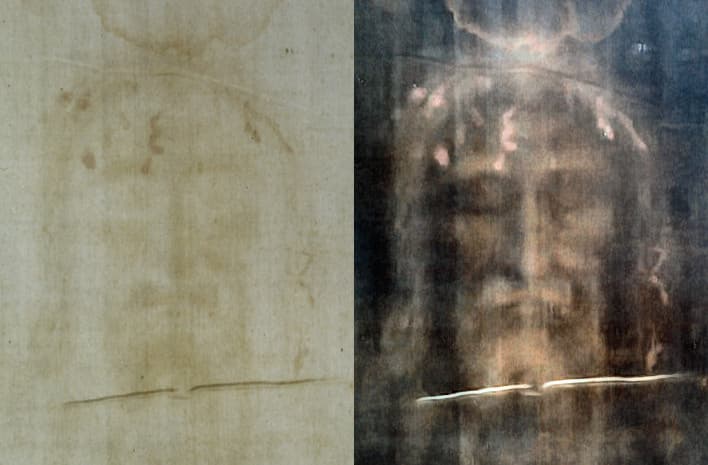
For centuries, people saw only a faint brown figure. Then in 1898 an Italian lawyer and amateur photographer named Secondo Pia was allowed to photograph it. When he developed his glass plate in the darkroom, he saw something no one had seen before.
On the negative, where light and dark are swapped, the man on the cloth suddenly looked real: a clear, lifelike face. So the image on the linen works like a photographic negative itself, and no one could see that properly until cameras came along, centuries after the cloth first shows up.
Sources:Secondo PiaShroud of Turin (history, dating and image)
A body in relief
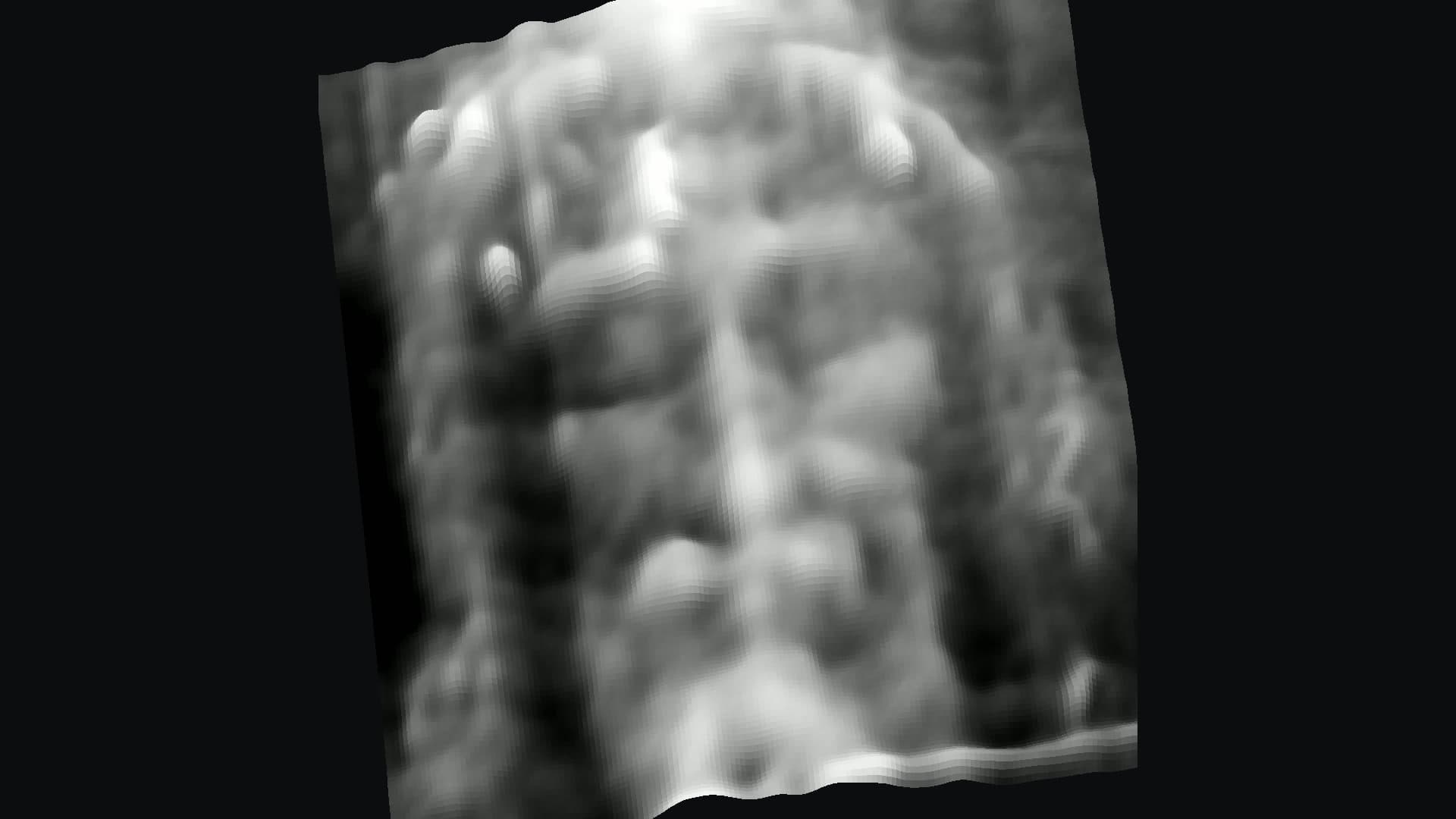
In 1976 two American scientists, John Jackson and Eric Jumper, ran a photo of it through an image analyzer, a machine that turns light and dark into height.
They found that the image's shading tracks how close a cloth would lie to a body: the closer, the darker. Turned into height, it rose up as a body in relief. The picture here does the same with the face: the brightness of the photo, taken as height.
Sources:Jackson, Jumper and Ercoline, Applied Optics 23 (1984)Shroud of Turin (history, dating and image)
No paint
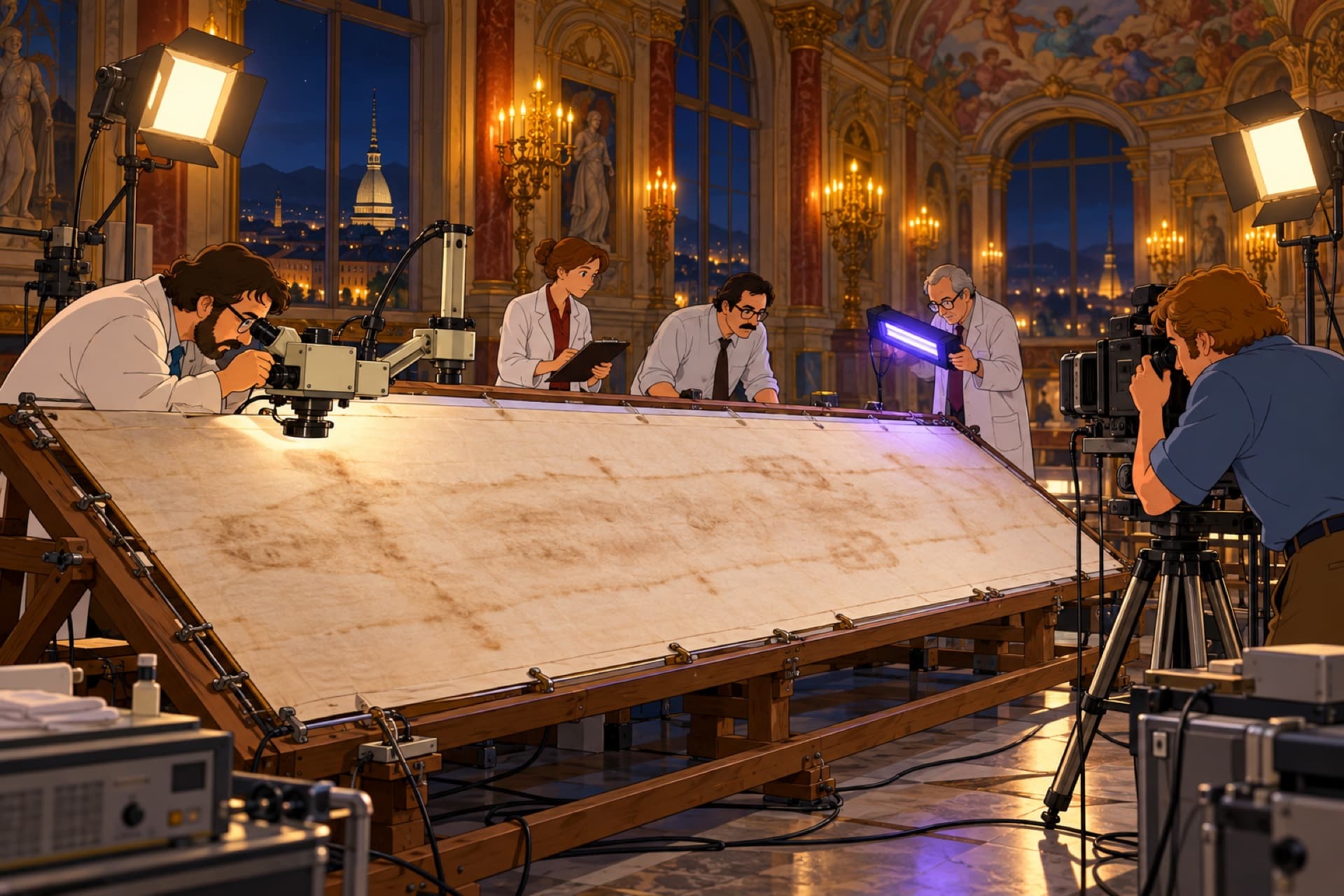
In 1978 a team of American scientists called STURP got five days with the cloth, and they worked round the clock. They looked for paint. In their words:
“No pigments, paints, dyes or stains have been found on the fibrils.”
STURP, summary of the 1978 examination (1981)
And the stains that look like blood tested as blood.
Sources:STURP, summary of the 1978 examination (1981)Shroud of Turin Research ProjectShroud of Turin (history, dating and image)
Only on the surface
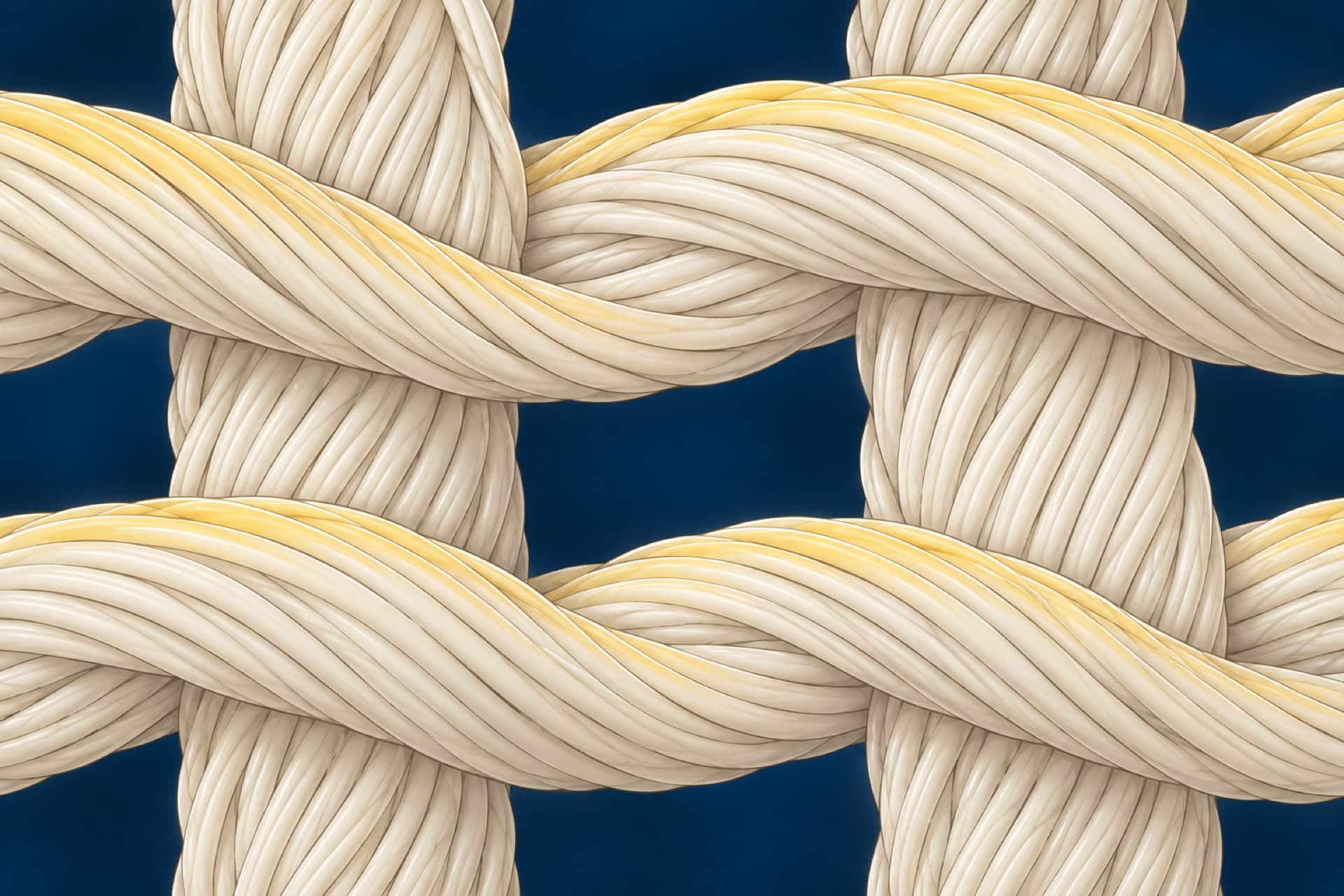
Now look closer. Ink or paint is a liquid: brush it onto linen and it soaks down into the thread and into the fibers themselves.
The Shroud's color doesn't. Under a microscope it sits on only the top two or three fibers of a thread, as a coat about two hundred nanometers thin, hundreds of times thinner than a hair, and the inside of each fiber stays white.
So the team's summary reached this conclusion:
“We can conclude for now that the Shroud image is that of a real human form of a scourged, crucified man. It is not the product of an artist.”
STURP, summary of the 1978 examination (1981)
Sources:Rogers, “Frequently Asked Questions” (2004)Fanti et al., Journal of Imaging Science and Technology 54 (2010)STURP, summary of the 1978 examination (1981)Shroud of Turin (history, dating and image)
What he suffered
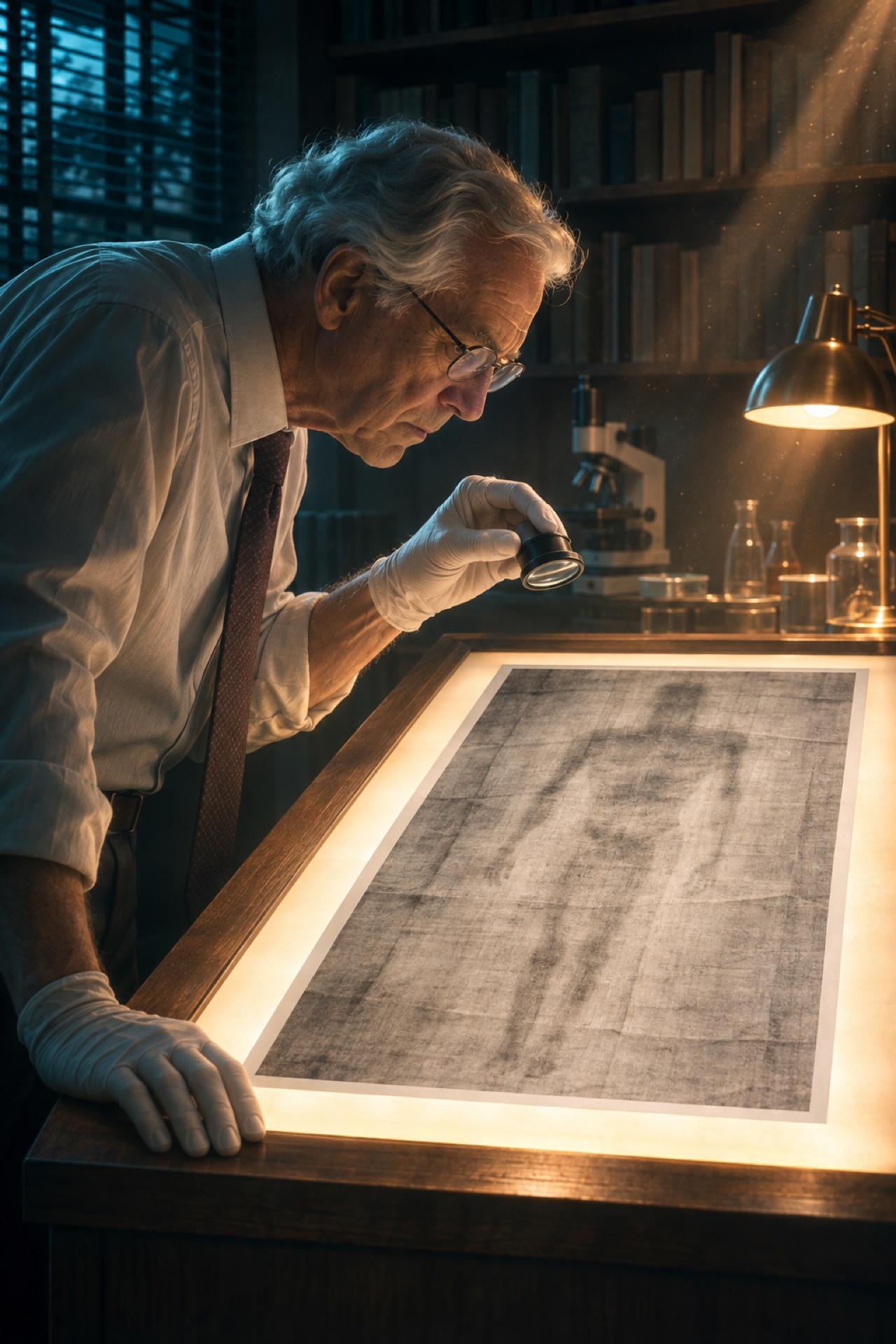
And the marks on the image match the Gospels in grim detail. Robert Bucklin, a forensic pathologist who “personally examined over 25,000 bodies by autopsy,” read the man on this cloth like a body on his table.
Go through the wounds one at a time, and set each beside what John says was done to Jesus: the whip, the crown of thorns, the blows to his face, the beam, the nails, and the spear.
 The whipMore than a hundred small dumbbell-shaped wounds from the shoulders to the calves, every one struck from behind: the mark of a Roman flagrum, leather straps with small iron balls tied into them.
“Then Pilate took Jesus and had him flogged.”
John 19:1 The crownA ring of punctures around the head, front and back, and the blood runs down into the hair.
“The soldiers twisted together a crown of thorns and put it on his head.”
John 19:2 The blowsThe right cheek is swollen, and the tip of the nose is scraped.
“And they slapped him in the face.”
John 19:3 The beamAcross both shoulder blades the skin is rubbed raw, the way a heavy beam would do it.
“Carrying his own cross, he went out to the place of the Skull.”
John 19:17 The nailsThe nail wound is at the wrist, and the blood runs down the forearm at an angle that means his arms were stretched out above him.
“Unless I see the nail marks in his hands and put my finger where the nails were…”
John 20:25 The spearOn the right side of the chest, a large stain. Bucklin saw two fluids in it: blood, and something like water.
“One of the soldiers pierced Jesus' side with a spear, bringing a sudden flow of blood and water.”
John 19:34
Close-ups of Giuseppe Enrie's 1931 photographs of the Shroud. The gold circles are ours.
Every wound on this cloth matches what John says was done to Jesus.
This is what Jesus went through for us. As Peter wrote:
“…by his wounds you have been healed.”
1 Peter 2:24
Sources:Robert Bucklin, “The Legal and Medical Aspects of the Trial and Death of Christ”Lind and Antonacci, St. Louis Shroud Conference (2014)Edwards, Gabel and Hosmer, “On the Physical Death of Jesus Christ,” JAMA 255 (1986)John 19:1–3, 34STURP, summary of the 1978 examination (1981)1 Peter 2:24John 19:17John 20:25
The carbon date
Then came 1988. With the Church's permission, a strip was cut from one corner, and three labs, in Oxford, Zurich and Arizona, carbon-dated pieces of it. They got AD 1260 to 1390, and in the journal Nature they called their results:
- AD 1260–1390 The carbon date
- 1350s First shows up, at Lirey in France
- 1532 Nearly burns at Chambéry
- 1855 A pilgrim's badge turns up in the Seine
- 1988 Three labs carbon-date a strip
- 2022 An X-ray test of one thread
“…conclusive evidence that the linen of the Shroud of Turin is mediaeval.”
Damon et al., Nature 337 (1989)
That's just when the cloth first shows up in France. Headlines called it a fake, and for many people, that settled it.

Sources:Damon et al., Nature 337 (1989): the carbon dateShroud of Turin (history, dating and image)
Was the date right?
Not everyone accepted the date. Raymond Rogers, a chemist from the 1978 team, studied threads from that same corner. He found cotton mixed in, and chemistry unlike the rest of the cloth, and argued that the corner was a medieval repair. If he's right, the labs dated the mending, not the original cloth. The lab in Arizona disputes that.
Rogers also tested for vanillin, a chemical that slowly fades out of old linen. On the Shroud there was none left, just as on linen from the Dead Sea Scrolls. He wrote:
“It is thus very unlikely that the linen was produced during medieval times.”
Raymond Rogers, Thermochimica Acta (2005)

Sources:Rogers, Thermochimica Acta 425 (2005)Freer-Waters and Jull, npj Heritage Science (2026)Shroud of Turin (history, dating and image)
The raw data
Then in 2017, after a legal request, the labs' raw data were finally released. Statisticians who studied it wrote:
“…homogeneity is lacking in the data and that the procedure should be reconsidered.”
Casabianca et al., Archaeometry 61 (2019)
In plain words, the pieces disagreed with each other more than they should, and the date needs a fresh look.

An X-ray date
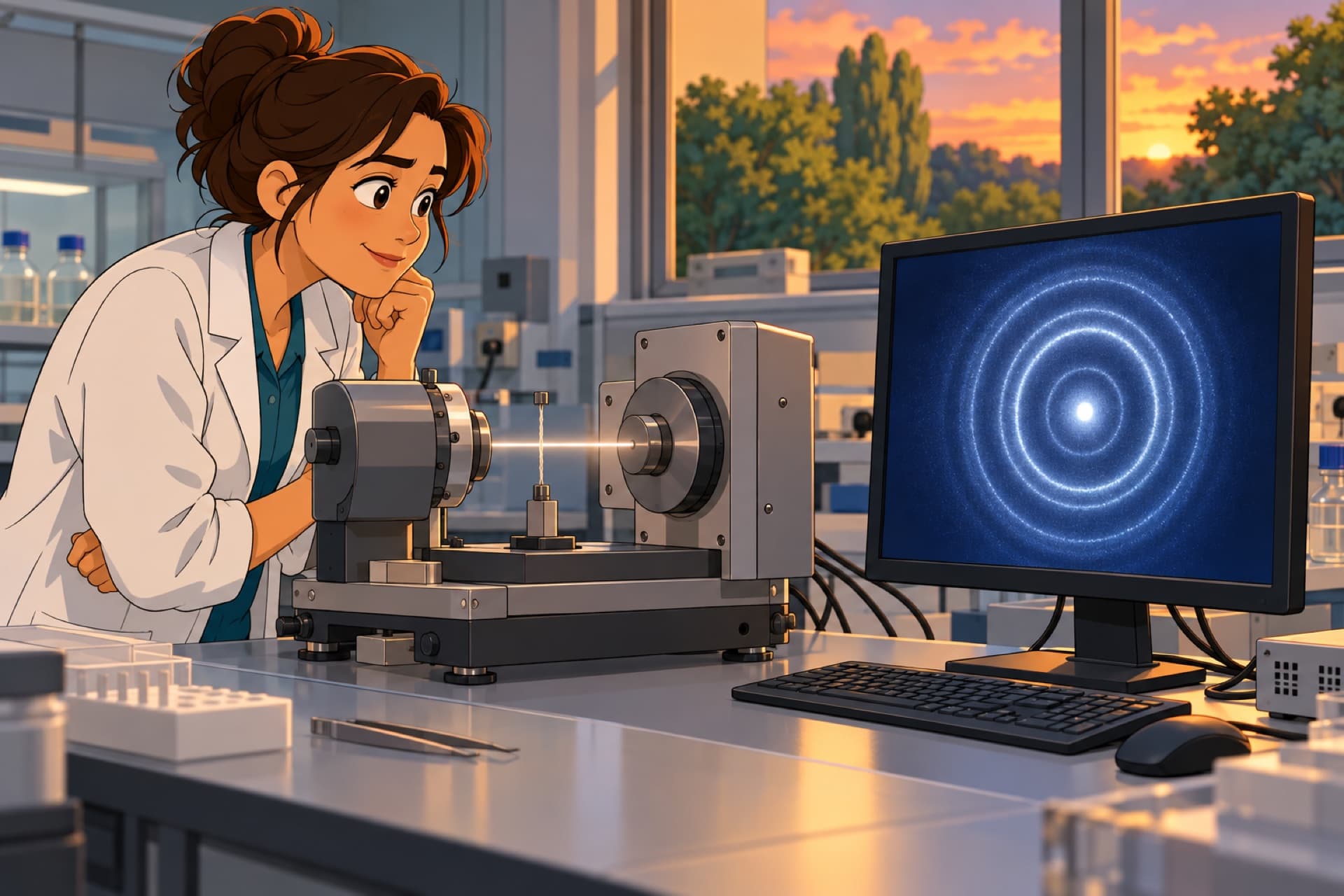
In 2022 an Italian team tried another way. They used X-rays to measure how much one linen thread had aged, and it matched linen from Masada, from AD 55 to 74.
They wrote that the results are “compatible with the hypothesis that the TS is a 2000-year-old relic,” if it was kept at ordinary room temperatures through its history. TS is the Turin Shroud.
Nobody has copied it
And nobody has fully copied the image. In 2012, physicists at ENEA, Italy's national research agency, came close: short, intense bursts of ultraviolet light colored linen like the Shroud, on only the outermost fibers.
Some believers wonder whether the image is a trace of the light of the resurrection. That's a hope, not something a lab can test. But the experiment is real.

Sources:Di Lazzaro et al., Applied Optics 51 (2012)Shroud of Turin (history, dating and image)
Is it real?
Jeremiah Johnston, a New Testament scholar, used to think it was a fake. As he put it:
“I believe in an evidence-based faith, an evidence-based Christianity, and I did not believe in the shroud. I thought there was no evidence behind it.”
Jeremiah J. Johnston, “Why I Changed My Mind About the Shroud of Turin”
Then he looked at the evidence for himself, and it changed his mind. He's not alone. Many who have studied the cloth up close are convinced it's real, and we think they have good reasons.
The carbon date is the one result that says medieval, and three lines of evidence call it into question: the corner it came from, the labs' own raw data, and the X-ray test.
Sources:Jeremiah J. Johnston, “Why I Changed My Mind About the Shroud of Turin” (YouTube)Damon et al., Nature 337 (1989): the carbon dateCasabianca et al., Archaeometry 61 (2019)De Caro et al., Heritage 5 (2022)Shroud of Turin (history, dating and image)
What the faith rests on
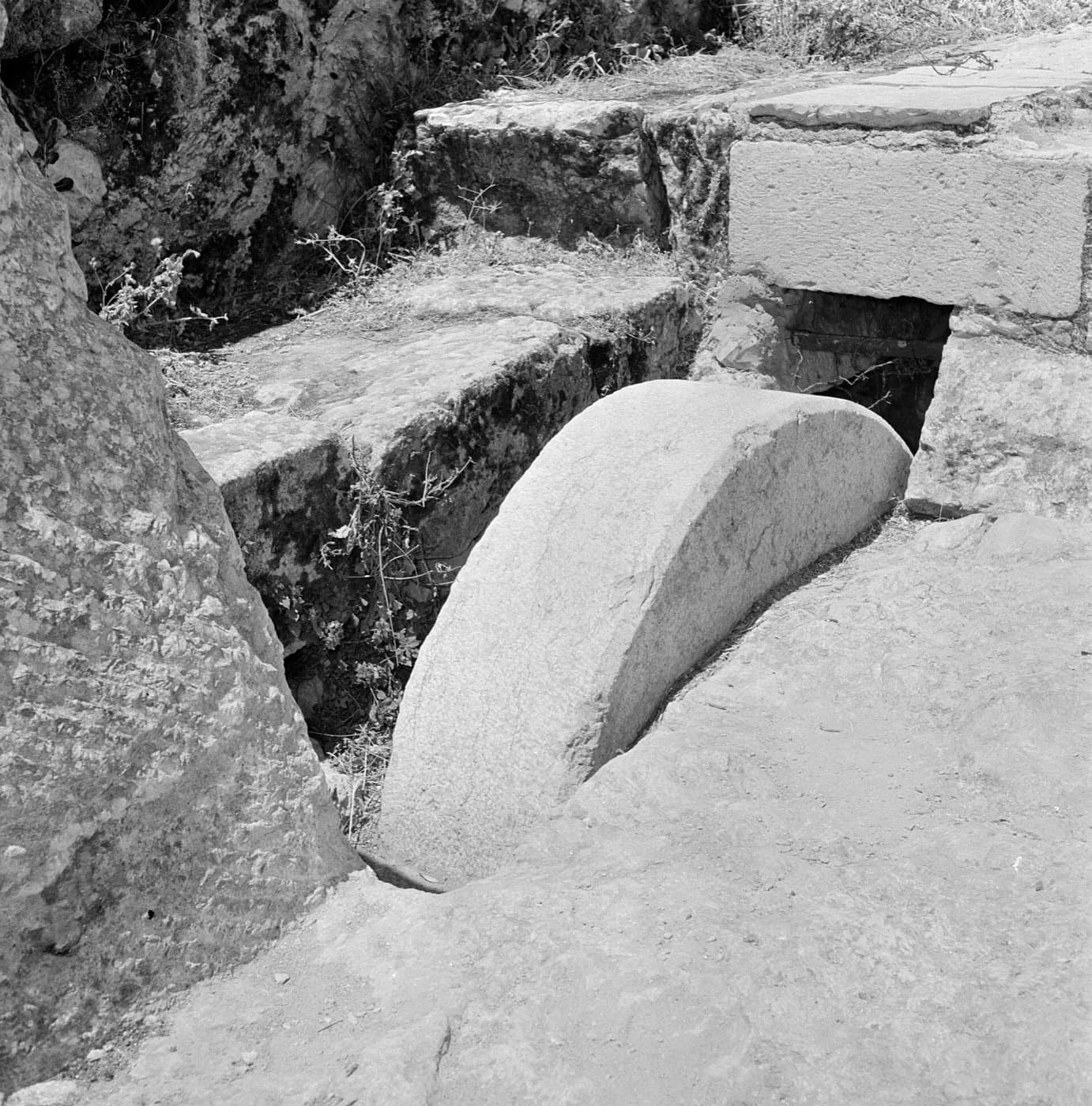
Now, the Christian faith has never needed a cloth. Go back to that Sunday morning. After Peter, “the other disciple, who had reached the tomb first, also went inside. He saw and believed” (John 20:8). He hadn't seen Jesus yet. All he saw was the linen lying there and no body: an empty tomb.
That's what the faith stands on, and this chapter has shown the evidence for it: a man who really died, a tomb found empty, and hundreds who saw him alive, a skeptic and an enemy among them. Paul staked everything on it: “if Christ has not been raised, your faith is futile” (1 Corinthians 15:17). He didn't say a word about grave clothes.
And the Shroud bears witness to that morning: a picture of what John already told us, the cloth left behind by a man who walked out of his grave.
Is he alive?
The Shroud shows what was done to Jesus. The question it leaves you with is whether he is alive. And if he is, what will you do with him?
Jesus said he came “to give his life as a ransom for many” (Mark 10:45). He died to set us free from sin and death, and he rose, and death couldn't hold him. And he told Thomas, “Blessed are those who have not seen and yet have believed” (John 20:29).
You could pray: Lord Jesus, you died to set me free, and you rose again. I don't need to see a cloth to trust you. I turn from my sin, and I give my life to you. I belong to you. You are my Lord and my God, and I will follow you.
Sources:Mark 10:45Acts 2:24John 20:28–29
Or go straight to the bigger question Was Jesus's tomb really empty? →